
CEO Delegation to China: What to Expect on Day One
A CEO delegation to China spends its first day on arrival, an opening briefing and a welcome dinner. By default, there is no factory floor, no Great Wall and no meeting with a founder. If the client wants a company visit on day one, CST can arrange a light one. Either way, day one is shorter than most groups expect. However, it decides how much the delegation gets from the other six days.
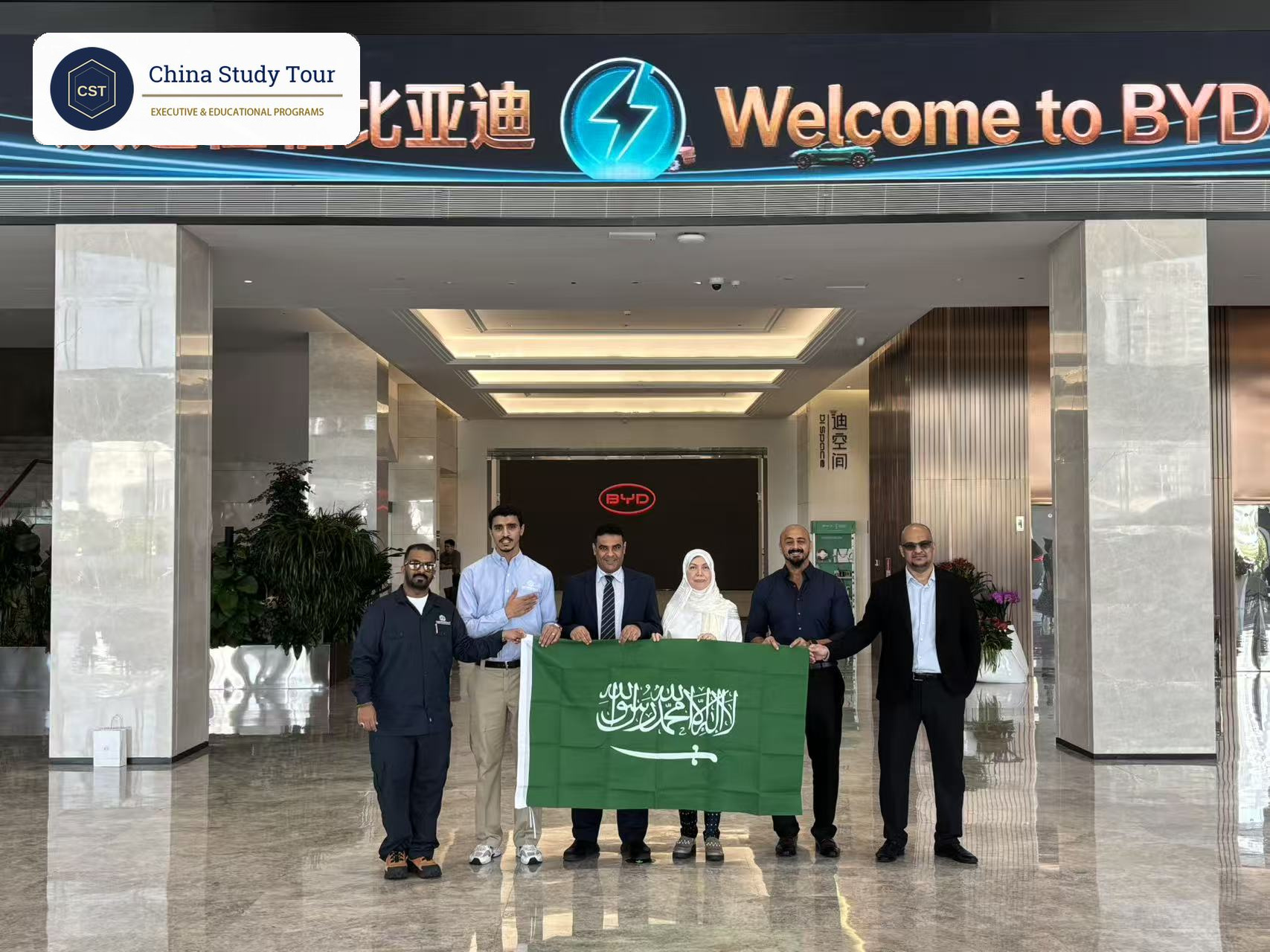
By default, day one of a CEO delegation to China has no company visits, although CST can add a short one if the client asks. The standard day runs from airport pickup to a group check-in, a rest block with nothing scheduled, an opening briefing of 90 to 120 minutes, and a welcome dinner. The briefing is the working part of the day. It turns a broad interest in China into a short list of questions, decides who asks what, and agrees what stays off the table.
Key Takeaways
- Calibration first, visits on request. We recommend no host visit on day one, because the group needs a buffer, rest and a briefing. If the client prefers, we add one short visit, such as a showroom or exhibition hall.
- Three written outputs. The opening briefing should produce a question list, an asking order and a stop list.
- Protect the rest block. Groups lose more from a deleted rest block than from one canceled visit.
- The city changes the day. Beijing, Shanghai and Shenzhen each allow a different amount of day one. Shenzhen allows the least.
- Phone and payment before boarding. Both are slow to fix at midnight in a hotel lobby.
Why Day One Usually Has No Company Visits
Most first-time groups ask for a company visit on day one. They have flown a long way, the calendar is tight, and an empty afternoon looks like waste. Our default advice is to wait until day two. The reasons below explain that advice, and the next section shows how we add a visit when the client still wants one.
Host plans can move late
A host confirms three things: a date, a building and a named person. Even after that, a host can move a slot when a production line stops or a leadership meeting is called. Chinese companies sometimes cancel with little notice, and CST replaces a canceled visit within hours. Still, arrival day is the buffer that absorbs these changes. If the first host visit sits on arrival day, one change pushes everything behind it.
Jet lag costs you the first meeting
China is 6 to 8 hours ahead of most of Europe, depending on the season. It is 12 to 13 hours ahead of the US East Coast and 15 to 16 hours ahead of the West Coast. A tired CEO gets little from a closed-door session with a Chinese founder. Also, hosts form their view of a group early, and first impressions are hard to change later in the week.
A briefing leads to better questions
This is the reason that usually convinces clients. A group without a briefing asks about China in general. A briefed group asks about a specific decision that a specific company made. The second group gets answers worth the airfare. The first group often gets a standard company presentation it could have read online.
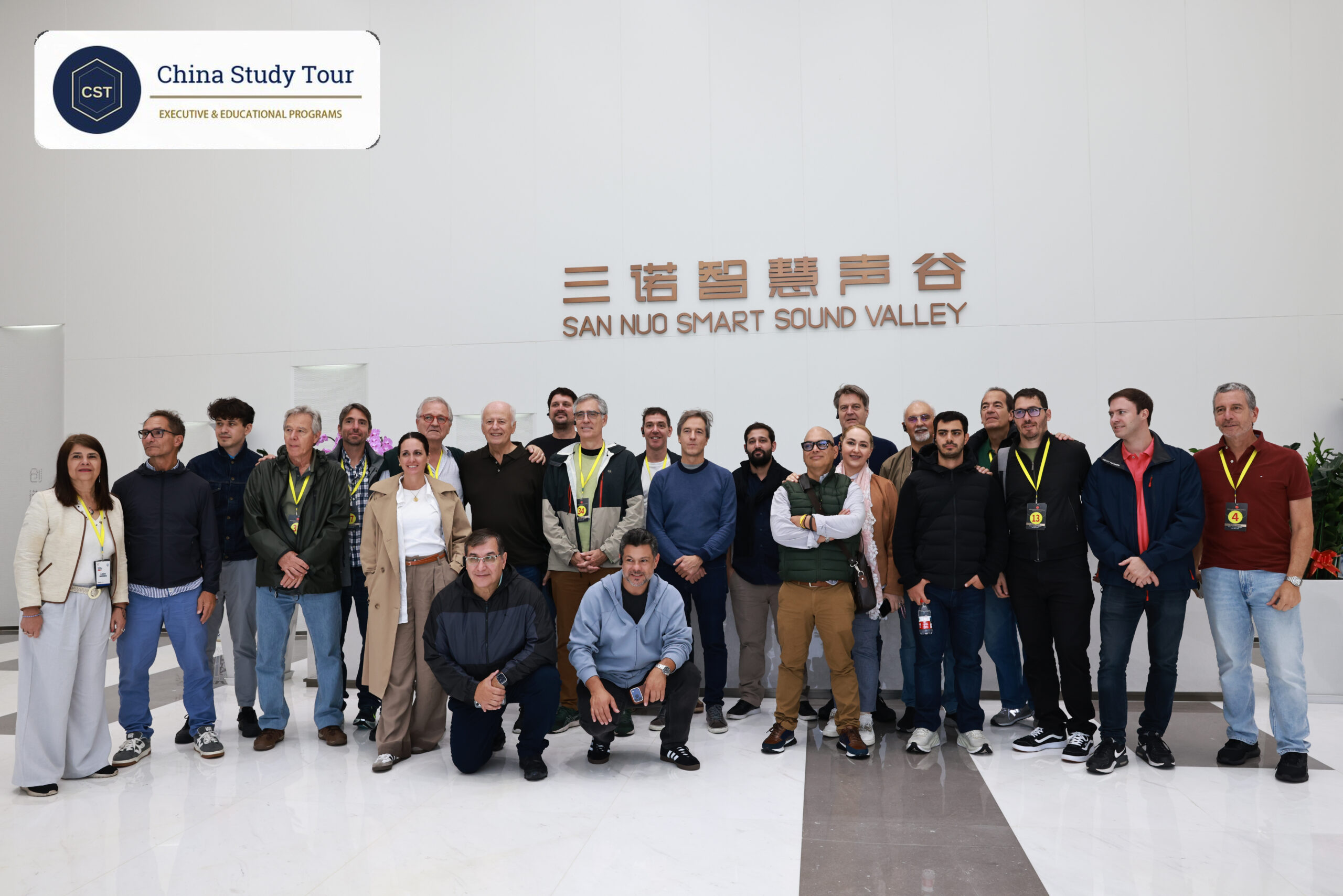
Delegations flying in from Singapore or Hong Kong do not carry the jet lag problem. The buffer argument still applies, so we keep major host sessions for day two. However, the day can hold more: a short company visit, a longer orientation, a market walk or a second briefing block.
Adding a Company Visit on Day One
The plan above is our recommendation, not a fixed rule. Some clients want to see a company on the day they land, and CST arranges that when the client asks. For example, an EV program that starts in Shanghai can open with a carmaker's showroom and a short meeting with an executive. The key is to choose a visit that fits a tired group.
What works well on arrival day
- A light format. A showroom, an exhibition hall or one short meeting works better than a full factory tour.
- A short slot. Plan 60 to 90 minutes, in the late afternoon, after the rest block.
- A short transfer. Choose a host within about 30 minutes of the hotel or the airport.
- A morning landing. The visit fits best when the group lands before noon, or arrives the night before.
- A shorter briefing. Move part of the briefing to the evening, or run the macro section by video before departure.
What we still keep for day two
We advise keeping the most important host session for day two or later. That includes a closed-door meeting with a founder, a full production line, or any visit the trip depends on. If that host moves the slot, the group then still has time to recover. Before you confirm a day one visit, we explain the trade-offs, so the choice stays with you.
The First 12 Hours of a CEO Delegation to China
The times below count from landing, not clock time. They show a well-run first day on a program that starts in one city and stays there for at least two nights.
| From landing | What happens | Who is with you | What often goes wrong |
|---|---|---|---|
| 0:00 to 0:45 | Landing, immigration and baggage. Nobody meets you before passport control. | Nobody yet | Delegates split up to find a cash machine or a SIM card desk. Both can wait. |
| 0:45 to 1:15 | Meet and greet inside the arrivals hall, with a name board. The team takes care of luggage and walks the group to the vehicle. | Program coordinator | A driver waits outside with no name board. It looks unprofessional and wastes 20 minutes. |
| 1:15 to 2:00 | Transfer to the hotel district, usually 40 to 90 minutes depending on city, terminal and traffic. | Coordinator in the vehicle | The coordinator hands out paperwork instead of answering the group's first questions. |
| 2:00 to 2:30 | Group check-in, arranged in advance. Rooms are checked, keys are ready and a meeting room is booked for the week. | Coordinator, hotel contact | Nothing, if the hotel was briefed. Long delays, if it was not. |
| 2:30 to 4:00 | Rest block. Shower, sleep and food in the room. Nothing is scheduled. | Nobody | It is the first thing cut when a program is too full. It should be the last. |
| 4:00 to 6:00 | Opening briefing in the hotel meeting room: wider context, the sector, then the question work. | Program director, sector briefer, interpreter | The briefing is held in a restaurant room or on a moving bus. Nobody can take notes there. |
| 6:30 to 8:30 | Welcome dinner. The hosts arrange seating by seniority, so do not change it at the table. | Host side, coordinator | Delegates check email between courses. Hosts notice. |
| 8:30 to 8:45 | Short standing debrief in the lobby: 15 minutes, three questions, no notes. | Delegation only | The group skips it, although it costs almost nothing. |
The two steps that matter most
Two rows in that table matter most. First, the rest block, because a tired group on day two loses the session it flew furthest for. Second, the lobby debrief. It takes 15 minutes, and it is the only time all week when the group talks without a host in the room.
Who should be with the group
The team on day one is smaller than most groups expect, and each person has one job.
| Role | Present from | Job on day one |
|---|---|---|
| Program director | Airport pickup | Owns the week. Can move a host session, and is the only person who should make promises to you. |
| Sector briefer | The briefing only | Presents the industry section and tells you which of your questions will not get answered. |
| Interpreter | The briefing onward | Sets the words the group uses all week. Sits beside the delegation lead, not at the back of the room. |
| Coordinator | Airport pickup | Vehicles, rooms and timing: the details that go wrong quietly. |
If the person who answers your business questions is also carrying your luggage, no real program team is running your trip. So ask early who decides what happens if a host cancels. Then make sure that person is in the city with you.
What the Opening Briefing Must Produce
A briefing that ends with everyone feeling informed has failed. A briefing that ends with three documents on the table has worked. These are the three.
| Output | Form | Who owns it | When it is used |
|---|---|---|---|
| Question list | Three to five questions per host, each one answerable in under five minutes | Program director drafts, delegation lead approves | Every host session, from day two |
| Asking order | Who opens, who follows, and who stays silent and takes notes | Delegation lead | From the first host meeting on |
| Stop list | Questions not to ask, rooms not to photograph, numbers not to press for | Program director, based on what each host agreed to | Repeated before each visit |
An asking order can sound too formal. Then you watch six delegates answer the same question at once. Or you watch the most junior person use the only time slot a founder had. Decide the order on paper on day one, and you will not need to settle it in front of hosts.
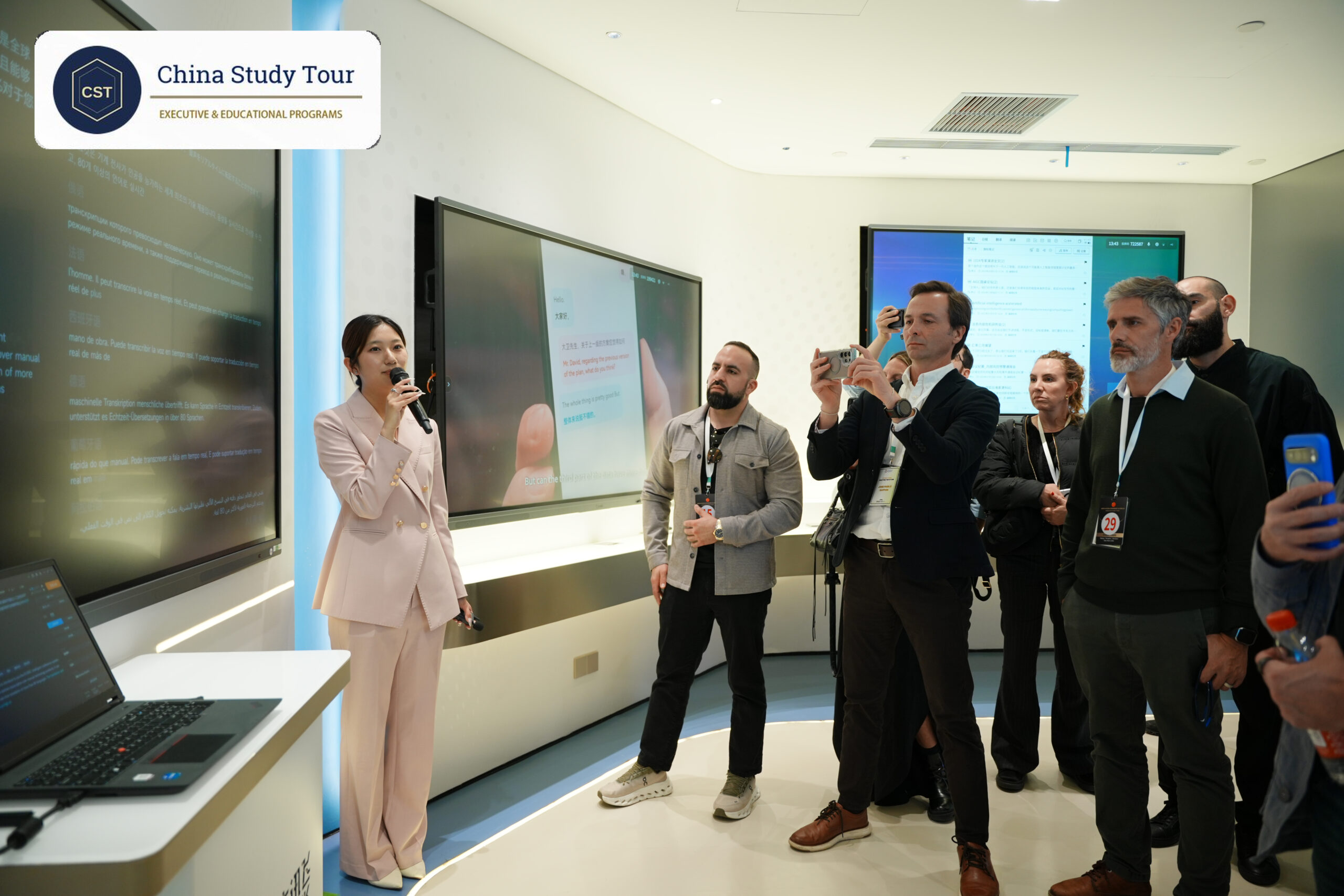
The three parts of a good briefing
A good briefing has a fixed shape. Without it, the session turns into a lecture. Roughly 30 minutes go to policy and the wider economy, so that the group later sees a system rather than a series of separate firms. Then about 40 minutes cover the sector: where your industry stands in China, which numbers matter, and which published figures are disputed.
The last 30 minutes are the working part. Unfortunately, they are also the part that gets cut when a program runs late. In this block, the group writes down the question list while the sector briefer is still in the room. The briefer can then say which questions will not get answered. If you can, record the middle section, because most delegates forget much of it by day three.
Weak questions and strong questions
The difference below is the difference between a standard slide deck and an answer you can act on.
| Weak | Strong |
|---|---|
| How does China innovate so fast? | Which decision in your last product launch would you not repeat, and what did it cost you? |
| What are your margins? | Which cost line changed most when you switched to a locally made controller, and by roughly how much? |
| Can we see the factory? | Which of your lines works to the tightest tolerance, and can we see that one? |
| What happens if tariffs go up? | What did you change in your supplier base in 2025, and what did you decide not to change? |
| How is the Chinese market doing? | In which segment did you lose share last year, and what did the competitor do? |
Cost breakdowns below the part level, named customer lists, anything on a restricted production line, direct questions on politics, and photos without permission. Some of these are host rules, and some are legal limits. Your program director should tell you which is which before you walk in, not after.
Five Things Only the CEO Can Do on Day One
A coordinator can handle everything else on this page. These five tasks belong to the CEO.
- Say the decision out loud. Use one sentence, in the briefing, in front of the whole group: "This trip should let us decide X." Groups that skip this collect impressions all week. Then they spend the next month arguing about what they saw.
- Name the one counterpart you need most. Name a role, or a person if you have one, not just a company. This is the most useful thing you can give your operator. On CST programs, it often decides whether a founder or a business development manager takes the meeting.
- Cut the agenda in half. Do it on day one, while there is still time to move things. The most common failure in executive programs is not a bad session. Instead, it is six good sessions with no time to think between them.
- Set the note rule. Decide who writes, in what format, and where the notes go. For example: one person per session, one page, in their own words, within two hours. Photos of slides do not count.
- Fix the follow-up date early. Put a working debrief in the calendar within ten days of return, with one owner. In our experience, interest from Chinese contacts fades quickly without a fast follow-up.
Tell us the sector, the city and the decision your trip should inform. We will send back a day one plan and an honest view of which hosts are realistic for your dates.
Day One by Arrival City
The city you land in changes what the first day can hold. The transfer times below are typical ranges for a booked vehicle, and traffic can change them a lot.
| City | Airports | Transfer to hotel area | Fits on day one | Does not fit |
|---|---|---|---|---|
| Beijing | Capital, Daxing | 40 to 90 minutes | Policy and economic context, a short walk near the hotel | The Great Wall. It takes half a day, and tired delegates get little from it |
| Shanghai | Pudong, Hongqiao | Pudong 45 to 75 minutes, Hongqiao 30 to 45 minutes | A walk through the financial district, a market briefing | Plans on both sides of the river. Choose one side and stay there |
| Shenzhen | Bao'an | 30 to 50 minutes | An early evening walk through an electronics market, a briefing on the hardware sector | A full factory visit. Most hosts sit in Nanshan, Longgang and Pingshan districts and need a half day. A short visit near the hotel can work on request |
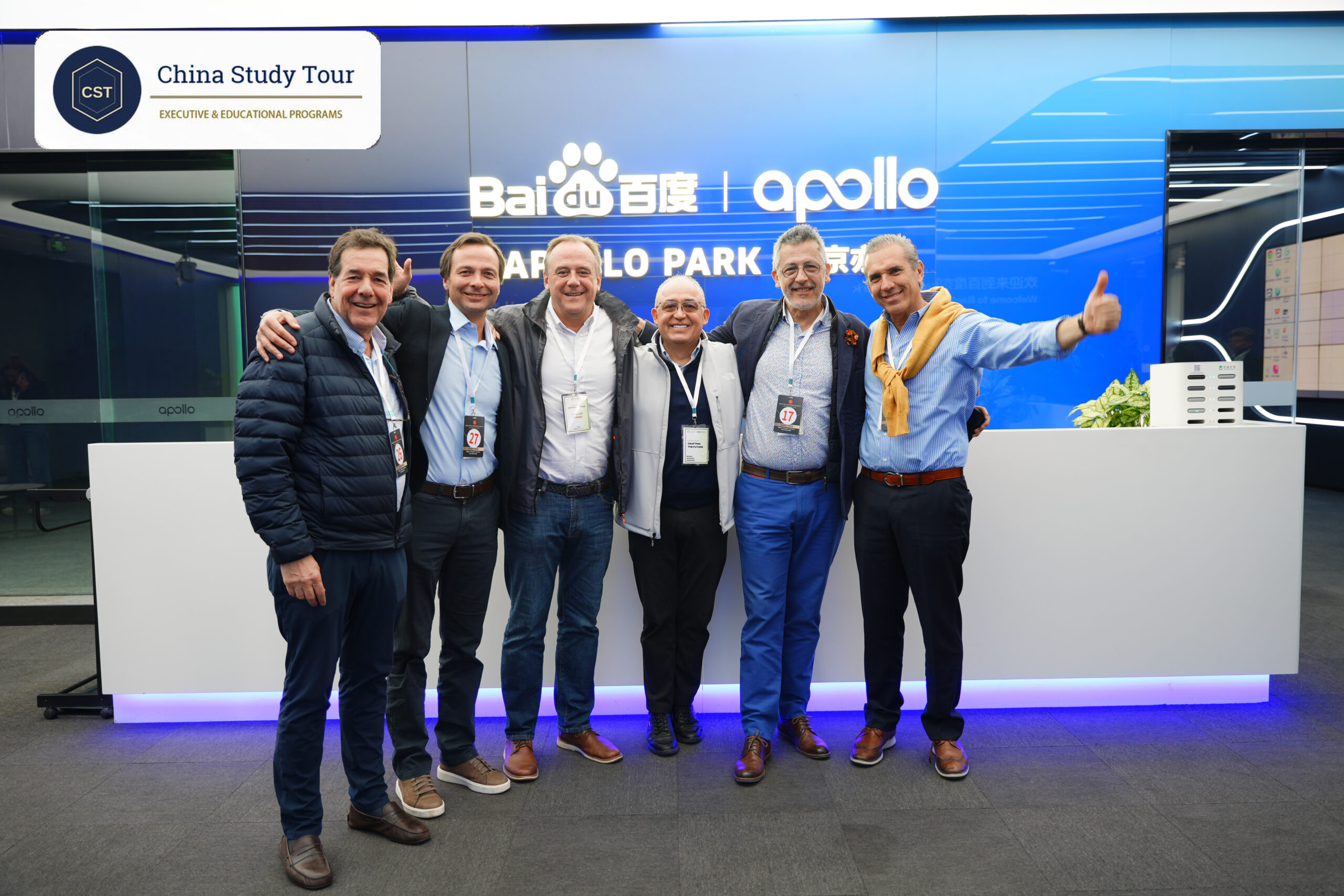
Beijing gives the most day one content of the three cities. That is one reason it often closes a program rather than opening it: policy makes more sense once you have seen the companies it aims at. Shanghai is the usual first stop, for the reason given in our sample 7-day executive itinerary: business context before factory floors. For a city-by-city comparison, see Beijing vs Shenzhen vs Shanghai for executive delegations. If Baidu is on your list, the Baidu company visit guide explains what the host shows.
Phone, Payment, Entry and Names
None of the items below is exciting. However, each one can cost you a morning if it goes wrong, so finish them before you board.
| Item | Before boarding | Why it matters on day one |
|---|---|---|
| Phone and data | An eSIM or a roaming plan from your home carrier. Many Western apps and services do not work on local Chinese connections. | Your coordinator reaches you on WeChat, not email. If WeChat does not load, nobody can reach you after landing. |
| Payment | Alipay and WeChat Pay both accept major international cards. Install, register and verify both before departure. Carry some cash as well. | Small shops expect mobile payment. A delegate who cannot buy a bottle of water at 11 pm becomes everyone's problem. |
| Entry documents | A passport valid beyond your stay, plus the right visa or visa-free entry for your nationality. The arrival card can be filled in online before departure. | Entry is quick when the documents are right and slow when they are not. |
| Delegate name list | Send every name spelled exactly as in the passport, well before departure. | Hosts need the list in advance for gate access. A spelling mismatch at a factory gate can end a visit. |
| Business cards | English on one side and a Chinese version on the other, if you have one. Expect to exchange WeChat QR codes too. | Card exchange is still formal in China. Take a card with both hands and read it. |
Visa and entry rules as of October 2026
Entry rules change, often with little notice. As of October 2026, citizens of more than 40 countries can enter China visa-free for up to 30 days for business or tourism. That scheme currently runs to December 31, 2026. The United States is not on the list, so US delegates still need a visa. China also launched an online arrival card in November 2025. Our guide to visa-free business travel in 2026 and the visa, timing and budget guide track the current rules. We check them again against official sources when each program is confirmed. For dinner seating, gifts and card exchange, see China business etiquette for executives.
Six Signs the Operator Is Ready
You can learn a lot about an operator in the first six hours, before any company visit. Watch for these signs.
| Sign | What it tells you |
|---|---|
| A greeter inside the arrivals hall with your name | The team has handled groups of your size before and knows the airport process. |
| Group check-in with no reception queue | The hotel was briefed days ago on rooms, luggage and a meeting room for the week. |
| A trained interpreter at the briefing, not a guide who speaks English | The team knows that precise wording is part of the product. |
| Before each visit, you hear what you will see and what not to ask | The operator has a working relationship with that host, not just a booking. |
| Someone with authority to make decisions travels with you | If a host moves a slot at 8 am, the person who can fix it is in the same city. |
| A day one visit only if you asked for it, with the trade-offs explained | The operator is protecting the week rather than filling the schedule. |
A warning sign: a full factory tour you did not ask for
The reverse is also worth saying plainly. If an operator puts a full factory tour on the afternoon you land from a long-haul flight, and you did not ask for it, ask why. Often the operator has a list of companies that accept bus groups, and sells the list rather than the conversation. China's leading firms host delegations through partners they have checked over years. That is why which Chinese companies accept corporate visitors depends on tiers and lead time, not on willingness.
China's leading firms usually accept outside groups only through vetted partners with a track record. Cold emails to a company's press or sales team rarely lead to a real host session. China Study Tour (CST) arranges access through relationships built since 2013. In addition, top-tier company approvals usually need 8 to 12 weeks.
When Day One Goes Wrong
Failed first days are rarely dramatic. Instead, they are a series of small changes that each look reasonable, but together cost the week. These are the five we see most often, including on programs that clients ran with other operators before they came to us.
| Failure | How it starts | What it costs |
|---|---|---|
| The rest block becomes an extra briefing | Someone sees an empty afternoon and fills it. | Day two's host session, the one you flew for. Tired delegates ask fewer and weaker questions. |
| No interpreter in the briefing room | The briefer speaks good English, so nobody books one. | By day three, the group uses three different words for the same thing and confuses hosts. |
| The group arrives on two flights | Two arrival times, one coordinator. | The briefing runs twice, or half the group hears it secondhand over dinner. |
| The welcome dinner becomes a work session | Delegates start arguing about the briefing in front of the hosts. | Hosts see internal disagreement they were not meant to see. |
| Everyone talks, nobody writes | The conversation is good, so nobody wants to stop it. | Ten days later, two people remember the same commitment differently, and there is no record. |
Four of these five failures are prevented by decisions made before anyone boards. That is the case for planning early rather than fixing things on the ground.
Day One on a Four-Day Program
A four-day program cannot hold the full version of day one. Here is what to keep and what to drop.
Keep the rest block. Cut it to 90 minutes if you must, but do not remove it, or the group meets a founder while exhausted. Keep the welcome dinner too, because that is where the host side decides what kind of group you are. Shorten the briefing to 60 to 75 minutes by cutting the economic context, not the question work. Many operators do the opposite, so ask for this.
Drop the orientation walk and any second session. On a four-day program in one city, we prefer to run the briefing by video call the evening before departure. Then arrival day is a half day, and host visits start on the morning of day two. If your group flies in from Singapore or Hong Kong on the same morning, this option is not available, and you should consider adding a day.
Group size changes day one as well. Our monthly fixed-date group tours take 20 to 30 people, so the briefing covers what a mixed group has in common, and the question list is general. A custom delegation usually has 8 to 18 people. In that case, the sector section is written for your industry, and the question list is yours. If your trip serves one narrow business question, choose the custom format.
How It Differs From a China Business Trip
Executives who have made supplier visits to China sometimes expect a familiar first day. However, a CEO study tour works differently, and the reason is structural.
| Dimension | China business trip | CEO study tour |
|---|---|---|
| Purpose | A deal you have already defined: a price, a contract, a problem | A question you have not answered yet |
| Who sets the agenda | Your counterpart, usually the seller | You, with an independent operator |
| Day one | Straight into meetings | Briefing, calibration and dinner |
| Who asks the questions | The other side asks you | You ask them |
| Output | A quote, an order, a fix | Written conclusions, contacts and the next three questions |
| Who is in the room | Your colleagues and their sales team | Peers from other companies, or your own leadership team, with a host who is not selling to you |
In practice, a China business trip rewards preparation you do alone, while a delegation rewards preparation you do as a group. That is why the briefing sits on day one rather than arriving as a reading pack three weeks earlier. We compare the two formats in more detail in China study tour vs business trip. The full planning sequence is in how to plan a China business delegation.
Day One Planning Checklist
Use this list when you book a CEO delegation to China. Most items take minutes, but each one protects the first day.
| When | Task | Owner |
|---|---|---|
| 8 to 12 weeks out | Write the one-sentence decision and name the counterpart you need most | CEO |
| 4 to 6 weeks out | Send the delegate name list, spelled exactly as in each passport | Delegation lead |
| 2 weeks out | Confirm visa or visa-free entry for every nationality in the group | Each delegate |
| 1 week out | Set up the eSIM, WeChat, Alipay and WeChat Pay, and test them | Each delegate |
| Before boarding | File the online arrival card and save the coordinator's WeChat contact | Each delegate |
| Day one | Leave the briefing with a question list, an asking order and a stop list | Program director and delegation lead |
Languages, participants and related guides
Languages: English, Chinese, Spanish, Portuguese, and Japanese. All guides are bilingual, and additional language support is available upon request.
Who joins these programs: CEOs and leadership teams, industry associations, business schools and MBA groups, investors, and government trade missions. You can see the full format on our China executive study tour page.
Related reading: a China executive tour, day by day, the 7-day CEO study tour itinerary, logistics for executive delegations in China, and the corporate visit FAQ on lead times, group size and access.
The program team at China Study Tour (CST) wrote this guide. CST has run corporate visit and study tour programs since 2013, with offices in Beijing, Shanghai and Shenzhen. The day one pattern, timings and failure cases come from CST programs for business delegations. Transfer times are typical ranges and change with terminal, route and traffic. Company access is confirmed case by case. Entry rules were checked against official sources as of October 2026; check them again for your own passport before you book.
Frequently Asked Questions
What happens on day one of a CEO delegation to China?
Arrival, a meet and greet inside the arrivals hall, the hotel transfer, a group check-in, a rest block with nothing scheduled, an opening briefing of 90 to 120 minutes, and a welcome dinner. No company visit is planned unless the client asks for one. Day one sets the questions the delegation will ask for the rest of the week.
Can we visit a company on the first day?
Yes, if you want one. CST can add a short visit on day one, such as a showroom or an exhibition hall within about 30 minutes of the hotel. By default we advise against it: host plans can move late, long-haul delegates are tired, and a briefing first leads to better questions.
How long is the opening briefing and who runs it?
It takes 90 to 120 minutes in a hotel meeting room, not a restaurant or a bus. The program director leads it, with a sector briefer and an interpreter. The interpreter attends even when every delegate speaks English, because the briefing sets the words the group uses all week. It produces a question list, an asking order and a stop list.
Should the CEO attend the welcome dinner on arrival night?
Yes. At the dinner, hosts and local experts form their first view of the delegation, and they judge its seniority by who attends. Hosts will accept one absence for rest. However, missing the dinner costs you the informal side of the relationship, and the formal sessions later in the week depend on it.
What should a CEO prepare before boarding the plane?
Prepare a one-sentence statement of the decision the trip should inform, and the one counterpart the group most needs to meet. Also send a name list spelled as in each passport, and check visa or visa-free entry. Finally, set up mobile data, WeChat and mobile payment, because all three are harder to fix at midnight.
Is it a problem to arrive on a weekend?
No, and flights are often cheaper, but it changes what day one can hold. Company hosts rarely run visits at weekends, and some briefing partners are not available. A Sunday arrival with a Monday briefing works well and is a common pattern. A Saturday arrival usually means one extra day with no fixed program.
Can day one be shorter if we only have four days?
Partly. Keep a 90-minute rest block and keep the welcome dinner. Shorten the briefing to 60 to 75 minutes by cutting the economic context rather than the question work, and drop the orientation walk. On a four-day program in one city, we usually run the briefing by video the evening before and start host visits on day two.
How is a CEO delegation different from a normal China business trip?
A China business trip serves a deal you have already defined, such as a supplier, a contract or a complaint. A delegation serves a question you have not answered yet. Nobody is selling to you, you choose who is in the room, and the result is a set of written conclusions rather than an order.
Send us the sector, the cities and the decision the trip should inform. You will receive an itemized proposal, with a day one plan, within 24 hours.
Email: info@chinastudytour.ai·WhatsApp / WeChat: +86 131 6180 6706