China Study Tour (CST) vs. Business Trip: What's the Difference?
The China study tour vs business trip question usually comes up before a team's first visit to China. Clients often ask China Study Tour (CST) why they should join a structured program instead of booking their own meetings. Both formats work, but they solve different problems. This guide compares access, results, cost and fit.
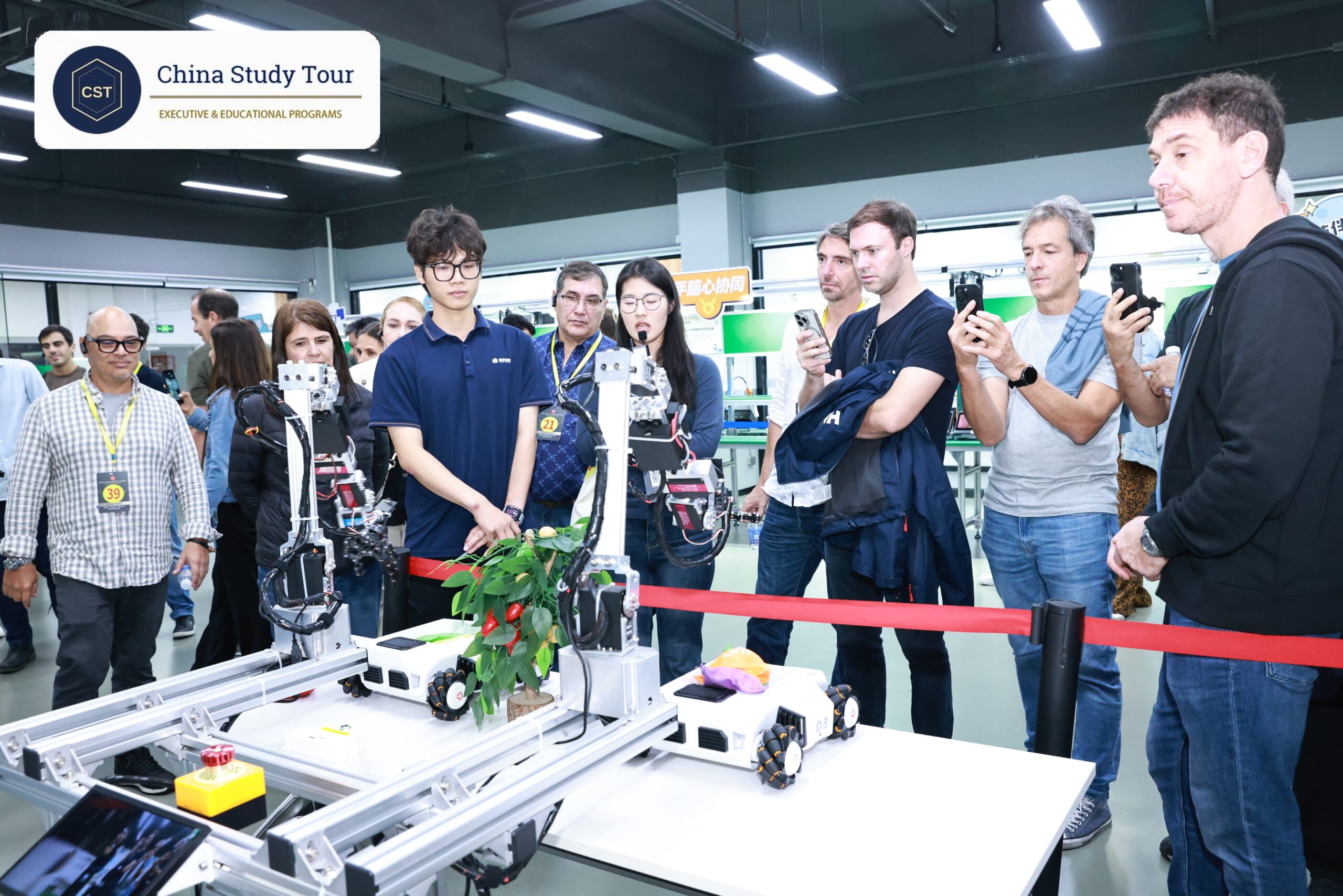
A China study tour is a structured group program with a clear outcome. Company visits are confirmed before you fly, and the group returns with a written briefing report. A business trip is built around your own meetings and existing relationships. Choose a study tour for market insight; choose a business trip to close, sign or audit.
Key Takeaways
- Access is the core difference. A study tour confirms company visits through the operator's relationships. A business trip depends on your own contacts.
- The outcomes are different in kind. A study tour ends with a briefing report; a business trip ends with your own notes and agreements.
- Cost per confirmed meeting favors the tour. Most 7-day programs cost USD 2,500 to 8,000 per person and include a custom-designed visit route.
- Plan 8 to 12 weeks ahead. Flagship hosts such as BYD approve every visitor in advance.
Definitions: Study Tour vs Business Trip
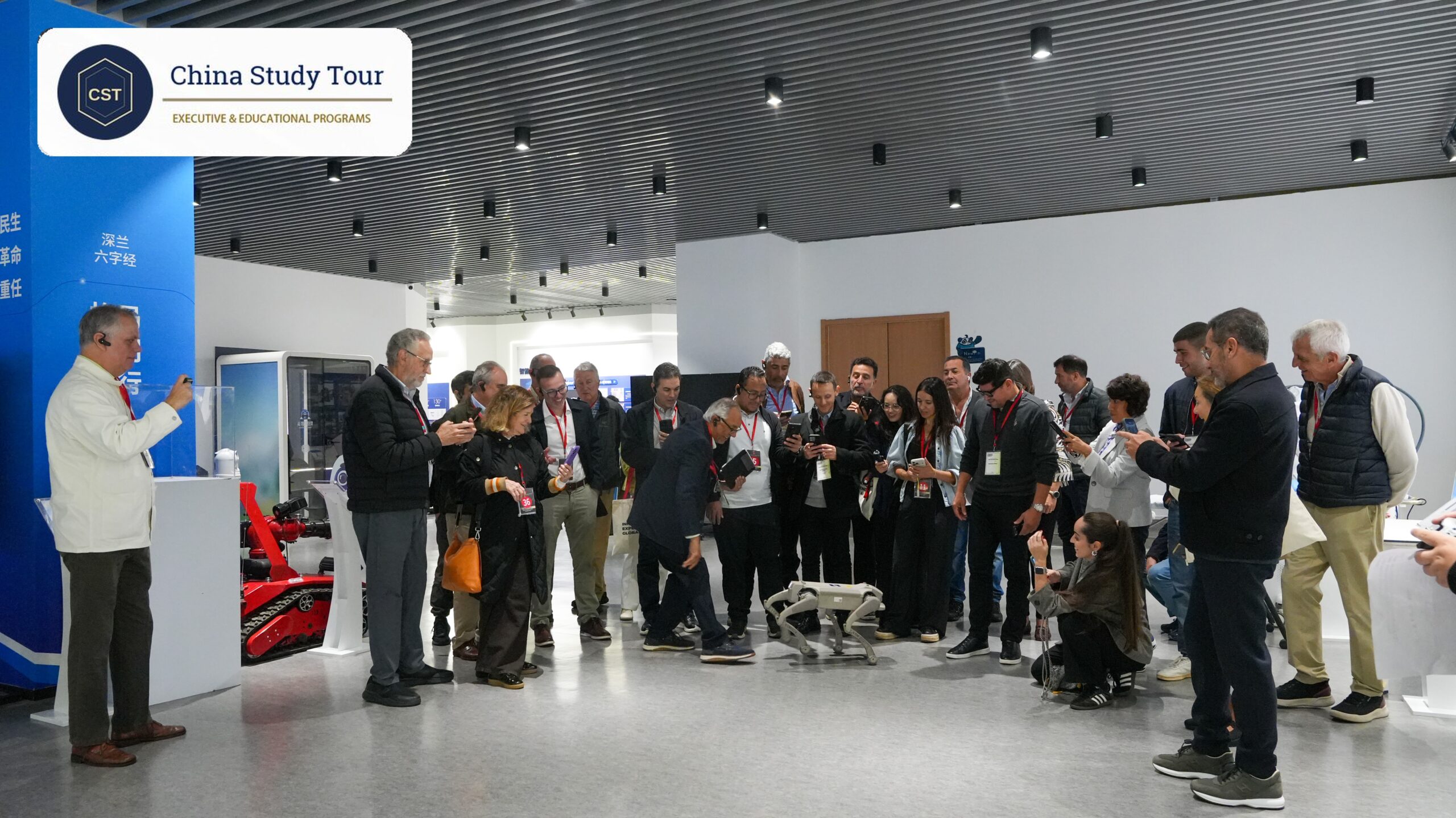
A China study tour is a planned group program of four to ten days across two or three cities. It follows an industry theme, such as AI, electric vehicles, smart manufacturing or healthcare. The operator designs the route, confirms each visit and provides interpreters and logistics. See our China study tour programs for the formats.
A business trip is the format most executives already know. You, or a small team, travel for your own agenda: sales meetings, supplier talks, a contract signing or a trade fair such as the Canton Fair. You control the schedule yourself.
In short, a study tour builds understanding, while a business trip completes transactions.
Company Access: Structured Programs vs. Cold Outreach
Access is where an organized study tour vs independent trip in China differs most. Without a network, arranging your own visits is slow. Requests to large companies go through internal approvals that can take weeks, and the person who meets you may be a sales representative. Language is a second barrier, especially in technical discussions.
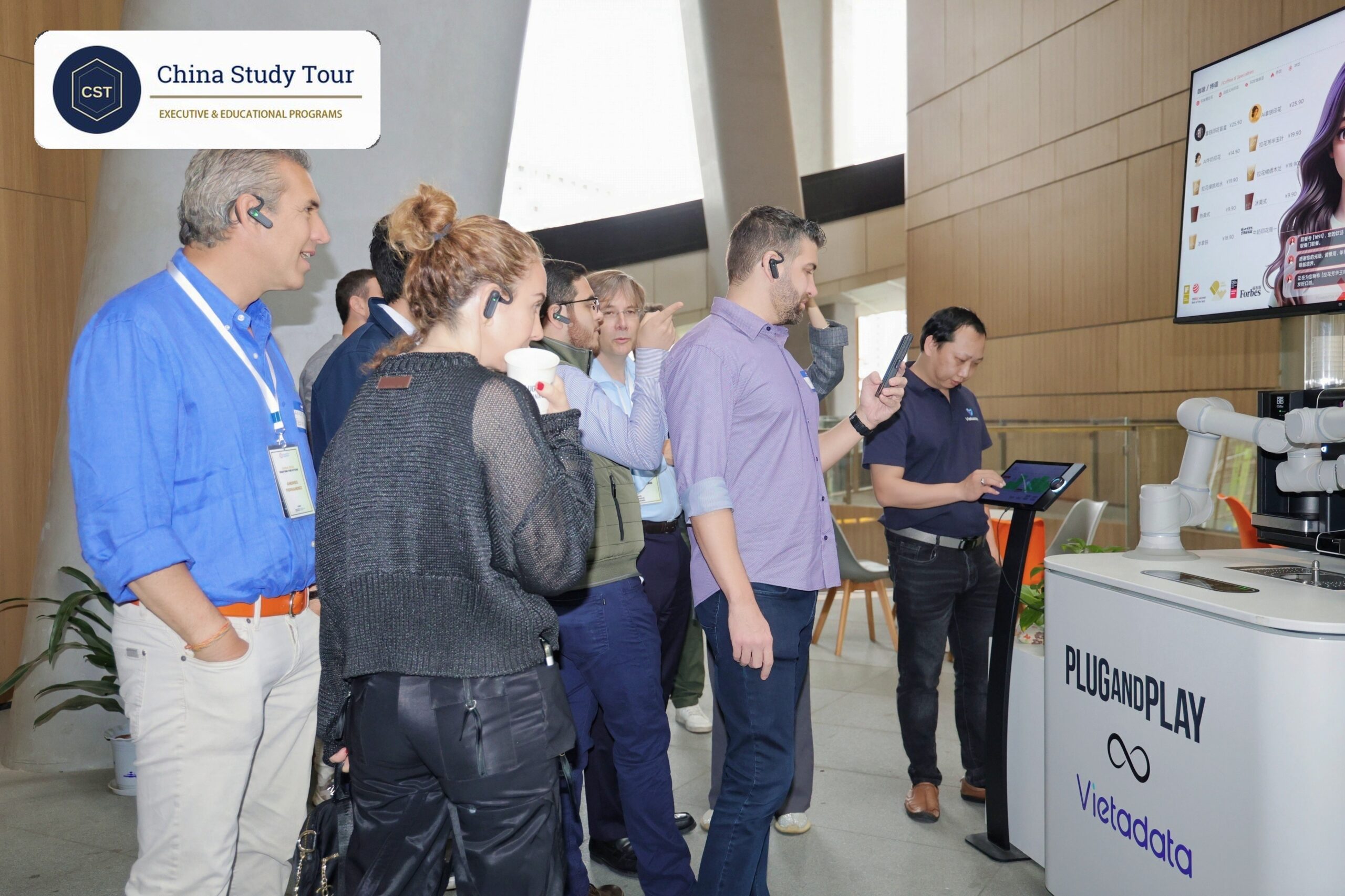
At CST, company relationships are the core of the business, built over 13 years and more than 300 programs. Appointments are usually confirmed three to four weeks before departure. If a host changes its schedule, we look for a company of the same type for the group to visit instead. Industry-prepared interpreters support every presentation, and our teams in Beijing, Shanghai and Shenzhen coordinate on the ground.
Two honest limits
First, flagship hosts take longer. BYD approves every participant in advance, so we plan 30 to 45 days for that visit alone. Second, not every site is open. At BYD's Shenzhen headquarters, groups see the exhibition hall and museum, but the production workshops are closed. When a group needs a production line, we add a factory visit elsewhere, such as a GAC Group plant in Guangzhou.
Large Chinese companies rarely accept visit requests from strangers. Most visits pass through vetted partners they already trust, and every visitor's name must match the passport submitted in advance. Huawei uses a similarly strict process, explained in our guide to Huawei company visits.
Outcomes: What You Get Back
A business trip ends with what you carry home: signed agreements and your own notes. If the goal was a deal, the signed contract is the outcome.
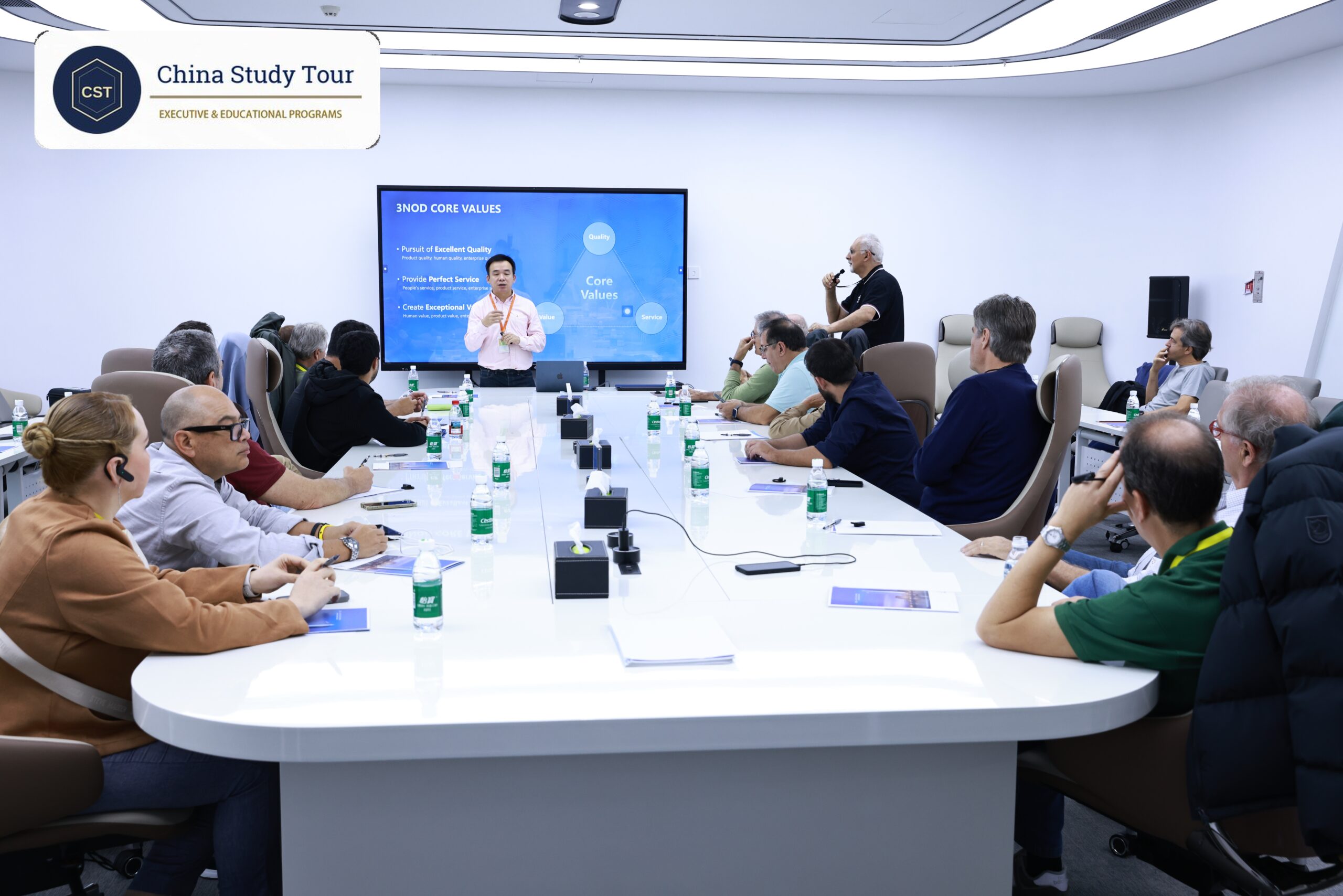
A study tour ends differently. On a CST program, each group follows a visit route designed around its industry and goals, with a short debrief after each visit. Within five business days of return, every participant receives a strategic briefing report with visit summaries, key data, group insights and follow-up actions, ready for a board presentation.
The table below shows the China study tour vs business trip comparison side by side.
| Feature | Study Tour | Business Trip |
|---|---|---|
| Main purpose | Strategic learning, benchmarking and market insight | Your own meetings, deals and negotiations |
| Company access | Arranged through operator relationships, confirmed 3 to 4 weeks ahead | Your own contacts, or cold outreach with uncertain results |
| Who you meet | Company teams briefed on your group's industry theme | Whoever your counterpart assigns, often sales staff |
| Daily rhythm | 2 to 3 company visits plus expert briefings and debriefs | Whatever you schedule yourself |
| Group format | Scheduled group program or private custom group | One person or a small team |
| Written result | Strategic briefing report within 5 business days of return | Your own notes |
| Planning lead time | 8 to 12 weeks for custom groups | Whenever your contacts can meet |
| If a host cancels | The operator looks for a company of the same type | Look for a similar company through your own network |
On language, CST supports English, Chinese, Spanish, Portuguese, and Japanese. All guides are bilingual, and additional language support is available upon request.
Cost Comparison
A solo business trip looks cheaper at first. However, a week of flights and hotels includes no confirmed company access unless you already have the relationships.
Study tour pricing is per person and covers the program in China: local transport, hotels, meals, bilingual guides, company-visit arrangements and the post-tour report. International flights are not included. As of October 2026, most 7-day programs cost between USD 2,500 and 8,000 per person, depending on group size, cities and hotel level. Every program is quoted individually.
Who Each Option Suits
A study tour fits groups whose goal is understanding: leadership teams benchmarking competitors, boards, MBA and EMBA classes, industry associations, government trade missions and first-time visitors. A business trip fits execution: closing a deal, auditing a known supplier or attending one trade fair. Many clients combine the two, joining a study tour first and returning later on focused business trips.
When to Choose a Study Tour Over a Business Trip
To settle the China study tour vs business trip choice, check how many of these are true:
- You have few or no contacts at the companies you care about.
- Your group has more than four people.
- You need a view across several companies, not one partner's.
- The results must convince a board.
- You can plan 8 to 12 weeks ahead.
If most are true, choose a study tour. If you already know whom to see and the agenda is contractual, choose a business trip. Still unsure? Read how a CST program works, from first brief to final report, or send your goal through our contact form for a quote within 24 hours.
Written by the CST operations team. Access rules, lead times and report timelines come from CST's program records, including a BYD headquarters visit in September 2026. Prices are a snapshot as of October 2026.
FAQ: China Study Tour (CST) vs Business Trip
What is the difference between a China study tour and a business trip?
A China study tour is a structured group program built around an industry theme. It includes pre-arranged company visits, expert briefings and a written report. A business trip is built around your own meetings with your existing contacts. In short, the study tour produces insight, while the business trip completes transactions.
What makes a China study tour different from an independent trip?
The difference is pre-arranged access, professional interpretation, expert context and a post-trip report. An independent traveler controls the schedule but must arrange every meeting alone. By contrast, a study tour follows a custom-designed route of confirmed company visits, each with a briefed host and a group debrief afterward.
Can a study tour arrange China company visits that a solo trip cannot?
Often, yes. Hosts such as BYD, Huawei, DJI and Baidu approve visitors through internal processes that a cold email rarely starts. An operator with long-standing relationships can submit the application, confirm the visit and, if a host cancels, look for a company of the same type. However, some areas stay closed to all visitors, such as the production workshops at BYD's Shenzhen headquarters.
What outcomes does a China study tour deliver compared with a solo trip?
A study tour ends with a strategic briefing report within five business days of return. The report includes visit summaries, key data points, shared group insights, recommended follow-up actions and a curated contact list, ready for a board presentation. A solo trip ends with your own notes and whatever your hosts chose to share.
When should I choose a study tour over a business trip?
Choose a study tour when you have few contacts at your target companies, your group has more than four people, you need a view across several companies, or the findings must convince a board. Choose a business trip when the relationships already exist and the agenda is contractual or operational.
Tell us your goal, industry and group size, and you will receive a custom quote within 24 hours.
See How It WorksGet a Custom Proposal in 24 Hours
Email: info@chinastudytour.ai·WhatsApp / WeChat: +86 131 6180 6706