
BYD Headquarters Tour: What a Saudi Delegation Learned in Shenzhen
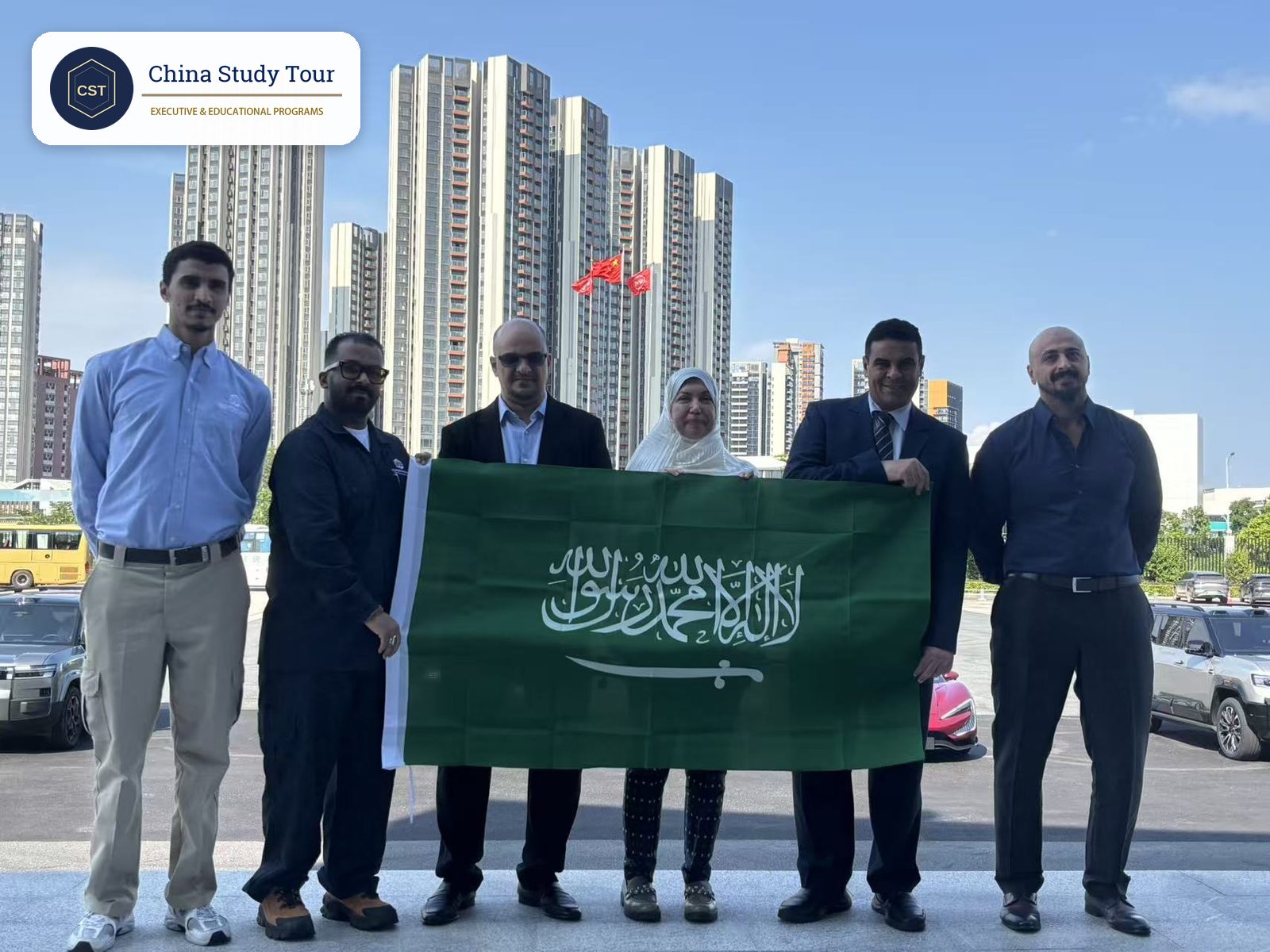
In September 2026, we hosted a six-person delegation from Saudi Arabia on a BYD headquarters tour in Shenzhen. During the visit, they watched a live battery safety test and stepped into a charging room kept at minus 30°C. They also learned how a company that started out making phone batteries sold 4.6 million new energy vehicles in 2025. The one thing they did not see was a production line, and we explain why below.
This is a stop-by-stop account of the day, with our own photos. If you are planning a similar visit, the checklist near the end will help you prepare.
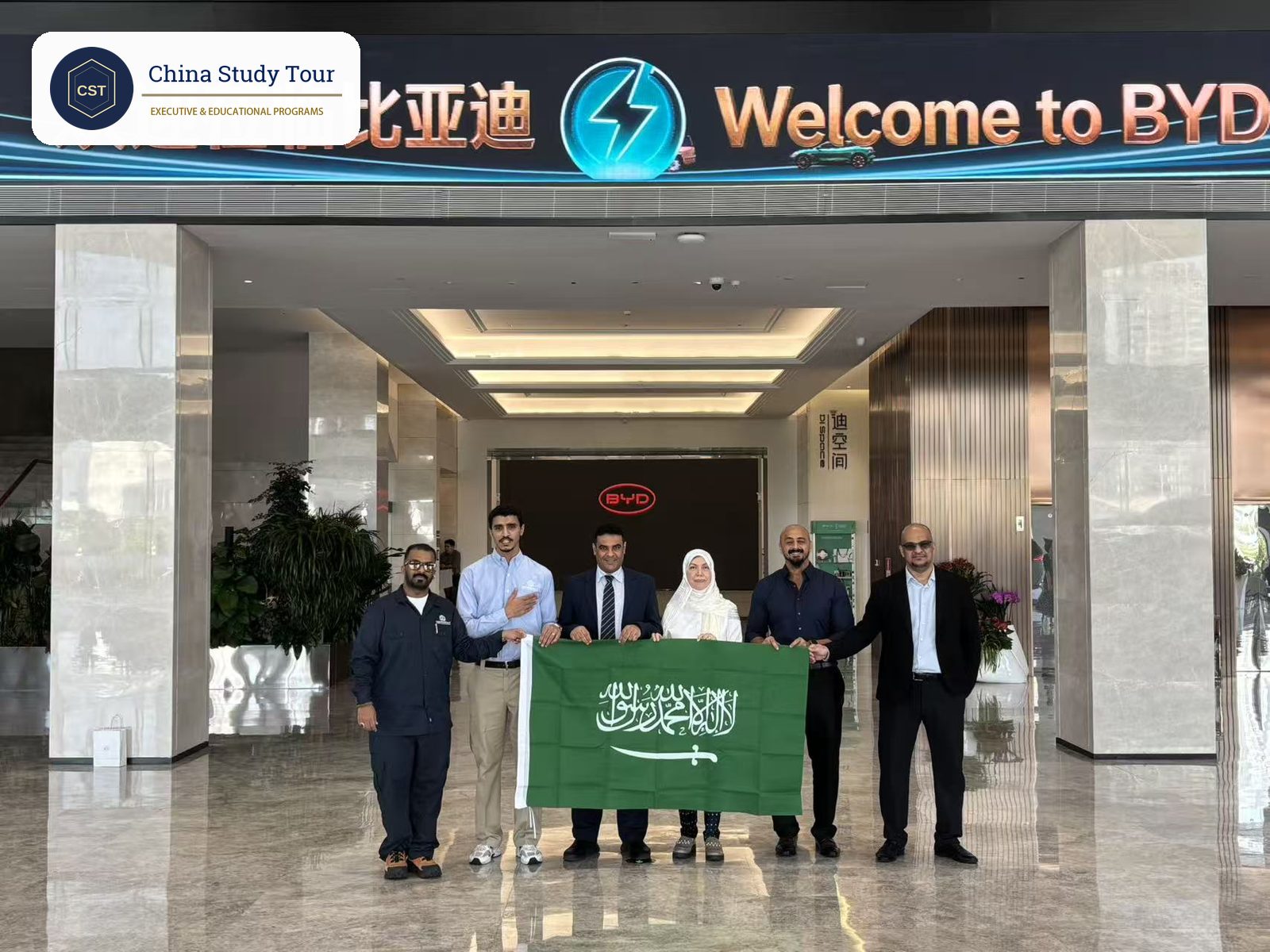
As of September 2026, a BYD headquarters tour in Shenzhen includes two sites: the technology exhibition hall (about 2 hours) and the company museum (about 1 hour). The two sites are about 20 minutes apart by car. The production workshops are not open to visitors. BYD must approve your group in advance, and security checks every name again at the gate.
Key takeaways
- Two sites, no factory. Only the exhibition hall and the museum are open to visitors right now. Plan for about three hours on site, plus the drive between them.
- Approval comes first. BYD approves every visitor before the day, and security checks each person again at the gate. Names must match passports exactly.
- Language is not a barrier. BYD provides professional English-speaking guides. In the busier halls, our group also used wireless earpieces.
- Two live demonstrations. The highlights are a nail penetration test on two types of battery and a fast-charging test room kept at minus 30°C.
- Want to see a real production line? We can add a working car factory to your program. For this group, we arranged a visit to a GAC Group plant.
Arrival and the security check
BYD's global headquarters is in Pingshan District, Shenzhen. At its center stands the Hexagonal Building, home to the company's leadership and its global research and development (R&D) center. The campus also receives many visitors every day. On the day of our visit, for example, a large student group was touring the halls at the same time as us. This is one reason why BYD controls entry so carefully.
BYD has to approve every visit in advance, so walk-in tours are not possible. When you arrive at the gate, your group submits its details again and waits while security checks each person. Only then can the group enter. Our check took just a few minutes because every document matched the approved list. However, a misspelled name or a last-minute change of participant can delay the whole group. That is why we confirm the final list early.
Inside, a BYD guide met us and led the full route in clear, fluent English. Because the halls can get noisy, the group wore wireless earpieces and could hear every explanation.
The opening film and BYD's key figures
The tour begins with a short documentary on a very large screen. It covers solar power, energy storage, electric trucks and BYD's global business. The message is clear: BYD sees itself as an energy and technology company, not only a carmaker.
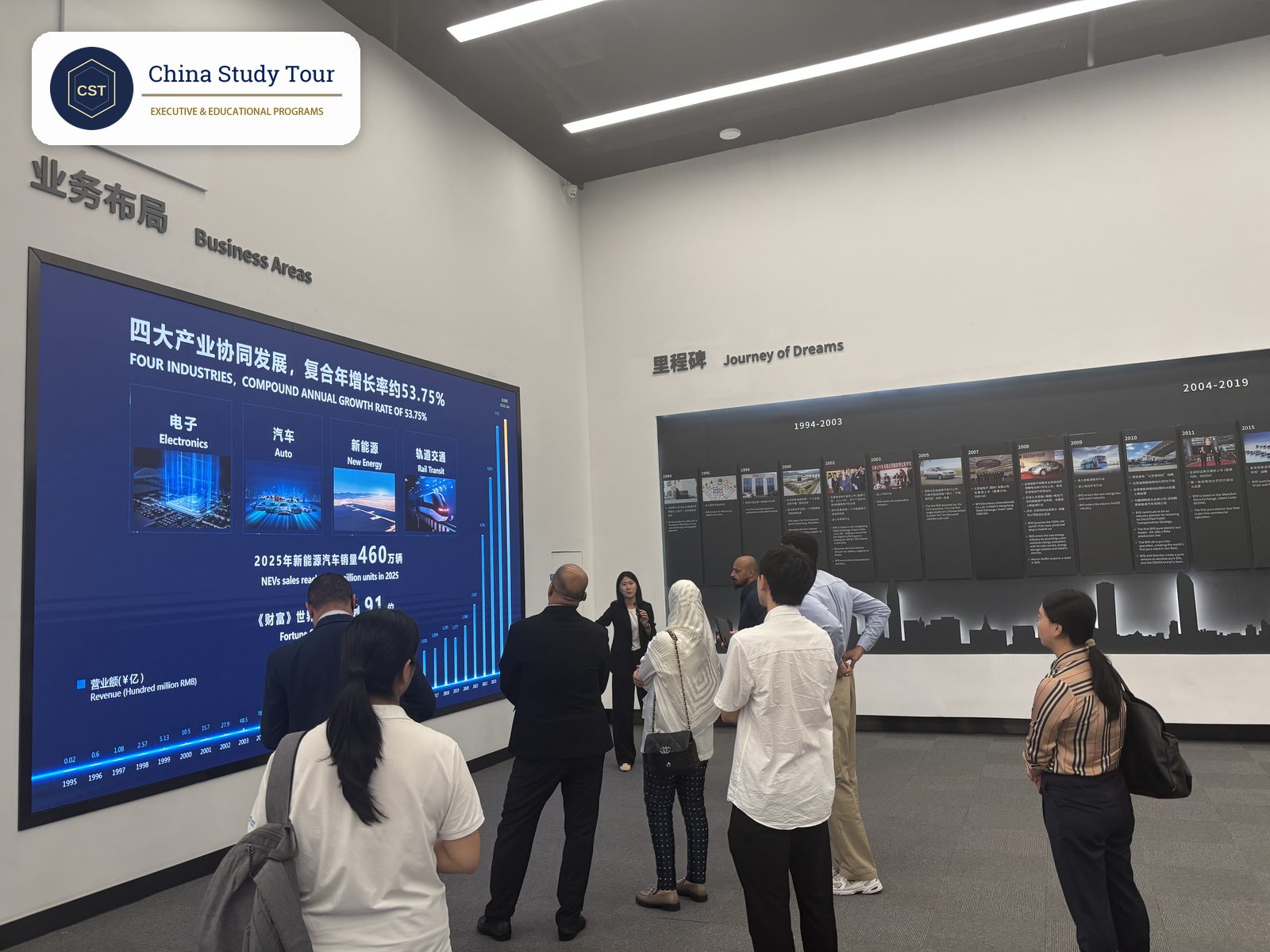
Next comes the Business Areas screen, where BYD presents four industries that grow together: electronics, automobiles, new energy and rail transit. According to the screen, the group's compound annual growth rate is 53.75%. The same screen lists 4.6 million new energy vehicles sold in 2025 and revenue of RMB 804 billion (about US$116.1 billion). It also shows BYD at number 91 on the Fortune Global 500 list.
Our guide also shared three figures that the group found especially useful:
| Figure shown during the visit | Number |
|---|---|
| Countries and regions where BYD sells | 121 |
| Total new energy vehicles sold worldwide | 17,940,850 |
| New energy passenger cars exported | 3,363,720 |
BYD updates these figures often, so please treat them as a snapshot from September 2026.
Journey of Dreams: from batteries to cars
Next to the figures is a long timeline wall called Journey of Dreams. Our guide then explained it year by year. For many in the group, this was the most useful part of the visit, because it shows how BYD became the company it is today.
The timeline starts on November 18, 1994, when BYD began in Shenzhen as a maker of rechargeable batteries. By 2000, it was the first Chinese company to supply lithium-ion batteries to Motorola. Nokia became a customer in 2002, the same year BYD listed on the Hong Kong Stock Exchange. During these early years, BYD developed its own battery materials and production methods in a market that foreign companies had long led.
In 2003, BYD made a surprising move. It bought Xi'an Qinchuan Automobile and entered the car industry. At the time, many people in the industry doubted that a battery company could build cars. Even so, BYD launched the F3 sedan in 2005, and it sold well thanks to low costs and parts made in-house.
Key milestones after 2005
From there, the timeline shows a series of firsts:
- 2008: The F3DM, the world's first mass-produced plug-in hybrid car. In the same year, Warren Buffett's Berkshire Hathaway group invested in BYD.
- 2010: The K9 electric bus, and the e6, which formed the world's first all-electric taxi fleet. BYD and Daimler also created the Denza brand.
- 2011: A second stock listing, this time on the Shenzhen Stock Exchange.
- 2022: BYD stopped making cars powered only by a combustion engine. Since then, it has built only electric and plug-in hybrid vehicles, the first major carmaker to do so.
The guide's main point was this: BYD learned materials science by making phone batteries long before it built its first car, and that knowledge is still its biggest advantage. Nearby, a map of BYD's industrial parks around the world and a wall of patent certificates support the same idea. The company motto on the wall reads: technology is king, innovation is the foundation.
The live Blade Battery nail test
For most of the group, this was the highlight of the day.
In the Nail Penetration Lab, two test machines stand behind a glass wall. The machine on the left holds a BYD Blade Battery. On the right is an NCM battery. NCM stands for nickel, cobalt and manganese, a battery chemistry that many carmakers still use. In the test, a steel needle 5 mm wide pushes into each battery at 25 mm per second.
Within seconds, the NCM battery caught fire. The Blade Battery, however, showed no change. Its temperature stayed at around 30°C to 35°C, with no smoke and no flames. We had seen videos of this test before, but watching it in person was very different. The room went silent for a moment, and then everyone started filming.
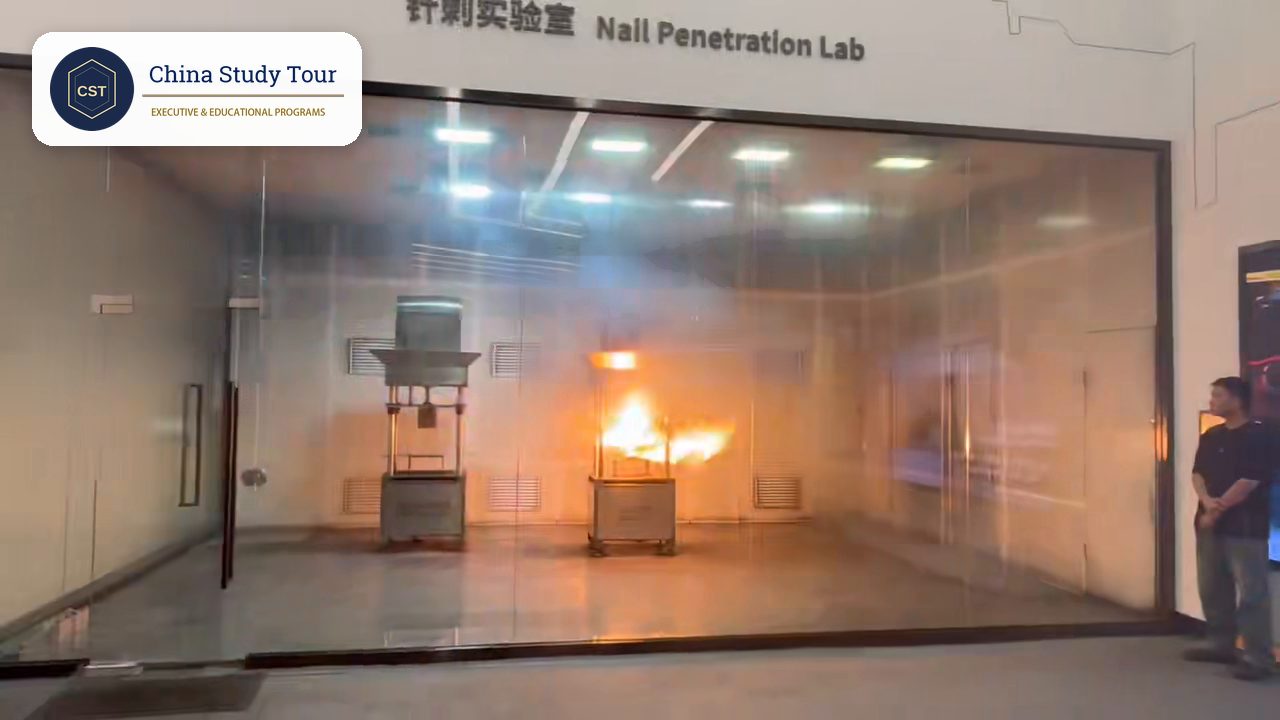
Screens next to the lab explain why this matters. Under China's new national standard, power batteries must not catch fire or explode during safety tests. BYD goes further with its second-generation Blade Battery. It carries out the nail test after 500 fast-charging cycles and describes this as an industry first.
Why the Blade Battery stays safe
There are two main reasons. The first is the chemistry. The Blade Battery uses lithium iron phosphate (LFP), which releases heat slowly and does not release oxygen when it breaks down. As a result, a fire has much less fuel. The second reason is the design. The cells are long and thin, like blades, and fit straight into the battery pack. This removes many of the usual parts, so more space inside the pack can store energy.
BYD's Cell-to-Body (CTB) design takes this one step further, because the battery pack also becomes part of the car's body structure. This also makes the car stiffer and lighter, simplifies production and increases driving range. For more technical detail, see BYD's official Blade Battery page.
Minus 30°C: fast charging in extreme cold
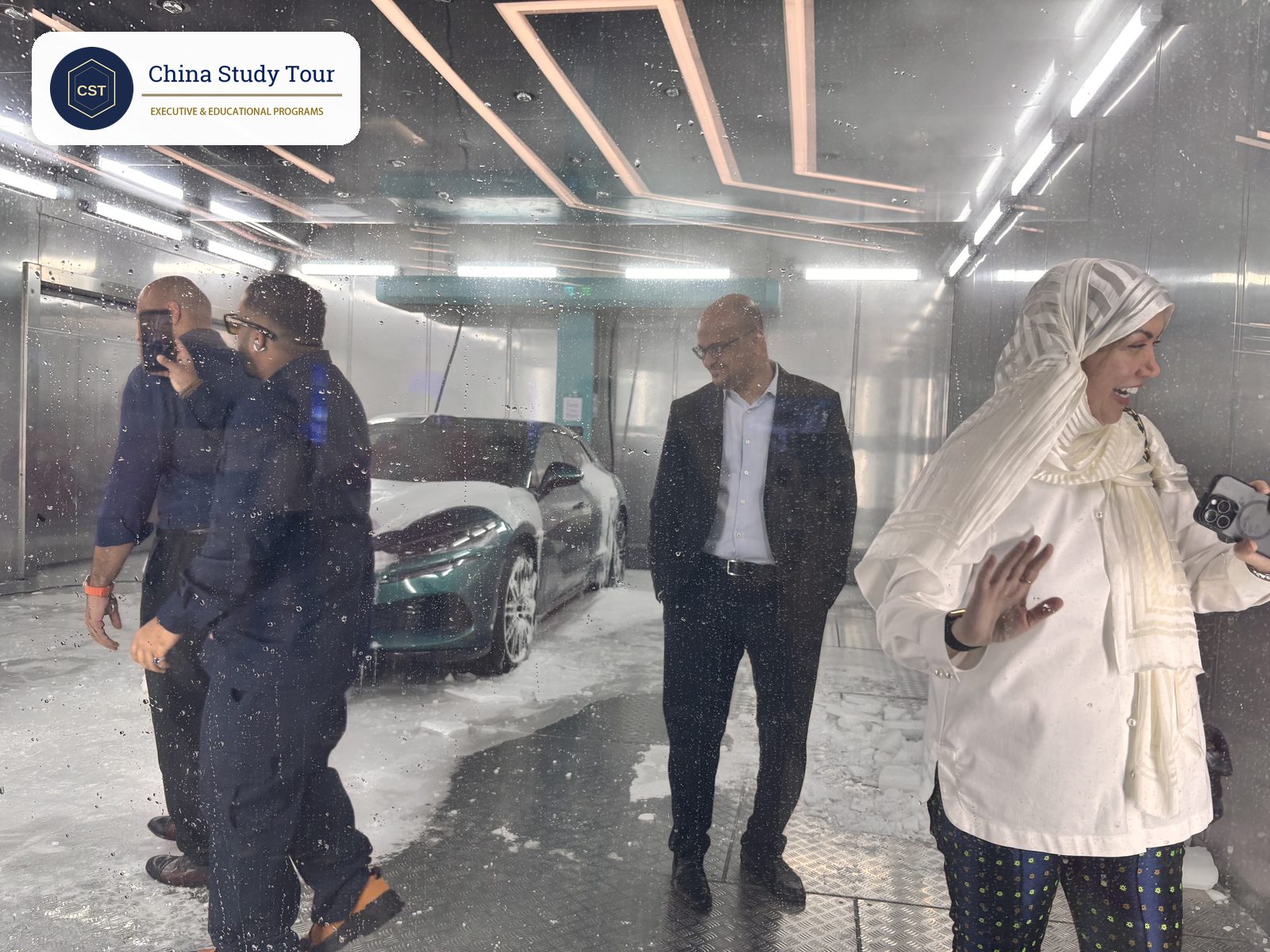
In the next room, a sports sedan sits inside a steel test chamber. Frost covers the car, and ice hangs from the front bumper. When we arrived, the display outside showed -30.2°C.
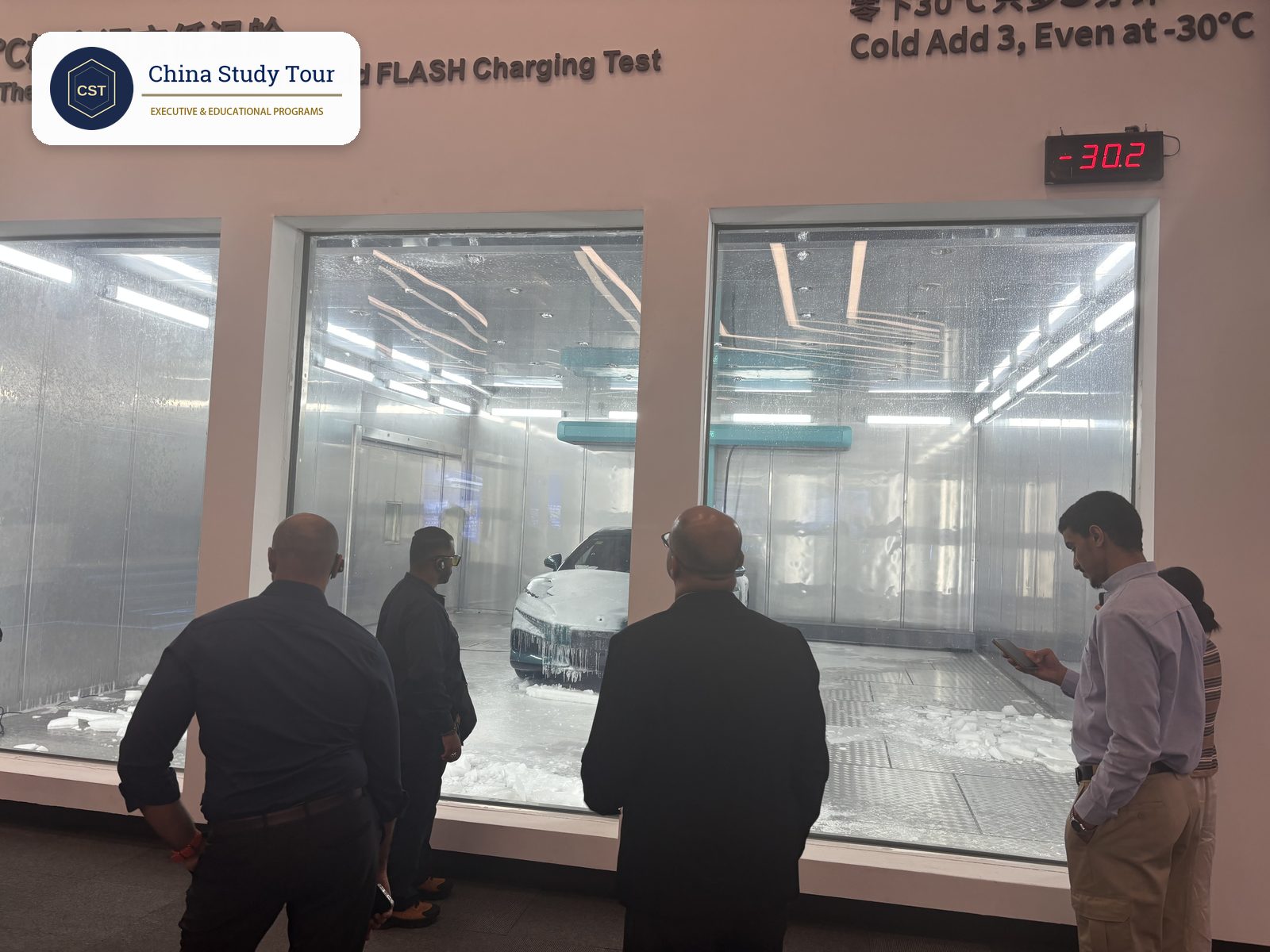
This room demonstrates BYD's FLASH charging technology with the second-generation Blade Battery, which BYD launched in March 2026. The sign on the wall makes three simple claims: ready in 5 minutes, full in 9 minutes, and only 3 extra minutes at -30°C. According to BYD, the battery charges from 10% to 70% in five minutes and reaches 97% in nine minutes. At minus 30°C, charging from 20% to 97% takes only about three minutes longer than at room temperature. BYD's official announcement for Saudi Arabia gives the full details.
Then the staff opened the door and invited our guests to step inside. For people who live with summer temperatures above 45°C, minus 30 was a memorable experience. There was a lot of laughter, many photos and a quick walk back out. Still, the demonstration made its point clearly. If an electric car can charge this fast in extreme cold, one of the most common concerns about electric cars becomes much smaller.
Hybrid, motor and chip technology
After the two live demonstrations, many groups move quickly through the next halls. We recommend taking your time here, because these displays show how BYD turns its technology into products and profit.
DM-i and DM-p hybrid systems
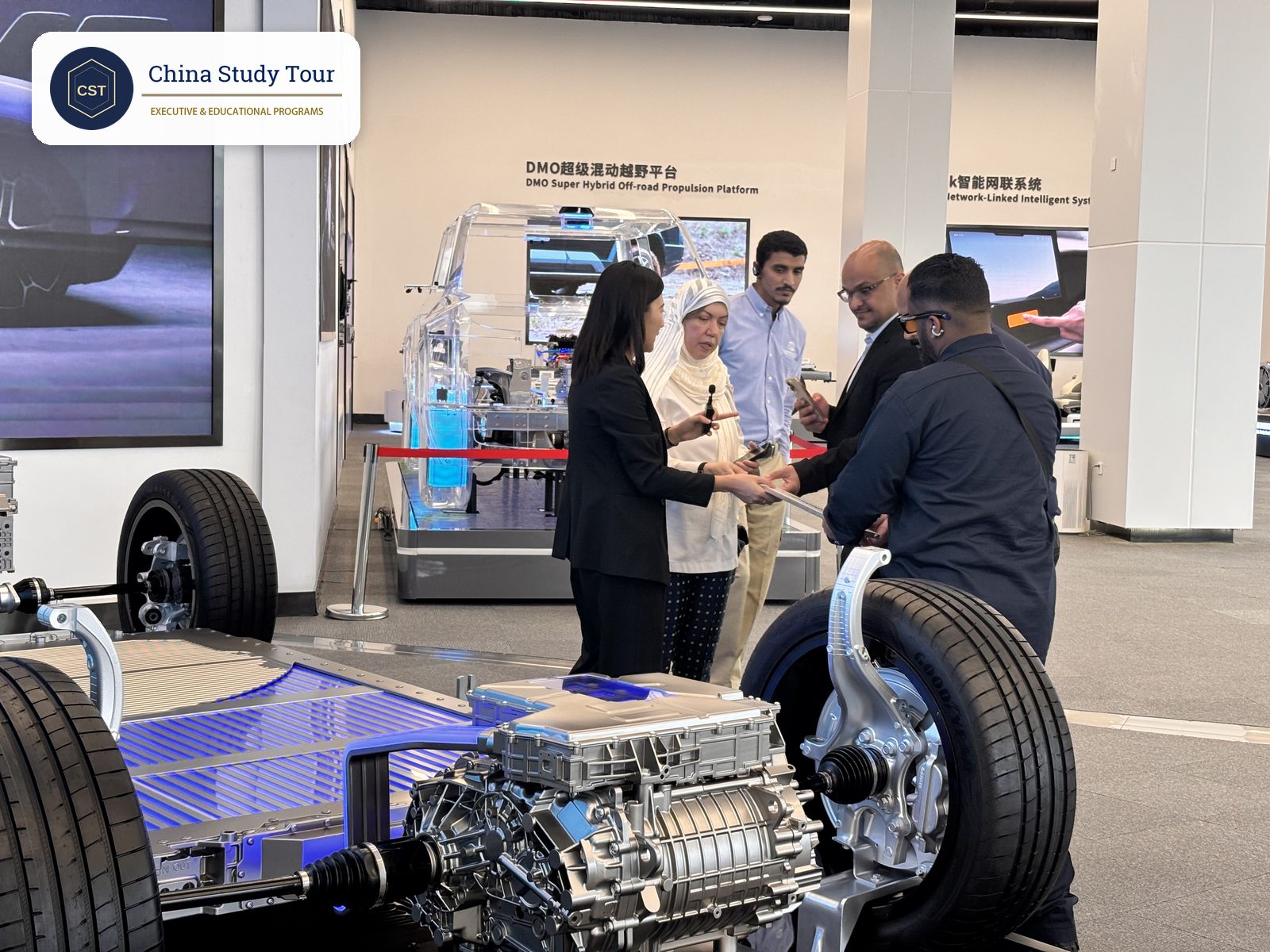
BYD offers two types of plug-in hybrid system. DM-i focuses on very low fuel consumption. The electric motor does most of the work, while the engine mainly acts as a generator. This keeps fuel use low even when the battery is nearly empty, so DM-i suits family cars well. DM-p is the performance version. In DM-p, the engine and motors drive the car together for faster acceleration and all-wheel drive.
Close by, a transparent off-road vehicle model shows the DMO Super Hybrid Off-road Platform, so visitors can see every major part.
Motors, controls and in-house chips
The motor section shows hairpin motors and oil-cooled motors, and explains how BYD matches motor power to each vehicle model. Next to it, the power electronics section covers a topic our group asked many questions about. For many years, Chinese carmakers depended on imported power chips. Today, BYD designs its own IGBT and silicon carbide (SiC) power modules. These chips control the flow of electricity in the car. Making them in-house reduces supply chain risk and also supports high-voltage vehicle platforms.
Four generations of e-Platform
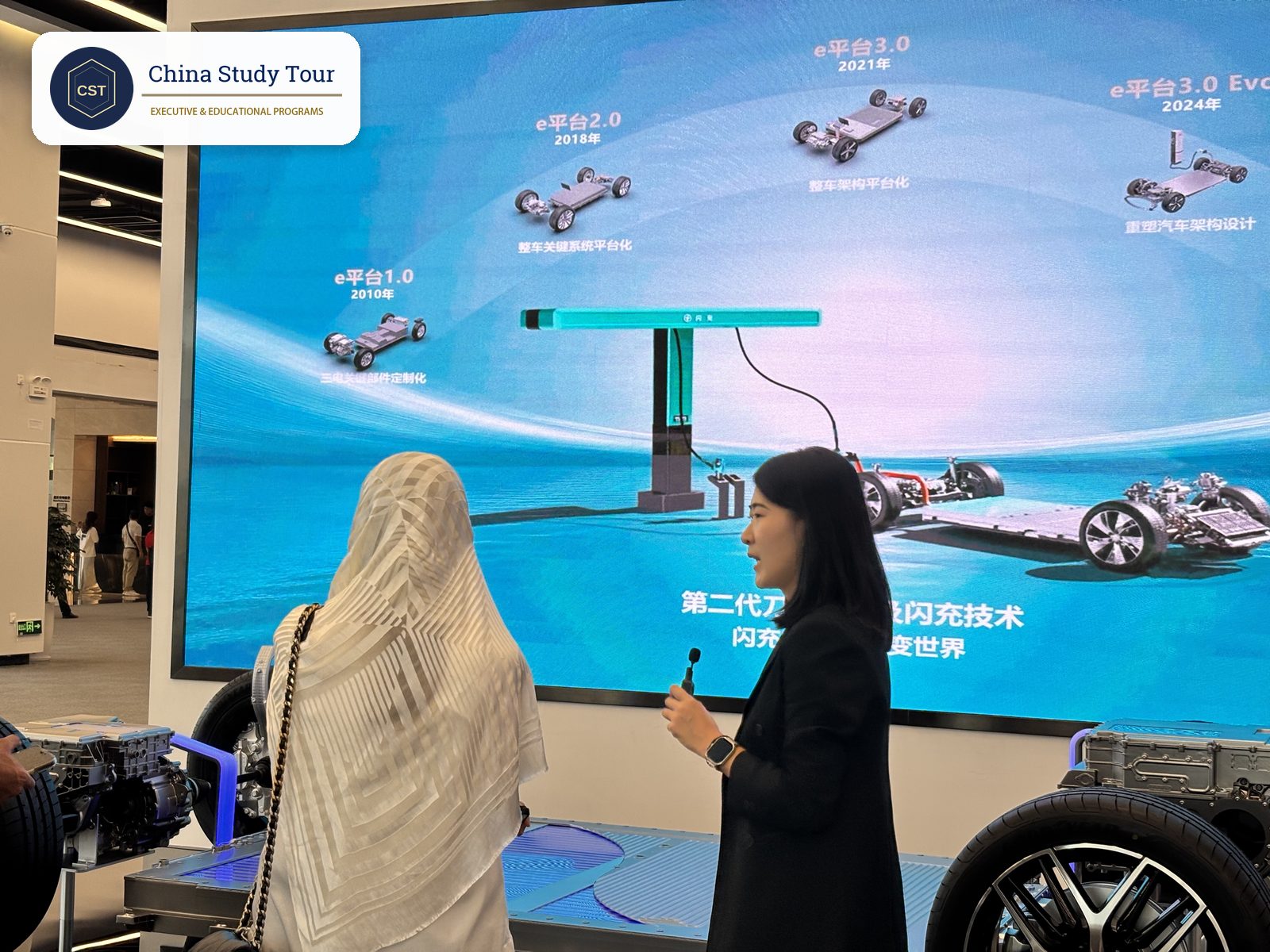
A large screen shows how BYD's electric vehicle platform has developed over time:
- 2010, e-Platform 1.0: custom-built key electric parts.
- 2018, e-Platform 2.0: a shared platform for key vehicle systems.
- 2021, e-Platform 3.0: a shared platform for the whole vehicle architecture.
- 2024, e-Platform 3.0 Evo: a redesigned vehicle architecture.
Designed for battery electric cars, e-Platform 3.0 includes an 8-in-1 electric powertrain and integrated thermal management. At the top of the range is Yangwang, BYD's luxury brand. Its e⁴ system gives each wheel its own motor, while its DiSus body control system comes in three versions: A, C and P.
Brands, buses, energy storage and rail
The final halls show the full BYD group, beyond passenger cars.
- Brands. Denza makes premium family cars, while Fangchengbao makes rugged off-road vehicles. Yangwang, with models priced above RMB 1 million, is where BYD tests its most advanced chassis and powertrain technology.
- Commercial vehicles. This area shows electric buses, heavy trucks and special-purpose vehicles. It also explains electric solutions for public transport, ports, mines and city cleaning fleets.
- Energy storage. Solar panels, home batteries and a model of a large storage station show how solar power, storage and charging work together. BYD also uses Blade cells in its storage systems, where old car batteries can get a second life.
- Electronics. BYD Electronics makes metal frames and other parts for global phone and device brands. Its skills in materials and precision molds support the car business too.
- SkyShuttle. This rubber-tired tram runs on its own track at GoA4, the highest level of automation, with no driver on board. It costs less than a metro and takes less time to build, so it suits industrial parks, new towns and tourist areas. BYD also makes SkyRail, a monorail system.
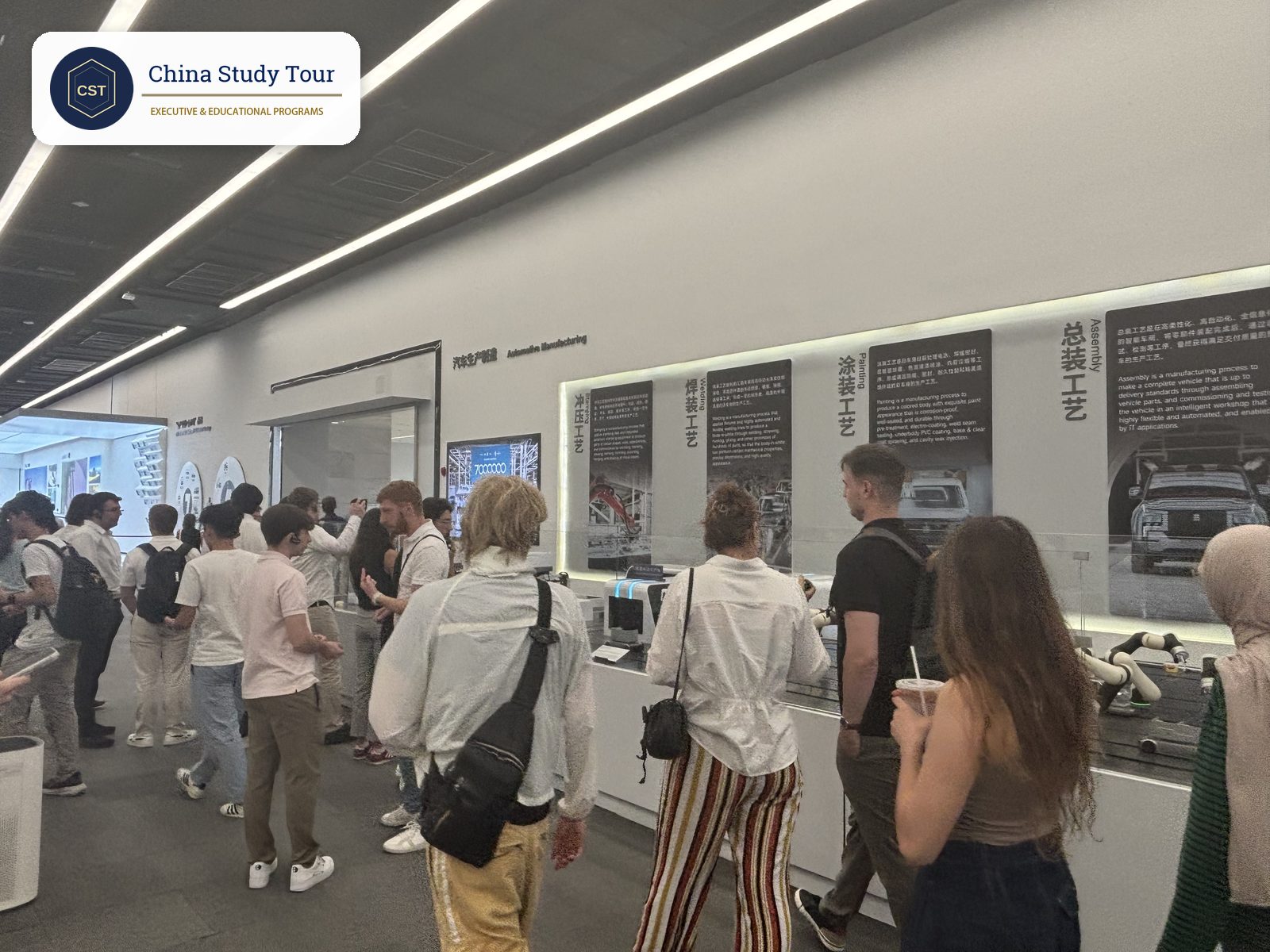
One more display is worth your time. The Automotive Manufacturing wall explains the four main steps of car production: stamping, welding, painting and final assembly. Small robot arms also show each step in action. This is the closest a BYD headquarters tour comes to a real factory floor.
What we missed, and how we filled the gap
There are two things we want to be open about.
First, we did not visit the museum. The group asked many questions in the exhibition hall, so that part of the tour ran longer than planned. The museum is a 20-minute drive away and needs about an hour, so we chose to spend more time in the exhibition hall instead. If you would like to see both, our BYD company visit guide describes the museum floor by floor.
Second, BYD does not currently open its Shenzhen workshops to visitors. For this group, it was the only real disappointment of the day. So we added a factory visit at GAC Group, the carmaker based in Guangzhou, where the delegation toured a working production line. Their reaction was similar to what we see from most first-time visitors. At first they were quiet, and then they had many questions about how quickly Chinese factories now build cars.
If seeing a live factory is important to you, please tell us early. We can combine a BYD headquarters tour with a working car plant, where you can watch welding robots at work and see sparks fly on the line.
Like most leading companies in China, BYD only accepts visitor groups through trusted partners with verified credentials. As a result, requests sent directly from overseas rarely receive a reply. China Study Tour (CST) manages the application, the participant checks and the visit itself, based on more than 13 years of working relationships in China.
Planning your own BYD headquarters tour
This is the checklist we now use for every BYD group:
| What to plan | What to expect |
|---|---|
| Approval | Start 30 to 45 days before your trip. BYD approves every participant in advance. |
| Documents | Each passport must match the approved list exactly. Changes on the day are not possible. |
| Time on site | About 2 hours in the exhibition hall and about 1 hour in the museum, plus a 20-minute drive between them. |
| Language | BYD guides speak English, and a bilingual CST coordinator stays with your group. |
| Photos | Allowed in the exhibition hall during our visit. The live tests take place behind glass. |
| Factory visit | Not available at the Shenzhen headquarters. Ask us about a working car factory nearby. |
| Test drives | Only possible for drivers who hold a Chinese driver's license. |
CST programs run in English, Chinese, Spanish, Portuguese, and Japanese. All guides are bilingual, and additional language support is available upon request.
Who can visit
BYD welcomes organized groups, not individual tourists. Visits suit corporate delegations and executive teams, government trade missions, industry associations, investors, and universities or business schools. However, individual travelers can sometimes join a scheduled group.
Plan the rest of your week
A BYD visit works best as one part of a wider program. Our Shenzhen destination guide covers the companies we often combine with it. If your focus is batteries and electric vehicles, read which EV companies to visit in China and see our EV and new energy study tours. To learn more about how access works, and what happens if BYD rejects an application, read how to arrange a BYD factory visit.
FAQ: BYD headquarters tour
Can you see BYD's production line on a headquarters tour?
No, not at the moment. As of September 2026, BYD's Shenzhen headquarters only opens its exhibition hall and museum to visitors, and the workshops remain closed. If your group wants to see a production line in action, we can add a working factory elsewhere in Guangdong Province, as we did with GAC Group.
How long does a BYD headquarters tour take?
Plan for half a day. The exhibition hall takes about two hours, and the museum takes about one hour. The two sites are about 20 minutes apart by car, so also allow time for the drive and for the security check at the gate.
Do BYD guides speak English?
Yes. BYD provides professional English-speaking guides, so language is not a barrier. Our group also used wireless earpieces in the busier halls. CST programs run in English, Chinese, Spanish, Portuguese, and Japanese. All guides are bilingual, and additional language support is available upon request.
How far in advance should we apply?
We suggest starting 30 to 45 days before your travel dates. BYD approves every participant before the visit, and security checks each name again at the gate. Please confirm your participant list early too, because a late name change can delay the whole group.
Can we take photos inside BYD's exhibition hall?
Yes. During our visit, BYD allowed photos and videos throughout the exhibition hall, including at the nail test and the minus 30°C chamber. Both live tests take place behind glass. Rules can differ from one area to another, so your CST coordinator will confirm them before each stop.
What is the Blade Battery nail penetration test?
In this test, a steel needle goes into a battery and causes an internal short circuit. It is one of the toughest battery safety tests. At BYD's lab, a 5 mm needle enters at 25 mm per second. The NCM battery caught fire, while the Blade Battery showed no smoke and no flames.
Can CST arrange a car factory visit instead?
Yes. Because BYD does not open its Shenzhen workshops to visitors, we often combine the headquarters visit with a working car factory. For this Saudi delegation, we arranged a visit to a GAC Group plant. Please tell us early if a live production line is important, since factory visits also need approval.
How much does a BYD headquarters tour cost?
We price every program individually. The cost depends on your group size, the other visits you add, transport, interpretation and the number of days you spend in China. Once you share your group size and travel dates, we will send a tailored proposal within 24 hours.
Tell us your group size, travel dates and what you most want to see. We will handle the BYD application, add the right factory visit and manage the day on the ground.
Get a Custom Proposal in 24 Hours →
Email: info@chinastudytour.ai·WhatsApp / WeChat: +86 131 6180 6706