
Huawei Company Visit Guide for International Delegations
In little more than thirty years, Huawei has gone from a small local company to one of the world's leading ICT firms and a symbol of Chinese enterprise on the global stage. That is exactly why it sits near the top of almost every delegation's wish list — and why getting inside takes more than sending an email.
Visiting Huawei requires advance coordination through an authorized partner — independent requests are rarely accepted. Below is how CST arranges executive access, what a visit actually includes, who qualifies, typical lead times, and how to combine Huawei with companies like BYD and DJI in a single Shenzhen trip.
Key takeaways
- Huawei does not run public tours — access is granted to organized corporate and institutional delegations through an authorized partner, not to individuals.
- Most international delegations visit the Songshan Lake campus in Dongguan (about an hour from central Shenzhen), not only the registered Shenzhen Bantian headquarters.
- A proper visit pairs a deep campus walk-through with a customizable management sharing session led by a Huawei expert — not a walk-through alone.
- Plan ahead: we recommend arranging four to six weeks in advance, and longer around peak seasons and major trade fairs.
- Huawei combines naturally with BYD (EV) and DJI (drones) in a two- to three-day Greater Bay Area itinerary.
What a Huawei company visit includes
A Huawei company visit is built around three things: seeing the campus, seeing the technology, and — the part delegations remember most — sitting down with people from inside the company. Done well, it is a structured study visit rather than a tourist stop.
Campus & headquarters tour
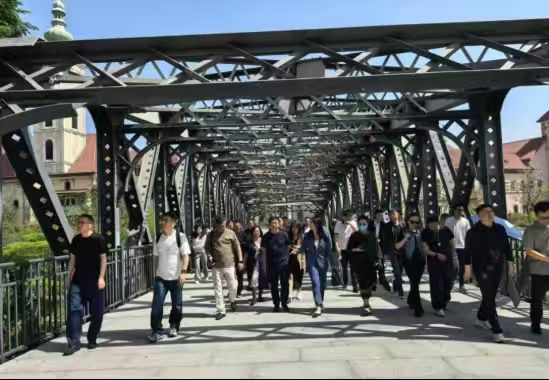
Huawei's flagship visitor experience is the Songshan Lake base in Dongguan, known as the "European Town." A vintage lakeside train loops the campus, stopping at themed districts modeled on Oxford, Paris, Burgundy and others, where science, nature and architecture blend into one another. The campus library is a landmark in its own right — more than 110,000 volumes across some twenty languages, alongside an art gallery — and it says a great deal about how Huawei thinks about knowledge, talent and the long game. This is Huawei's "build the nest to attract the phoenix" talent strategy made physical.
Showrooms & R&D experience areas
Beyond the architecture, the substance is in the experience zones:
HarmonyOS full-scenario zone
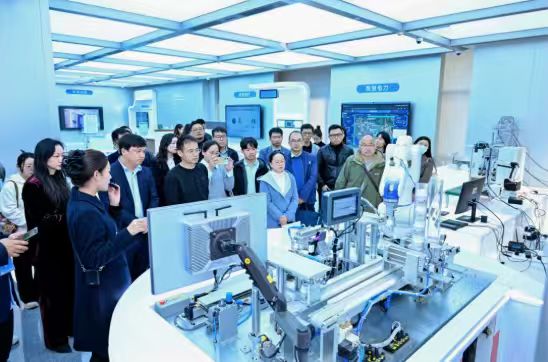
Touch how a single system moves content seamlessly across phones, home devices and smart-mobility terminals — distributed technology you can operate hands-on rather than watch on a screen.
Brand & technology hall
Core communications equipment from every era, paired with live industry data screens, tracing Huawei's path from a start-up to a global telecom leader and its long-term bet on basic research.
Zero-carbon smart park
Driverless shuttles, rooftop distributed solar and campus systems all orchestrated by Huawei's own digital platform — a working sample of digital-enabled, low-carbon operations.
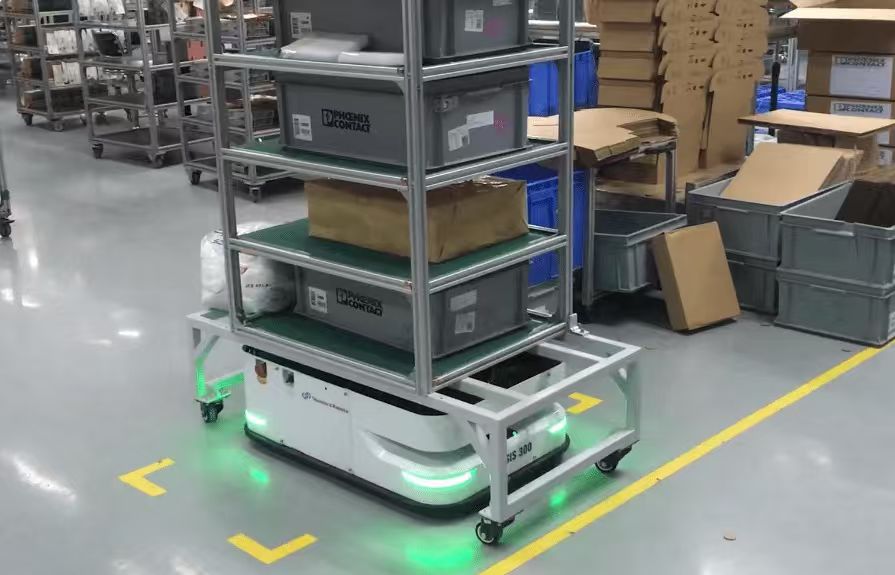
Depending on the delegation's focus, the itinerary can also reach Huawei's smart manufacturing base in Dongguan, where highly automated lines, AGV logistics fleets and flexible manufacturing systems illustrate the shift from "made" to "intelligently made" — genuinely useful for delegations interested in advanced manufacturing.
Access restrictions
Huawei controls access tightly, and it is important to set expectations before you travel. Visits run only through an authorized partner and on a pre-approved route; core R&D and certain production areas are off-limits; photography is restricted in parts of the campus; and every visitor's passport details are submitted in advance for registration. None of this is unusual for a company of Huawei's profile — but it is why an ad-hoc, self-arranged visit almost never works.
Who can visit
Huawei hosts organized groups with a clear business or learning purpose — corporate executive delegations, business associations such as Vistage and YPO, chambers of commerce, and educational institutions. What it does not host is walk-up individual tourists. In our experience since 2013, delegations of roughly ten to thirty travel best; larger groups are possible but need earlier planning and a tighter route. If you are a single executive, the practical path is to join or form a small delegation.
How to book — and how much lead time you need
The booking process is straightforward once you know it runs through a partner rather than a public booking page. To open a request, we need your company profile, the delegation list with passport details, your preferred dates, and the management topic you would most like to cover. From there, coordination and confirmation take time — so we recommend starting four to six weeks ahead, and earlier still around the Canton Fair, major exhibitions and Chinese public holidays, when both access slots and Shenzhen hotels tighten. The single most common reason a Huawei visit falls through is simply leaving it too late.
How to arrange the visit through a partner
Independent requests to Huawei are rarely accepted, which is where an authorized partner does the real work: securing the access slot, agreeing the route, briefing your group, and — crucially — arranging the management sharing session that turns a campus walk into a study visit. A typical session is an internal talk such as "Huawei's Customer-Centric Culture and Management," delivered by a Huawei expert with 15+ years inside the company, followed by open Q&A with executives or specialists.
The topic is customizable. Delegations regularly choose from themes including:
- Huawei's customer-centric culture and management
- Cadre (leadership) management
- Strategy decoding (DSTE)
- Global talent-development strategy
- Performance management and incentives
- Huawei's transformation journey — and what it teaches
- Organizational change and organizational vitality
A sample Huawei visit day
Every itinerary is tailored, but a full-day Huawei visit typically looks like this:
| Time | Activity |
|---|---|
| 09:00 – 10:00 | Depart hotel for the Huawei Songshan Lake base |
| 10:00 – 11:40 | Tour the Songshan Lake "European Town" — vintage campus train through the themed districts, the landmark multilingual library, and the art gallery |
| 12:00 – 14:00 | Lunch and midday break |
| 14:00 – 17:00 | Themed management sharing (customizable) + interactive Q&A with a Huawei expert or executive |
Cost & what's included
Because Huawei visits are arranged per delegation rather than sold as a fixed ticket, pricing depends on group size, the number of companies on your itinerary, the sharing-session topic and speaker, and your travel dates. A typical Huawei day arranged through CST covers access coordination and registration, private transport to and from Songshan Lake, a professional interpreter, the internal management sharing session and Q&A, and lunch. Flights, hotels and evening activities are usually quoted separately so you can flex them. We provide a written, itemized quote for your specific group through the contact form below — no guesswork.
Pairing Huawei with BYD and DJI
Huawei is at its strongest as one stop in a themed Greater Bay Area route, not a standalone errand. Because Shenzhen and Dongguan sit side by side, most delegations pair Huawei (ICT and smart ecosystem) with BYD (electric vehicles and battery technology) and DJI (consumer and industrial drones) across two to three days — one company per theme, with time to compare how each approaches R&D, manufacturing and global expansion. See our Shenzhen destination guide for how these fit into a wider itinerary. This is also a useful hedge: if one company's slot shifts, a well-built multi-company route keeps the trip on track.
Frequently asked questions
Through an authorized partner, not by contacting Huawei directly. The partner secures a pre-approved access slot, arranges the campus route and the management sharing session, and handles registration. CST has arranged this kind of access for delegations since 2013.
No. Huawei does not offer public tours for individuals. Access is granted to organized corporate, institutional and association delegations with a clear business or learning purpose. A solo executive would need to join or form a small delegation.
We recommend four to six weeks, and earlier around the Canton Fair, major exhibitions and Chinese public holidays. The most common reason a Huawei visit does not happen is simply booking too late.
Typically the Songshan Lake campus and its themed districts, the landmark library, and experience zones such as the HarmonyOS full-scenario area, the brand and technology hall, and the zero-carbon smart park — plus, on request, a smart-manufacturing base. Core R&D and certain production areas are restricted, and photography is limited in parts of the campus.
Huawei's registered headquarters is in Bantian, Shenzhen, but the flagship visitor campus most delegations experience is Songshan Lake in Dongguan — about an hour from central Shenzhen and easy to combine with other Greater Bay Area company visits.
Yes. The session is customizable — popular themes include customer-centric management, leadership (cadre) management, strategy decoding, global talent development, performance and incentives, and Huawei's transformation journey. It is delivered by a Huawei expert, followed by Q&A.
Yes, and most delegations do. Huawei, BYD and DJI sit within the Shenzhen–Dongguan cluster and pair well as one ICT, one EV and one drone company across a two- to three-day route. Building the trip around several companies also protects you if any single slot shifts.
Plan your Huawei visit
Tell us your delegation size, dates and the management topic you want to cover. We'll come back with a written, itemized plan — and, if you'd like, a Huawei + BYD + DJI itinerary.
Request a Huawei visit plan →