Baidu Company Visit: PaddlePaddle, ERNIE and Apollo
A Baidu company visit is a briefing and demonstration program, not a factory tour. Here is what an AI-stack visit actually covers, where autonomous driving does and does not fit, and how the request works.
- 📍 Beijing
- 🤖 AI stack: chips to applications
- 👥 Corporate and academic groups
- 📅 Book 4–6 weeks ahead
- 🚗 Apollo: separate request
- ✍ Updated August 2026
A Baidu company visit is arranged for organized groups through pre-vetted partners and typically combines a company briefing, a technology demonstration and a session on the PaddlePaddle developer ecosystem. Autonomous driving is a separate track rather than an extra hour in the same day: Apollo sits in a different business group with its own hosts and its own approval path. Allow four to six weeks, and send passport details for every delegate with the request.
About Baidu and PaddlePaddle
Most Western visitors know Baidu as a search engine. That framing is fifteen years out of date, and it is the first thing a good briefing corrects.
Baidu now runs a full AI stack, and each layer is a different conversation for a visiting group:
- Chips. The Kunlun family, developed in-house for training and inference.
- Framework. PaddlePaddle, launched in 2016 as China's first home-grown open-source deep learning framework, now in its third major generation and adapted to more than sixty domestic and international chips. It is general-purpose infrastructure in the same category as PyTorch and TensorFlow, used across manufacturing, healthcare, agriculture, finance, OCR, language and scientific computing.
- Models. The ERNIE family, including open-weight releases under a permissive license, plus the Qianfan platform that serves models to enterprise customers.
- Applications. Search and the ERNIE assistant on the consumer side, and the Comate coding assistant for developers.
Autonomous driving sits beside this stack rather than on top of it. Apollo, the ASD driver-assistance system and the Apollo Go robotaxi service belong to the Intelligent Driving group, while PaddlePaddle belongs to AI Cloud. The framework can train perception models and did so in earlier Apollo releases, but the current driving model is built around Baidu's own chips and cloud architecture, and as of August 2026 the two are neither merged nor marketed as one brand.
The scale number worth carrying into a briefing: Baidu reports the PaddlePaddle and ERNIE ecosystem serving over 23 million developers and around 760,000 enterprises as of the end of 2025. Whatever discount you apply to vendor figures, the order of magnitude explains why the framework matters domestically even where PyTorch dominates elsewhere. PaddleOCR, one of the ecosystem's toolkits, has become one of the most-starred open-source OCR projects on GitHub.
PaddlePaddle and Apollo Are Not the Same Visit
This is the single most common misunderstanding in AI-themed requests, and it is worth settling before you choose a theme. The relationship is tool and application: the framework can support driving models, but it is not owned by or specific to them.
| PaddlePaddle | Apollo | |
|---|---|---|
| What it is | Open-source deep learning framework and AI infrastructure platform | Vertical solution for one industry: assisted driving, robotaxi, cockpit and HD mapping |
| Scope | Every sector, from factory vision to healthcare and finance | Intelligent vehicles only |
| Who uses it | Developers, enterprises and research institutions | Automakers licensing the technology, and consumers riding Apollo Go |
| Openness | Open source | Partly open: algorithm modules on the open platform, production stack delivered closed |
| Inside Baidu | AI Cloud group | Intelligent Driving group |
| What a visit looks like | Briefing, demo environment, engineer Q&A | Vehicles, a test environment, or a ride in a service zone |
A group that books "the Baidu AI visit" expecting to see cars is usually disappointed, and a group that books the driving side expecting a framework deep-dive gets a product team instead of engineers. Tell us which of the two you want, or ask for both and we will run two requests.
This is the expectation gap that spoils AI visits. PaddlePaddle is software, so there is no production line to walk and no plant to photograph. What a group gets is a room, a set of engineers, a demo environment, and questions answered by people who build the thing. Delegations that want a physical experience should say so early, but the answer is not simply to bolt Apollo onto the afternoon: it is a different host team, a different approval path and often a different site.
What a Baidu Company Visit Includes
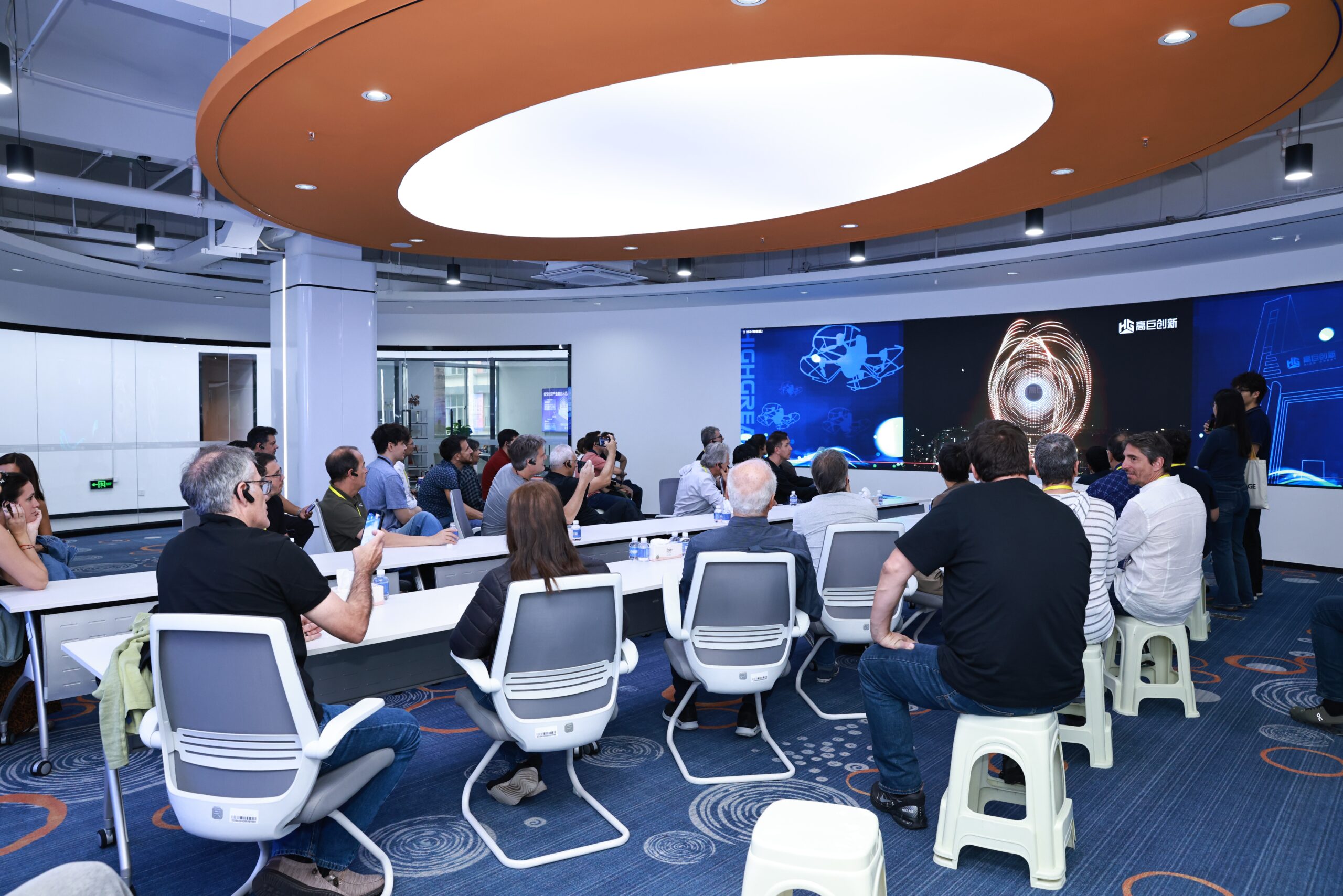
Formats vary by group and by what the host approves. Three building blocks recur, and a fourth sits outside the AI-infrastructure day:
Company and strategy briefing
How the stack fits together, where the revenue comes from, and how the AI transition has changed the business. This is the session non-technical delegations get the most from.
PaddlePaddle and developer ecosystem session
The framework, the toolkits around it, and how Chinese enterprises actually deploy models in production. Useful for engineering leads, CTOs and university faculty. Send your technical questions ahead of time so the right specialist is in the room.
Technology demonstration
Model capabilities, enterprise use cases, and industry deployments in areas such as manufacturing, healthcare, energy and public services. The industry examples land better than a generic capability demo, so tell us your sector in advance.
Apollo and autonomous driving, requested separately
Baidu's autonomous driving platform and its Apollo Go robotaxi service are the most tangible part of the story, and the part that has to be arranged on its own. Approval comes from a different team than the framework session, so treat it as a second visit rather than a bolt-on. Where the service operates and the schedule permits, a ride can be built into the same day. Availability depends on the city, the regulator and the season.
Who Qualifies for a Visit
- Corporate delegations and executive teams, particularly technology and digital transformation groups
- CTOs, engineering leads and enterprise architecture teams
- Business schools, MBA and EMBA cohorts
- Universities and research groups in computer science and engineering
- Government trade missions and industry associations
- Investors evaluating China's AI ecosystem
Individual travelers cannot arrange a corporate briefing on their own. The realistic route for a solo visitor is joining a scheduled group program built around an AI theme.
Booking Process and Lead Time
- Send the group profile. Organization, headcount, seniority mix, and the two or three questions the visit has to answer.
- Provide delegate details. Full names and passport information for everyone attending.
- Agree the theme. Enterprise AI, developer ecosystem, or autonomous driving. The theme decides which team hosts you, and the first two are approved by a different group than the third, so a day that covers both needs two requests running in parallel.
- Wait for confirmation. Technology hosts schedule around product cycles and conference season, so dates come back confirmed rather than negotiated.
- Receive the run-of-day. Site, arrival time, on-site rules and your coordinator's contact.
Four to six weeks is a realistic minimum for a technology briefing, longer than a factory visit because the right speakers have to be found. Add time if you want the driving side as well, since that is a second approval rather than a second hour. Work back from eight to twelve weeks if Baidu is one stop in a multi-city program. Avoid Golden Week in early October, and expect tight availability around major AI conferences.
How to Arrange It Through a Partner
Chinese technology companies filter inbound visit requests through partners who can confirm who a group is and why it is coming. Cold outreach from overseas rarely produces a briefing, and the calendar for hosting delegations is limited.
CST submits the request, agrees the theme with the host, arranges interpretation and runs the day on the ground with one point of contact. The same process applies to every host company and is described on our how it works page. AI-themed program formats are listed under AI and technology tours.
Sample Visit Day
| Time | What happens |
|---|---|
| 09:00 | Pick-up from your Beijing hotel; context briefing during the transfer. |
| 10:00 | Arrival and registration; company and strategy briefing. |
| 11:00 | PaddlePaddle and developer ecosystem session, with interpretation. |
| 11:45 | Q&A using questions submitted in advance. |
| 12:30 | Lunch. |
| 14:00 | Technology demonstration and sector use cases. |
| 15:30 | Optional, requested separately: an Apollo session, or an Apollo Go ride inside a service zone. Different team, different approval, often a different site. |
| 16:30 | Structured debrief with your group, then return transfer. |
Half-day formats keep the briefing and one session. Technology delegations often pair this day with a second AI company or a university lab in the same city.
Cost and What's Included
Company visits are quoted per request rather than per seat, because cost depends on group size, format and how much of the surrounding day you want handled. A visit arranged with CST includes:
- Visit request, host coordination and date confirmation
- Private vehicle and transfers in Beijing
- English interpretation on site, other languages on request
- A dedicated coordinator with the group all day
- Run-of-day planning and on-site management
Not included: international and domestic flights, hotels, travel insurance and personal spending. Inside a longer program, this stop is priced as part of that program.
Combining Baidu With the Rest of Beijing
Beijing is the policy and research capital, which makes it the right city to close a technology program rather than open one:
- A policy briefing — industrial strategy, data governance and AI regulation, usually a closed-room session rather than a company visit.
- A university lab — Beijing's research institutions are where the talent pipeline is visible.
- A second AI company — model developers, chip designers and AI infrastructure firms cluster in the same districts.
- A cultural half day — the one thing delegates regret skipping.
See the Beijing destination guide for logistics, and our sample 7-day itinerary for how a Beijing technology leg fits a full week.
What PaddlePaddle Looks Like on a Factory Floor
Framework conversations get abstract fast. The fix is to ask for one deployed industrial case and make the host walk you through it end to end. It is also the clearest way to see what the framework actually is: general-purpose tooling, at work in a sector that has nothing to do with cars.
A typical example: an AI sorting line for small molded and machined parts. A camera watches the conveyor, a detection model classifies each part and returns a confidence score, and a mechanical diverter routes rejects into their own bin before they reach the next station. Early versions handled one light part at a time. Current ones read several at once and cope with parts that overlap on the belt, which was the failure mode that used to push everything back to manual sorting. The system runs unattended around the clock, and that is the entire economic argument. Electronics assembly and injection molding lines are where these installations usually live.
Ask three questions about any case like this and you will learn more than an hour of slides gives you: what accuracy did it hit in the first month, what did the labeling effort cost, and what happens when a new part number arrives. The answers separate a demo from a deployment.
Frequently Asked Questions
Can we tour a Baidu facility the way we would tour a factory?
Not in the same sense. Baidu is a software and services company, so a visit is built from briefings, demonstrations and Q&A rather than a production line. Groups that want a physical component should ask about the autonomous driving side, which is arranged as its own visit with its own host team rather than as part of the framework day.
What is PaddlePaddle and why does it come up?
PaddlePaddle is Baidu's open-source deep learning framework, launched in 2016 and widely used across Chinese enterprises and universities. It sits under the ERNIE model family, so any serious conversation about how Chinese companies build and deploy AI runs through it. Baidu reports the combined ecosystem serving over 23 million developers as of the end of 2025. It is general-purpose infrastructure across many industries, not a driving product.
Is PaddlePaddle what powers the robotaxi?
Not in a way you can build a visit around. PaddlePaddle is a general-purpose framework and was used to train perception models in earlier Apollo releases, but the current driving model is built around Baidu's own chips and cloud architecture, and the two sit in different business groups. Treat them as two subjects, two host teams and two requests.
Can our group ride in an Apollo Go robotaxi?
Often, but not everywhere and not automatically. The service runs in designated zones in selected cities, and availability depends on the city, the regulator and the schedule. It is also arranged separately from the AI briefing, so tell us early if a ride matters and it can be requested up front.
How technical should the session be?
That is your call, and it changes who hosts you. Executive groups usually want strategy and use cases; engineering groups want the framework, deployment and infrastructure layer. Mixed groups work best when the day is split, with the technical session after lunch.
How far in advance should we book a Baidu company visit?
Four to six weeks minimum for a technology briefing, and eight to twelve weeks when the visit sits inside a multi-city program or includes the autonomous driving side as a second approval. Technology hosts schedule around product cycles, so early requests get better speakers as well as better dates.
What languages are supported?
English, Chinese, Spanish, Portuguese, and Japanese. All guides are bilingual, and additional language support is available upon request. Technical interpretation for AI and engineering sessions is briefed before departure.
Arrange Your Baidu Company Visit
Send your organization, group size, technical level and preferred dates, and tell us whether you want the AI infrastructure side, the autonomous driving side, or both. We agree the theme with the host, handle approvals, transport and interpretation, and reply within 24 hours.
Request a Baidu Visit →Email info@chinastudytour.ai · WhatsApp / WeChat +86 131 6180 6706
More on company visits: Alibaba company visit · BYD company visit · GAC company visit · How to organize a delegation · Corporate visit FAQ · Contact
Technical background on the model and framework releases: Baidu ERNIE blog.