China Factory Visit for Executives: What a Smart Factory Visit Looks Like
A China factory visit often goes like this. Executives fly to Shenzhen or Beijing, walk past a clean production line, take a group photo and fly home. They feel that China is ahead, but they cannot say exactly how. In other words, the visit happened, but the learning did not. The problem is rarely access. Instead, most groups do not know how hosts build a smart factory visit, so they cannot tell what each stop sets out to show.
This guide explains the shape of a typical arranged visit for a foreign executive delegation. It covers the standard route, what each stop is for, what stays closed, lead times and cost. In addition, it shows how to read the floor rather than just walk past it. The examples come from visits China Study Tour (CST) arranges at DJI, Huawei, BYD and Xiaomi.
A smart factory visit in China is not a walk-in attraction. Most arranged visits follow the same four stops: an exhibition hall, the production line, a live demonstration and a briefing with Q&A. At DJI, for example, this takes about two hours. Typically, groups of 10 to 30 people work best, with four to six weeks of notice. Core R&D, unreleased products and business figures stay closed, so the value comes from the questions your group brings.
Key takeaways
- Same four stops everywhere. Halls, line, demonstration and briefing. Each stop makes a different point, but the most useful information is on the line, not in the halls.
- No ticket for the big names. DJI, Huawei and BYD have no public booking page for groups. Access runs through a partner they already trust.
- Two numbers matter. Ten to thirty people, and four to six weeks of notice for one company. A multi-company route needs six to eight weeks.
- Some areas stay closed. Core research and development (R&D), unreleased products, some production steps, production data and supplier details are off the route.
- Ask "how", not "how much". The best visits we have hosted ended with questions about how people make decisions, not requests for numbers.
What a China Factory Visit Includes: The Four Stops
Whatever the marketing photos suggest, almost every arranged smart factory visit in China uses the same three or four stops. Knowing this before you go helps, because the stops differ in how much the host controls what you see. First, the host plans the halls in full. Next, the host also plans the line, but the line still has to run for real. Finally, the briefing is the only stop where the host chooses the talk and you choose the questions.
| Stop | What it is | Who controls the content |
|---|---|---|
| Exhibition or product hall | Company history, product line and technology displays | The host, fully |
| Production line | A walk or shuttle ride past live production | Limited by what is running that day |
| Demonstration area | A live product test, such as a drone flight test at DJI | Mostly the host; depends on weather and schedule |
| Briefing and Q&A | A talk by an engineer or manager on an agreed topic | The host chooses the talk; you choose the questions |
Stop one: the exhibition halls
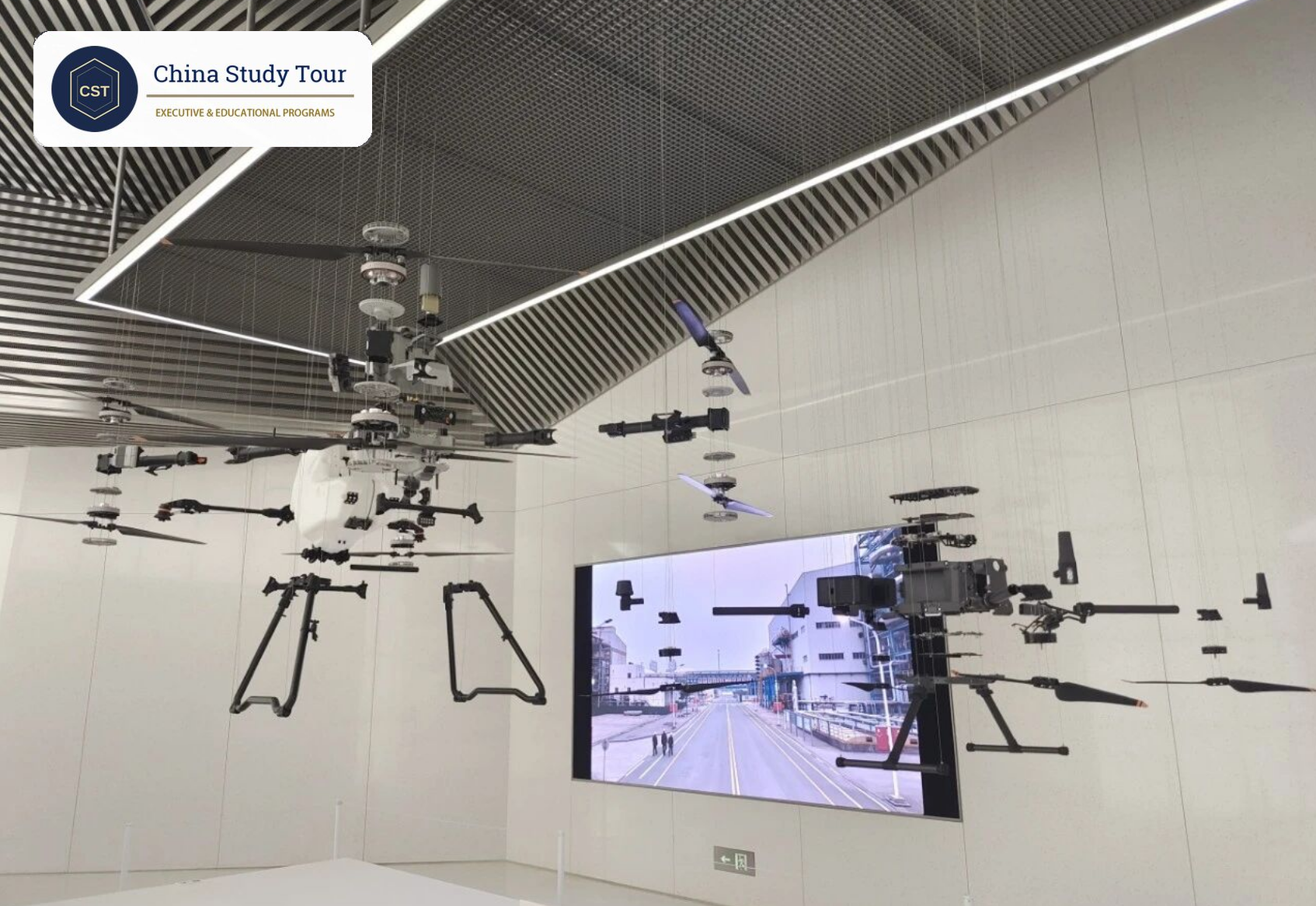
Every company starts you here. For example, at DJI the product experience center includes a component teardown wall, which shows a product taken apart piece by piece. At Huawei, likewise, delegations usually pass through the brand and technology hall and experience zones such as the HarmonyOS area. Similarly, Xiaomi's EV factory opens with a technology hall and a vehicle hall before any production area.
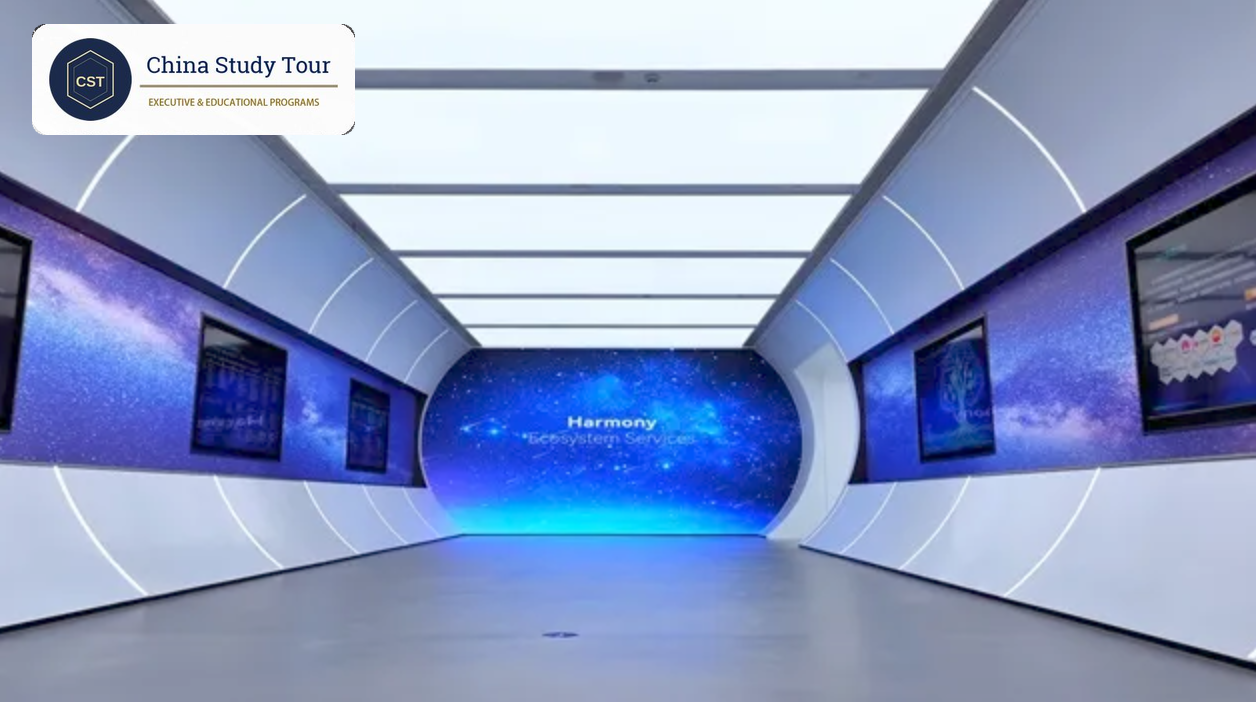
Treat the halls as orientation, not as data. In fact, they show how the company wants visitors to understand it: which products define it and which dates it is proud of. However, the most useful details are often small. For example, what a teardown wall chooses to show tells you something about which parts the company makes itself.
Stop two: the production line
Executives misread this stop most often, so two points help:
- It is not fully automated. Many visitors expect a "smart" line to run with no people. In reality, factories automate where volume and repeat work justify it, and they keep human checks where judgment still beats a machine. Where that line falls is one of the most useful lessons of the day.
- It is a sample, not the whole factory. After all, what runs on your day depends on production schedules you do not control. A quiet line and a busy line mean different things, so do not read too much into either.
The format also changes by site. For example, groups at Xiaomi's EV plant in Beijing see the workshops from a shuttle and do not walk the floor. At DJI, by contrast, the smart manufacturing line sits between the experience center and the flight test. Meanwhile, BYD keeps the production workshops at its Pingshan headquarters in Shenzhen closed to visitors as of October 2026. So for a factory floor, CST adds a working car plant, such as GAC Group in Guangzhou.
First, how much of the line is running. Second, how many people are watching screens rather than parts. Together, these are honest signals that no planned route can hide.
Stop three: the briefing
The briefing is the working part of the day, and preparation decides how useful it is. However, the format varies by company. At Huawei, the management sharing session can run up to three hours. There, a Huawei expert with 15+ years inside the company gives an internal talk on an agreed topic, followed by open Q&A. At DJI, on the other hand, an engineer or senior trainer leads the closing briefing. A briefing for a consumer electronics team and one for a logistics operator are two different sessions.
So name the topic in advance. This is the most common gap we see: a group arrives, the briefing starts, and the speaker only learns during the talk what the group came for. Instead, tell the host your sector and your main question when you book, not in the room.
What It Looks Like at Four Companies
The basic shape is the same everywhere, but the focus is not. Below are four examples from routes CST arranges.
| Company | Where | What the visit covers | What the floor teaches |
|---|---|---|---|
| DJI | Sky City, Nanshan, Shenzhen | About 120 minutes: experience center with teardown wall, smart manufacturing line, flight test, engineer-led briefing | How a drone maker links hardware production to a fast product cycle |
| Huawei | Songshan Lake campus, Dongguan (registered headquarters in Bantian, Shenzhen) | Campus districts and experience zones, a smart manufacturing base on request, and a management sharing session | Management systems, and how a company of this size keeps R&D moving |
| BYD | Pingshan, Shenzhen | Technology exhibition hall (about 2 hours) and museum (about 1 hour); no production workshops at the headquarters | How far one company can take vertical integration in electric vehicles (EVs) |
| Xiaomi (EV) | Beijing E-Town | About 60 to 90 minutes: technology hall, vehicle hall, then a shuttle through the workshops open that day | How a new EV maker built a plant around automation in about three years |
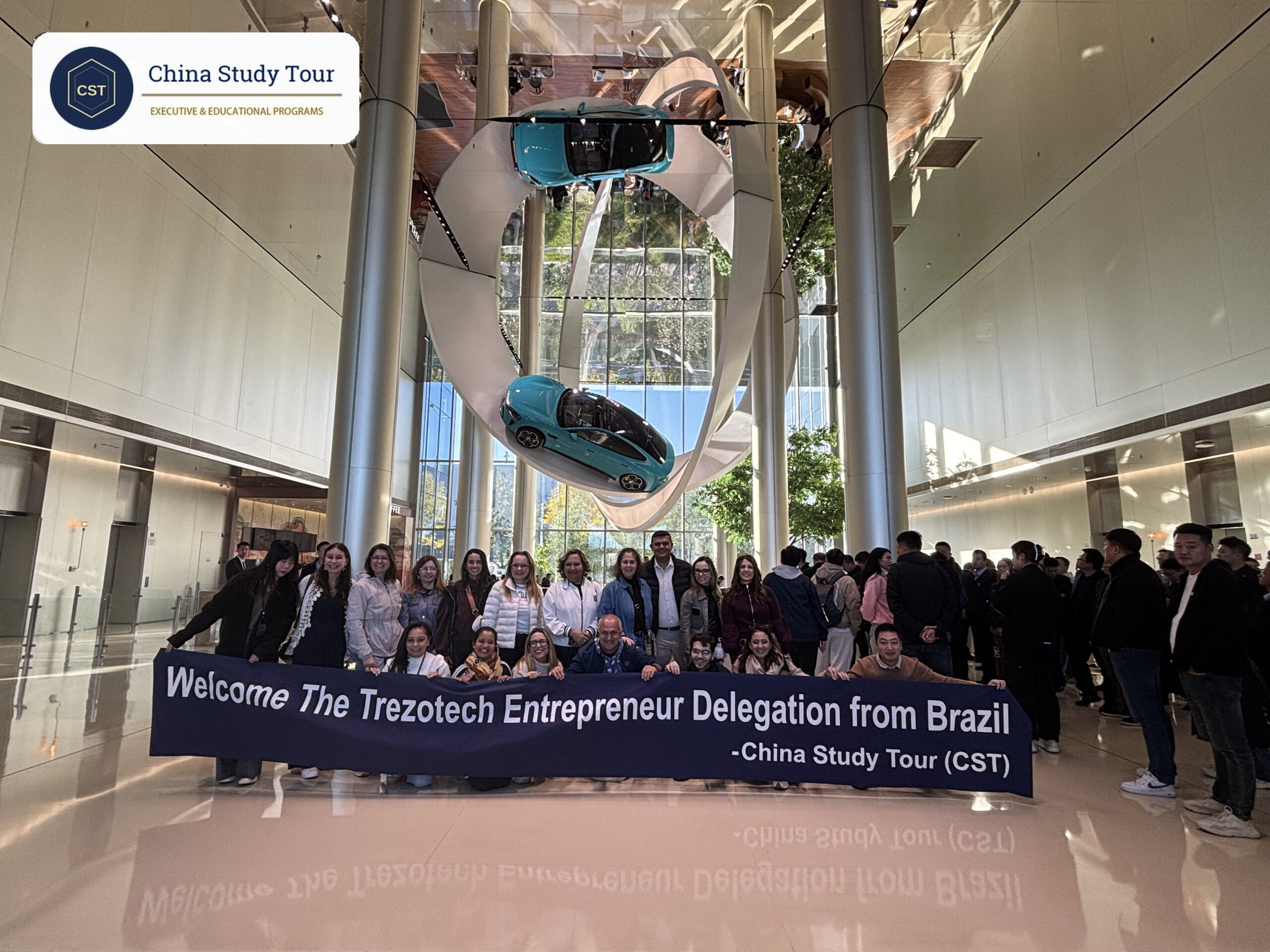
Choose the company by the question your team brings, not by how famous it is. A group asking how a company ships new hardware so fast belongs at DJI. Similarly, a group asking how vertical integration really works belongs at BYD, plus a working plant. Finally, a group asking about management at scale belongs at Huawei. Our DJI company visit guide, Huawei company visit guide and Xiaomi factory tour guide cover each host in detail.
What You Cannot See
The closed list is similar at every company. As a result, knowing it in advance saves an awkward moment in front of the host:
- Core R&D labs and unreleased products
- Some proprietary production steps
- Production data and supplier relationships
- Business figures such as unit volumes, margins and revenue splits. DJI is a private company, so it does not share any of these numbers.
Most campuses also limit photography in some areas. At Xiaomi, for example, cameras work from the shuttle, but the factory does not allow drones. Therefore, settle the photo rules in the pre-trip brief, so the host does not have to correct anyone in front of the group.
The approach that works is to reframe the question. In other words, ask how a team makes a decision, not what the numbers are. For example, "How does a new supplier win approval?" gets a real answer. By contrast, "What is your defect rate?" usually ends the conversation.
Who Can Visit, and Through Whom
DJI, Huawei and BYD have no public booking page for groups, and there is no ticket to buy. Instead, they host organized corporate, institutional and association delegations, as well as government trade missions, when the group has a clear business or learning purpose. In practice, access runs through pre-vetted partners who already hold the relationship.
China's leading firms accept outside groups only through partners with verified credentials. The partner sends the group profile and passport list, and takes responsibility for the group on the day. As a result, cold emails from unknown overseas organizations almost never lead to a visit. China Study Tour (CST) has built its access over 13+ years of working relationships.
Xiaomi is the main exception. Its EV factory runs an industrial tourism program with online booking, although sessions sell out fast. A public booking covers only a few people, however, and an English session may not fall on your dates. Delegations with fixed dates therefore usually book through a coordinator. For a wider list by sector and city, see Chinese companies that accept visitors.
Lead Time, Group Size and Booking
Two numbers do most of the work when you plan a China factory visit.
- Four to six weeks for one company. If a changed slot would force your group to rebook flights, treat six weeks as the minimum. BYD needs 30 to 45 days, because it approves every participant in advance. A route with several companies needs six to eight weeks, because the slowest approval sets the date.
- Ten to thirty people. Above that, however, the group splits and the briefing loses focus. Below ten, the cost per person rises, because the group shares fixed costs such as transport and interpretation. Therefore, a single executive should join or form a small delegation rather than expect a private session.
Also plan around the calendar. For example, the Canton Fair and Chinese public holidays fill visit slots and hotels at the same time, so add two weeks and keep a backup week. Our guide to factory visits around the Canton Fair shows how to fit both into one trip.
Five things to settle before you book
Settle these five things before the request goes in:
| Item | Why it matters |
|---|---|
| Group size and decision makers | Sets the format of the briefing and the level of the speaker |
| Briefing topic | The host needs your sector and main question before the day |
| Hands-on add-ons | The host needs to plan a flight session or similar in advance, not on the day |
| Dates plus a backup week | Turns a moved slot into a small change instead of a rebooking |
| Photo rules | Avoids a correction in front of your group |
If you skip one of these, it usually becomes a problem two weeks before travel, when the options have narrowed. Languages offered: English, Chinese, Spanish, Portuguese, and Japanese. All guides are bilingual, and additional language support is available upon request.
A Sample Factory Day
Here is how a factory morning often runs for a Shenzhen delegation, with a second company in the afternoon. However, these times are an example, not a fixed program.
| Time | Item |
|---|---|
| 08:30 | Coach from the hotel; the interpreter reviews the day's topic and question list on the way |
| 09:30 | Arrival and registration; badges issued and photo rules confirmed |
| 09:45 | Exhibition hall and product experience center |
| 10:30 | Production line, on foot or by shuttle depending on the site |
| 11:00 | Demonstration area, for example a supervised flight test at DJI, arranged in advance |
| 11:15 | Briefing on the agreed topic, then open Q&A |
| 12:30 | Lunch, then the drive to the second company of the day |
| Evening | Short group debrief: each person names one idea to apply at home |
The day runs on the host's schedule. As a result, a late arrival costs the whole group, because the line on your program does not wait.
How to Read the Floor
The best visits we have hosted did not end with the biggest showroom moment. Instead, they ended with good questions about how people make decisions. Here is a working set, by theme:
- Process: How much of the line we just saw runs on machines, and where do people still check the work? Also, how does a new supplier win approval, and what makes one lose that status?
- Speed: When a new sensor or chip becomes available, how long until it is in a product you ship?
- Quality: When a quality problem reaches customers, how far back into the line does the investigation go?
- Markets: Which market gave you the hardest regulation problem, and how did the product change because of it?
- Organization: How do you keep decisions fast at this size?
Every one of these asks how or why. On the other hand, questions that ask for a number tend to close the conversation. For a full question list at a hardware company, see our DJI factory tour preparation guide.
Cost and What Is Included
On a China factory visit, the company visit is only one part of the cost. What a delegation mostly pays for is everything around it: transport between the city and the site, a professional bilingual interpreter, hotels, and the planning work that fits a confirmed session into fixed travel dates. Xiaomi's public tour is the exception, because the factory sets its own entry terms.
Overall, the total depends on group size, trip length, hotel level and the number of company visits. Larger groups usually pay less per person, because more people share the fixed costs. In short, CST prepares a written, itemized quote for each group, so you see every cost before you commit.
Building the Visit Into a Route
A factory visit works best as one stop in a two- to three-day themed route, not as a single day trip. In Shenzhen, for instance, the map does much of the planning. DJI and Tencent are in Nanshan in the west, BYD is in Pingshan in the east, and Huawei's main visitor campus is at Songshan Lake in Dongguan, about an hour away. Our Shenzhen business visit itinerary shows how BYD and DJI fit into one day, about 58 km apart.
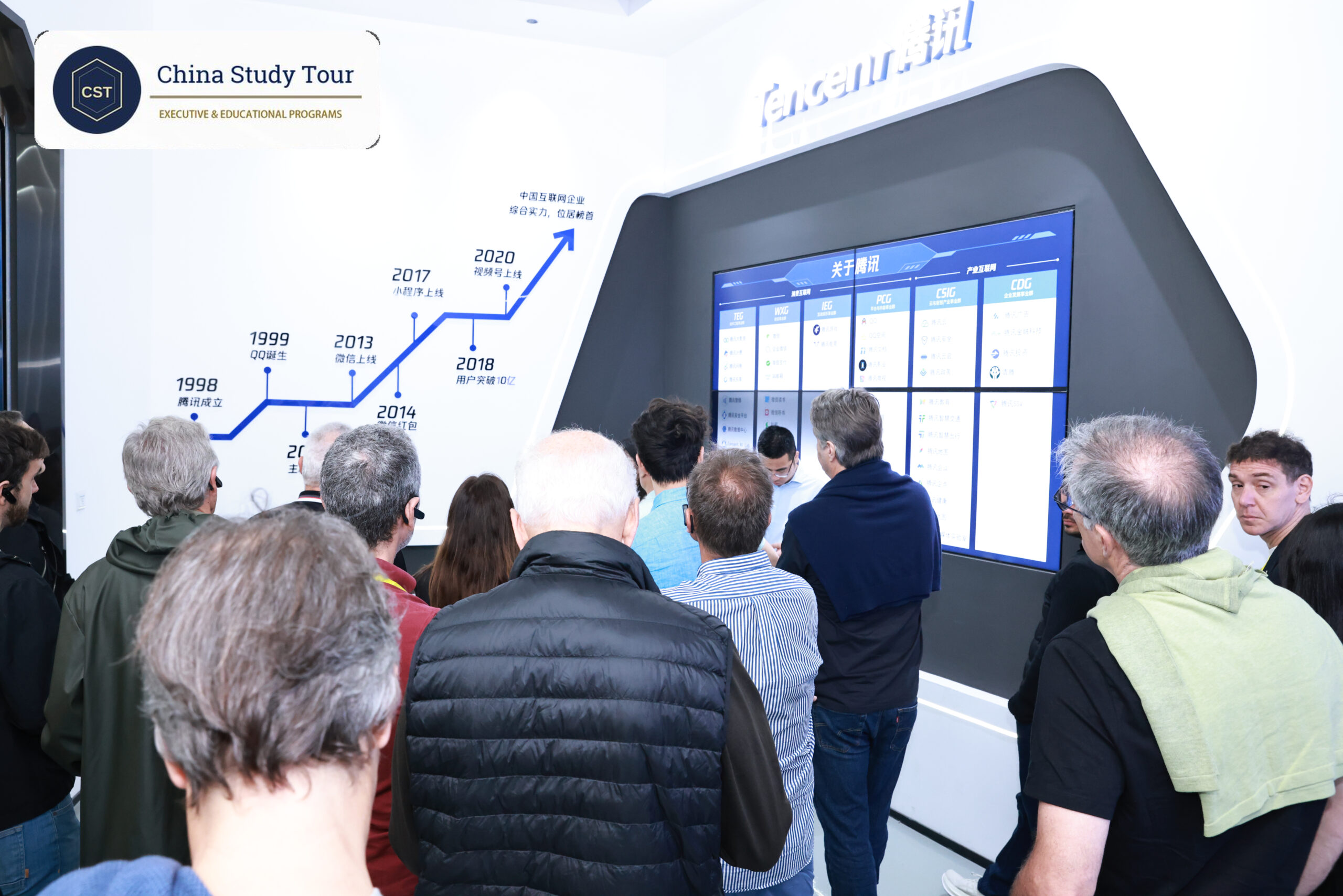
In addition, a route with several companies protects the program. After all, confirmed slots sometimes move when internal events or exhibition weeks fill the campus calendar. With three or four hosts, however, one change does not break the trip. If your focus is a single sector, see our guides to a robotics factory visit in China and a Guangzhou EV factory visit. For background on why Xiaomi's plant became so popular, CarNewsChina reported on Xiaomi factory tours as a weekend trend.
CST program managers in Shenzhen and Beijing wrote this guide from the company visits CST arranges for international delegations. The DJI route, the Huawei session format and the BYD headquarters details come from CST's arranged visits, including a BYD visit with a Saudi delegation in September 2026. The Xiaomi route comes from the factory's published visitor rules and booking calendar. All photos come from the CST team. Access rules, routes and lead times are a snapshot as of October 2026, and each company can change them.
FAQ: China Factory Visit
What does a China factory visit for executives include?
In general, most arranged visits follow four stops: an exhibition or product hall, the production line, a live demonstration and a briefing with Q&A. At DJI, the route takes about 120 minutes and ends with an engineer-led briefing. By contrast, Xiaomi's EV plant takes about 60 to 90 minutes, with the workshops seen from a shuttle.
Can an executive visit a Chinese factory alone?
Usually not, because DJI, Huawei and BYD have no public booking page for groups. They host organized delegations with a clear business or learning purpose, through partners they trust. A single executive should join or form a small delegation. Xiaomi's EV factory runs public online booking, but sessions are small and sell out fast.
How far in advance should we book a China factory visit?
Plan four to six weeks ahead for one company, and six to eight weeks for a route with several companies. BYD needs 30 to 45 days, because it approves every participant in advance. Also, around the Canton Fair and Chinese public holidays, add about two weeks. Booking too late is the most common reason a visit does not happen.
What is the best group size for a factory visit?
In our experience, ten to thirty people works best. Above that, the group splits and the briefing loses focus. Below ten, the cost per person rises, because the group shares fixed costs such as transport and interpretation. So smaller groups often do better by joining a group that CST has already confirmed.
What can you not see on a smart factory visit?
Core R&D labs, unreleased products, some proprietary production steps, production data and supplier relationships stay off the route. Hosts also do not share business figures such as unit volumes and margins. In addition, most campuses limit photography in some areas. Ask how a team makes a decision rather than what the numbers are, and you usually get a useful answer.
How much does a China factory visit cost?
The cost depends on group size, trip length, hotel level and the number of company visits. In practice, a delegation mostly pays for transport, a bilingual interpreter, hotels and the planning work around the visit. Larger groups usually pay less per person. CST sends a written, itemized quote for each group before you commit.
Which Chinese smart factories accept foreign delegations?
In Shenzhen and Dongguan, the most requested stops are DJI at Sky City in Nanshan, Huawei at Songshan Lake and BYD's headquarters in Pingshan, which shows its exhibition hall and museum but no production line. Further north, Xiaomi's EV factory in Beijing E-Town runs a visitor program. Guangzhou also has GAC Group and XPeng, which both host groups.
Tell us your sector, group size and travel dates. We will reply with a written plan showing which factories we can confirm in your window, in what order, and at what cost.
Email: info@chinastudytour.ai·WhatsApp / WeChat: +86 131 6180 6706