Xiaomi Factory Tour in Beijing: What Groups Can and Can't See
A Xiaomi factory tour is the easiest way for a foreign group to watch a Chinese electric vehicle (EV) plant at work. In a little over two years, Xiaomi's plant in Beijing E-Town has become the most open car factory in China. Visits are reserved online in advance, and English-language sessions are available. However, a public booking and a coordinated group visit are not the same product. This guide separates the two.
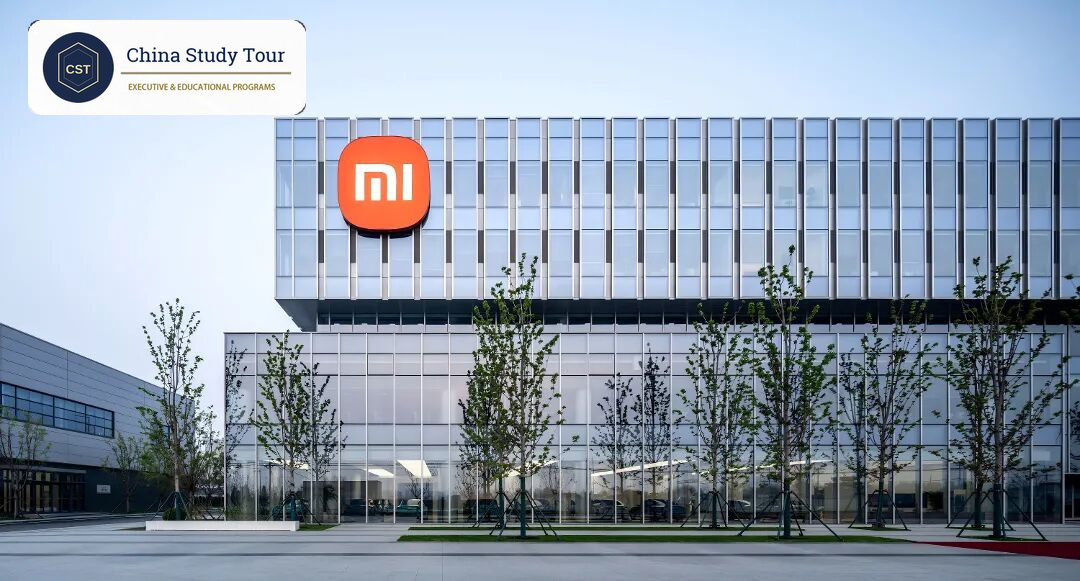
A group visit to Xiaomi's EV factory covers two exhibition halls and a shuttle ride through selected production workshops. The factory decides each day which workshops are open, based on production. Final assembly, the paint shop and the battery workshop are generally not on the standard route, and inside the workshops you stay on the shuttle. Places are reserved online and sell out fast, so delegations with fixed dates should plan four to six weeks ahead through a coordinator.
Key Takeaways
- A real plant, open to the public. Xiaomi delivered 411,082 vehicles in 2025, and the plant has welcomed more than 250,000 visitors since it opened.
- What you see. The technology hall, the vehicle hall and a shuttle ride through the workshops open that day. Final assembly, paint and battery workshops are generally not included.
- How you move. The halls and visitor areas are on foot. Inside the workshops, the group stays on the shuttle and does not walk the production floor.
- English is possible, but scarce. English-language sessions started in May 2026. As of October 2026 there were about six a month, and supply changes from month to month.
- A tour, not a briefing. Factory guides lead the standard tour. A meeting with engineers or managers needs separate arrangements and is confirmed case by case.
What a Xiaomi Factory Tour Includes
The standard tour runs about 60 to 90 minutes and has two halves. First comes the technology, on foot. Then comes live production, seen from a shuttle. The factory guides lead the group along a fixed route, so it helps to know that structure before the day.
The technology hall and the vehicle hall
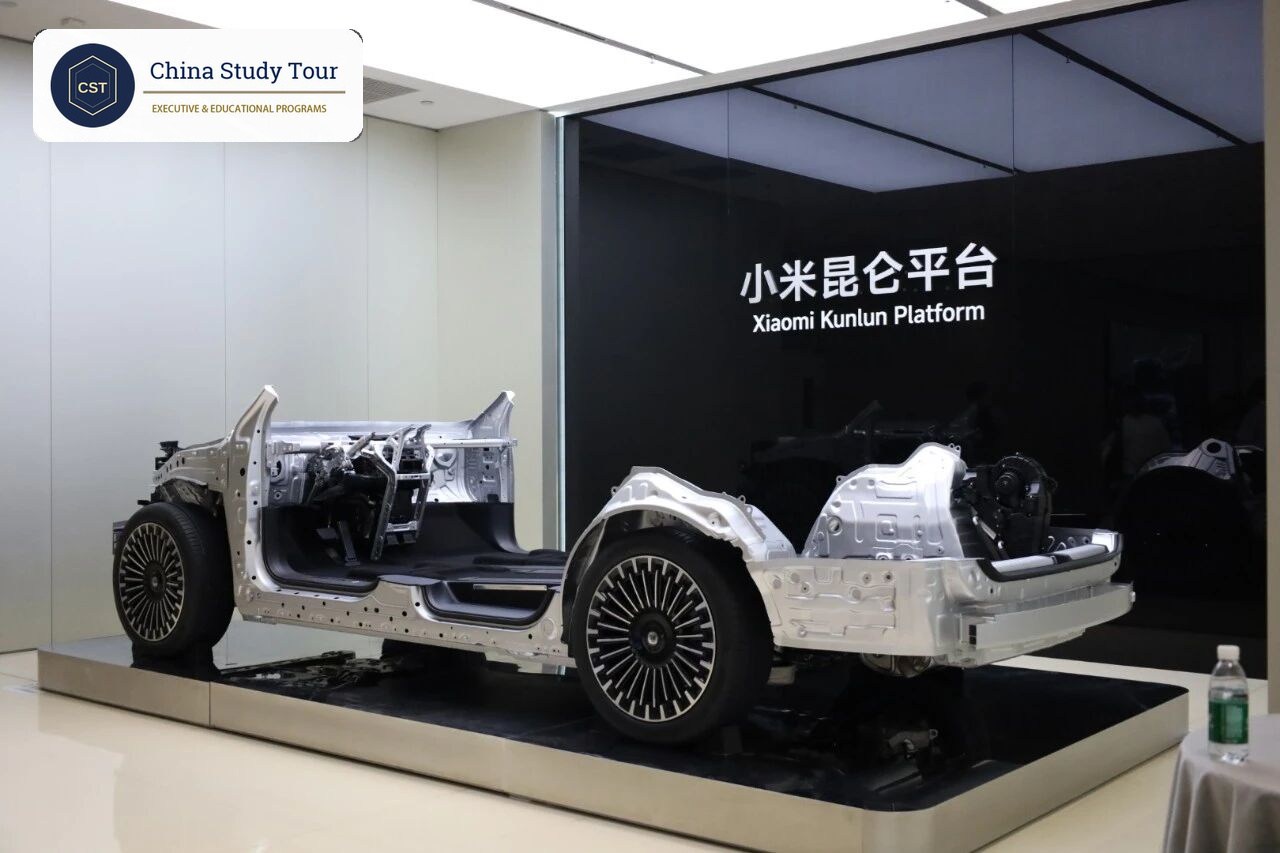
The visit starts in the exhibition halls of the main building, under a large Möbius-strip art piece with a blue SU7 inside it. The technology hall explains the engineering behind the cars. Exhibits cover the Modena platform used by the SU7, the newer Kunlun platform, and the 9,100-ton giga-casting process. The hall also shows the inverted battery cell design, the HyperEngine V8s motor, and the "human × car × home" ecosystem that links the cars to Xiaomi phones and home devices.
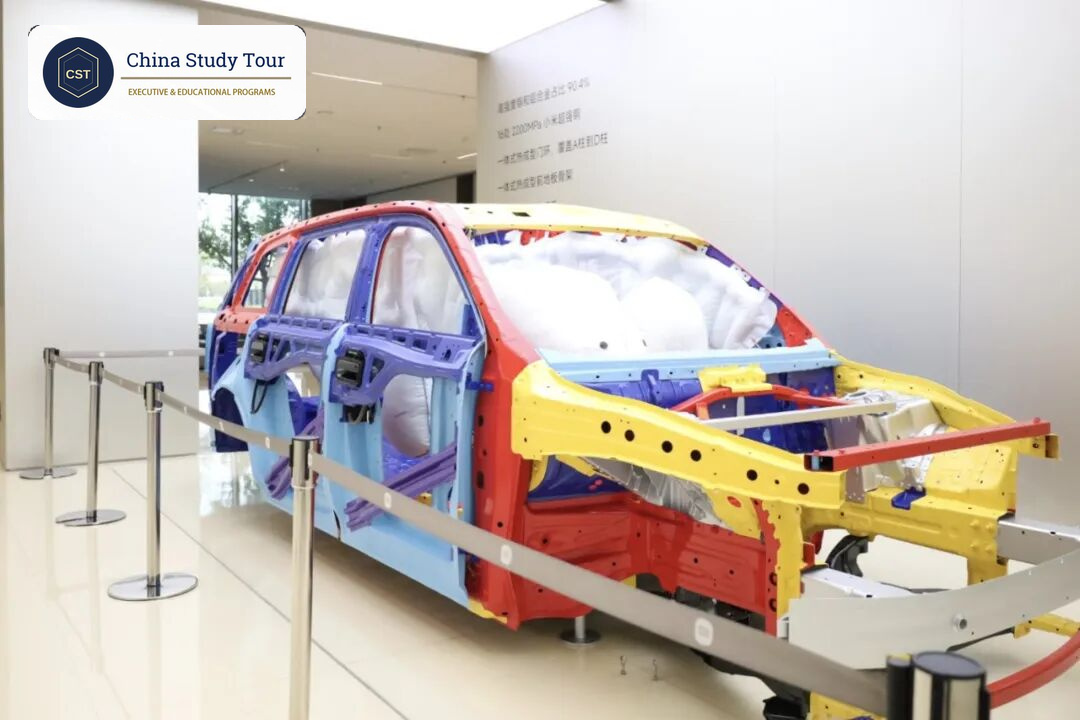
Two exhibits deserve extra time. The body-in-white display shows the bare steel and aluminum body of the YU7, which Xiaomi calls an armor-cage structure. The motor display cuts open the HyperEngine V8s, so visitors can see the stator and rotor inside.
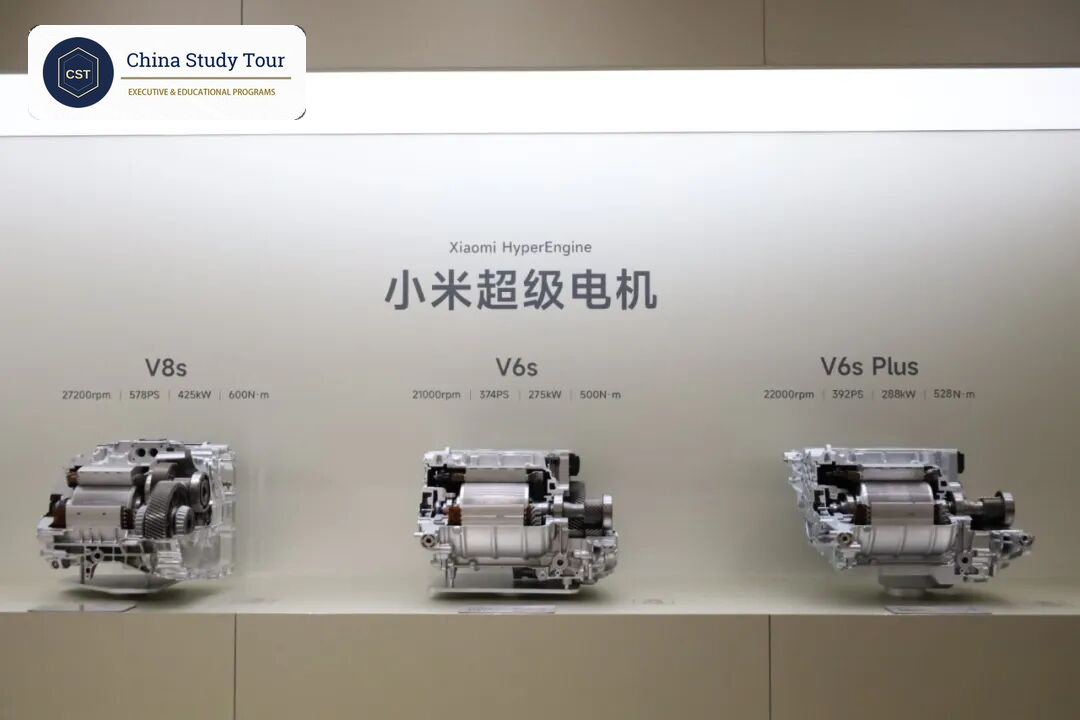
Next, the vehicle hall puts the SU7 and YU7 in front of the group. Visitors can sit in the cars, check the interiors and ask product questions. For most business groups, this half is more useful than it sounds. Later, when the group watches a rear underbody leave the casting machine, they already know why the plant was designed around it.
The workshop shuttle tour
The second half is a shuttle ride through selected production workshops. The factory chooses the route each day, based on production schedules and visitor safety. The workshops most often shown are these:
- Die casting. The 9,100-ton die-casting machine forms a complete rear underbody in about 100 seconds. A conventional line builds the same part from 72 stamped parts and 840 weld points. Next to the line, an X-ray inspection system uses artificial intelligence (AI) to find hidden defects, with accuracy above 99.9%.
- Stamping. These press lines feed the body shop, and they run almost without workers.
- The body shop. This is the highlight of most visits. More than 700 industrial robots handle welding, gluing and assembly. Autonomous mobile robots (AMRs) carry parts to each station. Key processes are 100% automated, and the shop's overall automation rate is 91%. At full output, the plant finishes one car every 76 seconds.
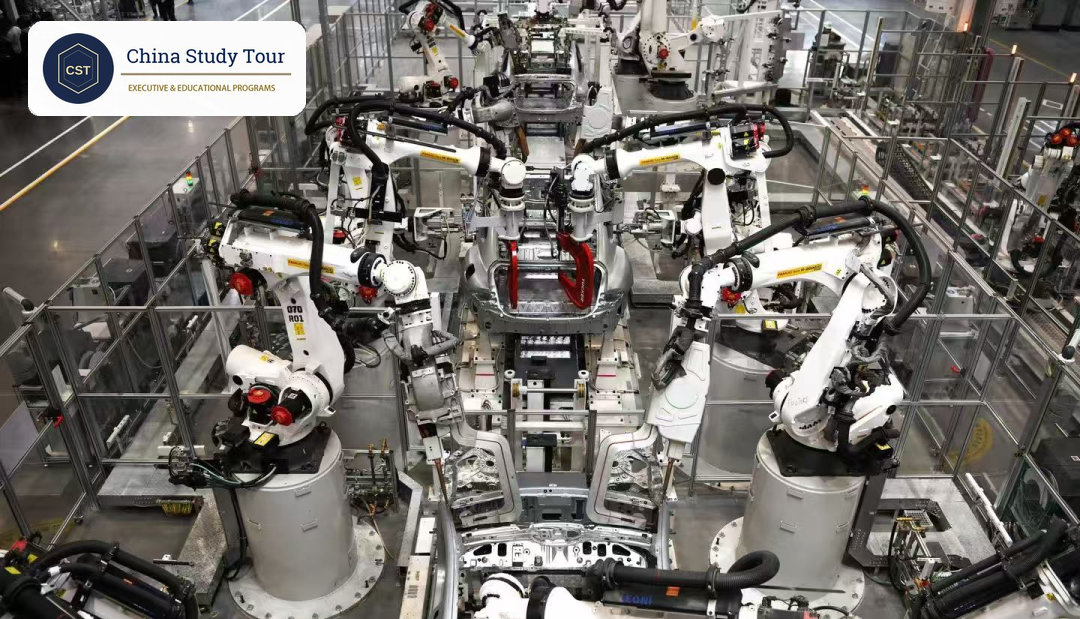
The route is carefully planned. Walkways sit inside safety zones, and the shuttle avoids core work stations. As a result, the group watches real production, not a demonstration line. This is also why the rules in the next section are firm.
Extras, if the schedule allows
- SU7 test ride. The plant has a 2.5-kilometer test track. With a driver at the wheel, visitors can feel the SU7 Max go from 0 to 100 km/h in 3.08 seconds.
- Electric go-kart track. A 580-meter electric kart track opened on site in March 2026.
- Merchandise store. The store is open to visitors, and the factory-branded products have become part of the experience.
The campus covers 718,000 square meters. It has six core workshops (die casting, stamping, body, paint, final assembly and battery), a 2.5-kilometer test track and a test building with 29 labs. In the words of the campus general manager, it is "all real production, not a set built for show." That is why production comes first at every step of the tour.
What You Can't See, and Why
Many guides leave this part out, and it is the part that most often leaves a delegation disappointed. Explain it before the trip, not at the gate.
- Final assembly is not on the standard route. Some visits have reached it when production allowed, but do not plan on it. You will reliably see car bodies being welded, not cars being finished.
- Paint and battery workshops are also closed. Both have their own access controls. Seeing battery cell or pack production needs separate arrangements.
- No walking the production floor. The halls and visitor areas are on foot. In the workshops, the group stays on the shuttle. Cameras work from the shuttle, and drones are not allowed.
- Photo rules change by area. Some zones allow photos and others do not. The guide points them out on the day, and the group is expected to follow them.
- No executive briefing in the standard format. Factory guides lead the public tour. A meeting where engineers or managers answer a delegation's questions needs separate arrangements and is confirmed case by case.
None of this means Xiaomi is being difficult. It is simply the cost of running a real plant as a visitor site: production first, safety second, sightseeing third. The groups that get the most from the day are the ones that know exactly where the route ends.
Who Can Visit, and the Two Ways In
Xiaomi's program is open to the public, but places are limited. There are two ways in, and they deliver different things.
| Public online booking | Coordinated delegation visit | |
|---|---|---|
| Best for | Individuals and families with flexible dates | Company, school, association and government trade mission groups with fixed travel dates |
| How to book | Reserved online in advance, with a small number of bookings per session. Age limits apply; contact us for the details. | Through a coordinator, who fits the session into the group's Beijing program with transport, interpretation and other visits |
| Language | Mandarin sessions daily; English sessions since May 2026 (about six a month as of October 2026) | An English-language session secured as part of the plan |
| What you get | The standard route: two halls plus the workshop shuttle | The same route, plus a fixed date, logistics, interpretation, other company visits, and help requesting a specialist meeting where possible |
| The catch | Sessions sell out quickly; in busy months, tens of thousands of people apply | Needs four to six weeks of lead time and a real program around the visit |
How many foreign groups visit
Foreign interest is growing fast. By September 2026, the factory had run 479 tours for foreign visitors, with 9,469 people from more than 70 countries and regions. In our experience, groups of 10 to 30 people work best. The factory hosts everyone from school study groups to government and business missions; the depth of the talk changes with the audience, but the route does not.
For a delegation, a public booking is a gamble: places open once a month, each booking covers only a few people, and an English session may not fall on your dates. A coordinator turns the visit into a fixed part of the program and handles the transport, interpreting and other company visits around it.
How to Book, and How Much Lead Time You Need
Xiaomi factory tours are reserved online in advance. For the booking steps and current availability, contact CST. Supply changes a lot from month to month. In October 2026 the factory ran 156 sessions, with extra sessions around the National Day holiday; for November 2026 it opened 63. Each session is small, and demand is far higher than supply, so places need to be secured early.
For a delegation, the session must fall inside a fixed travel window and connect with the rest of the program. Our lead-time guidance:
| Travel window | Lead time | Why |
|---|---|---|
| Normal weekday, outside holidays | 4 to 6 weeks | Time to secure a session that fits the program, plus transport and interpretation. |
| Golden Week (October 1 to 7) | Check that month's calendar | The plant has added sessions in past holidays, but domestic travel peaks and logistics get harder. |
| Chinese New Year (early to mid-February 2027; New Year's Day is February 6) | Plan around it | Businesses pause and travel is crowded. CST does not schedule factory visits in this window. |
| Multi-city programs (Beijing plus Shenzhen or Guangzhou) | 8 to 12 weeks | Each company has its own approval process, and the one with the fewest slots sets the calendar. |
For timing, visas and budgets across a whole trip, see the China visa, timing and budget guide.
A Sample Day Built Around the Xiaomi Factory Tour
Every program is planned for the group, but a typical Beijing day looks like this:
| Time | Activity |
|---|---|
| 08:30 to 09:30 | Drive from central Beijing (Chaoyang) to Beijing E-Town, about 23 km southeast of the city center |
| 09:30 to 10:00 | Registration, ID check and headsets |
| 10:00 to 11:00 | Technology hall and vehicle hall with the factory guide |
| 11:00 to 11:45 | Shuttle tour through the workshops open that day |
| 11:45 to 13:00 | Lunch |
| After lunch | SU7 test ride or go-kart track if available, or return toward the city |
| 15:00 to 17:00 | Afternoon company visit, for example the Baidu Apollo campus, then a debrief over dinner |
Before the Trip: Three Things to Brief
- Which parts are on foot. The halls and visitor areas are walked; the workshops are seen from the shuttle. Photo rules change by zone, and drones are not allowed. Tell the group early, so no senior visitor learns this at the gate.
- Any specialist meeting. If the group needs time with engineers or managers, request it at the planning stage. Asking on the day rarely works.
- The comparison you came to make. The best use of the day is a benchmark. What does 91% automation look like in practice? What does a 9,100-ton casting cell change about car design? Groups that bring three concrete questions leave with a benchmark. Groups that come only to see the robots leave with photos.
Six Questions to Ask on the Tour
The standard tour has no formal question time. Still, the guide, and any specialist you have arranged, will respond well to specific questions. These six usually produce useful answers:
- The plant was designed around giga-casting. What did that save in cost and time, and what did it make harder?
- How did a consumer electronics supply chain carry over into cars, and where did it not?
- What did it take to run a public visitor program inside a working plant?
- At 91% automation, where do people still make decisions on the line, and why there?
- What does the X-ray AI inspection catch that a human inspector could not?
- If you designed this plant again today, what would you change?
Cost and What Is Included
Xiaomi runs the tour itself as an industrial tourism program, and places are reserved online in advance. The factory sets the entry terms and any changes on the day. What a delegation actually pays for is everything around the tour: transport to E-Town, a professional bilingual interpreter, the wider Beijing program, and the work of fitting a confirmed session into fixed travel dates.
The total cost depends on group size, trip length, hotel level and the number of company visits. CST prepares a written, itemized quote for each group, so you see every cost before you commit. Larger groups usually pay less per person.
Combining Xiaomi With the Rest of Beijing
Xiaomi works best as one stop on a themed Beijing route. Beijing E-Town is the city's high-tech manufacturing zone, so same-day pairing is easy. Many groups build a three-to-four-day Beijing program around one carmaker, one AI company and one digital company: Xiaomi for EV manufacturing, Baidu for its Apollo self-driving campus, iFlytek or ByteDance, and BAIC New Energy as a state-linked carmaker for comparison. The Beijing destination guide shows how these fit together, and the GAC factory visit in Guangzhou offers a southern car plant to compare.
Beijing or the south?
For groups focused on EVs, the bigger question is Beijing or the south. The EV and new energy study tour visits BYD, the CATL battery technology center and the NIO Experience Center over five to seven days from Shenzhen. Read the BYD company visit guide for what that route includes. The two routes answer different questions. Xiaomi's new plant shows what a consumer electronics company built in three years, while the southern route shows how established carmakers built a full supply chain. For how visits are combined, see the corporate visits FAQ and the executive study tour guide. For background on why these tours became so popular, CarNewsChina reported on Xiaomi factory tours as a weekend trend.
After the Day: The Debrief
A common mistake is to treat the visit itself as the result. The real result is what the team can act on when they return to the office.
Three steps close the gap. First, CST runs a 45-minute debrief the same evening. The facilitator asks what changes a decision back home, what does not, and what questions remain open. Second, CST writes a post-tour report within five working days, with route notes, answers to the group's questions and the benchmarks they came to collect. Third, the team names three to five decisions it can defend. If they cannot, the visit was sightseeing. If they can, it was a study trip.
Planning Checklist
| Item | What to confirm |
|---|---|
| Passports | Each visitor brings a valid passport; IDs are checked at registration |
| Language | English session on your date, or an interpreter from your coordinator |
| Route | The group knows final assembly, paint and battery workshops are not on the standard route |
| Extras | Test ride or go-kart track treated as a bonus, not a fixed item |
| Pairing | Afternoon visit in Beijing booked, with travel time from E-Town |
CST programs support English, Chinese, Spanish, Portuguese, and Japanese. All guides are bilingual, and additional language support is available upon request. For the full list of companies that host outside groups, see which Chinese companies accept corporate visitors.
China Study Tour (CST) compiled this guide from Xiaomi's public booking calendar, the factory's published visitor rules, and reports on the plant's visitor program. It describes the standard public route; it is not a record of one specific visit. Xiaomi sets the route, session supply and photo rules, and may change them at any time. Session numbers and visitor figures are a snapshot as of October 2026.
Frequently Asked Questions
Can international groups take a Xiaomi factory tour in Beijing?
Yes. Xiaomi runs a formal visitor program at its Beijing E-Town plant, which is unusual for a Chinese car factory. Visits are reserved online, and English-language sessions are available. The challenge is demand: sessions are small and sell out fast, so most delegations arrange the visit through a coordinator.
What can groups actually see inside the Xiaomi EV factory?
Groups see two exhibition halls and then take a shuttle through selected workshops. The technology hall covers the Modena and Kunlun platforms, giga-casting and the HyperEngine motor, and the vehicle hall shows the SU7 and YU7. The body shop runs more than 700 robots at 91% overall automation.
What can't groups see at the Xiaomi factory?
Final assembly, the paint shop and the battery workshop are not on the standard route. Inside the workshops, visitors stay on the shuttle and do not walk the production floor. The standard tour also has no executive briefing; a meeting with engineers or managers needs separate arrangements and is confirmed case by case.
How do we book a Xiaomi factory tour from outside China?
Visits are reserved online in advance, and sessions are small, with supply that changes every month. For booking details, contact CST. Delegations that need a fixed date, an English session and other Beijing visits on the same day usually work through a coordinator.
How far in advance should we plan a Xiaomi factory visit?
Book as early as possible, because demand is far higher than supply. For a delegation visit within a Beijing program, plan at least four to six weeks ahead. Plan earlier around Golden Week (October 1 to 7) and Chinese New Year, when domestic travel peaks.
Is the Xiaomi factory tour available in English?
Yes. English-language sessions started in May 2026, and there were about six a month as of October 2026. Supply changes from month to month, so English-speaking groups should secure dates early. Another option is to join a Mandarin session with an interpreter provided by the coordinator.
Can we test drive or ride in a Xiaomi SU7 at the factory?
Sometimes, if the schedule allows. The plant has a 2.5-kilometer test track where visitors can ride in an SU7 Max with a driver, and a 580-meter electric go-kart track opened in March 2026. Places are limited and arranged on the day, so treat them as a bonus, not part of the plan.
Can Xiaomi be combined with other company visits in Beijing?
Yes, and most delegations should do this. The plant is about 23 kilometers southeast of central Beijing. It pairs well with Baidu's Apollo self-driving campus, iFlytek, ByteDance and BAIC New Energy in a three-to-four-day program: one carmaker, one AI company and one digital company.
How does a Xiaomi visit differ from the BYD, CATL and NIO route in Shenzhen?
The two routes answer different questions. Xiaomi's Beijing plant shows a consumer electronics company's first car factory, with high automation and giga-casting. The southern route visits BYD, the CATL battery technology center and the NIO Experience Center, giving a wider view of the EV supply chain. Groups with time for both see the full contrast.
Tell us your group size, travel dates and what you want the visit to show. We will reply with a written plan that fits the Xiaomi session into a full Beijing route.
Get a Custom Proposal in 24 Hours →
Email: info@chinastudytour.ai·WhatsApp / WeChat: +86 131 6180 6706