
China High-Speed Rail for Groups: How Study Tours Move Between Cities
China high-speed rail for groups is the simplest way to link the cities on a multi-city study tour. Stations sit in city centers, trains leave every few minutes on the busiest lines, and a group of 30 can travel together without an airport check-in. This guide covers the routes, the group ticket rules, the seat classes and when a flight is the better choice.
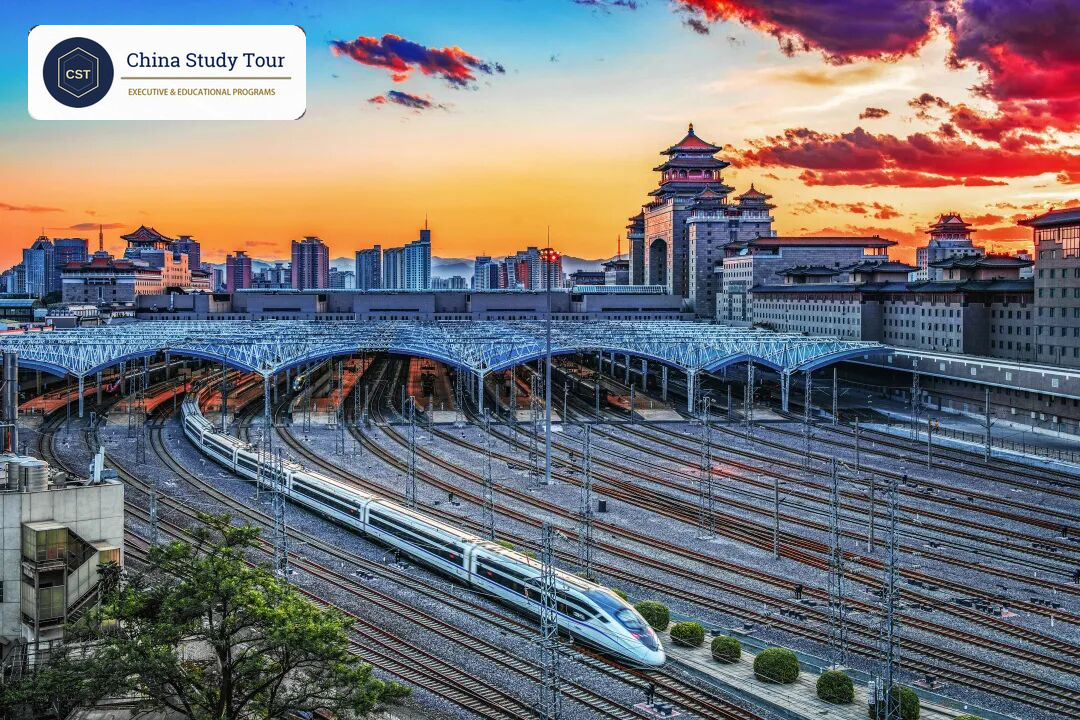
China's high-speed rail network passed 50,000 km at the end of 2025. Beijing to Shanghai takes 4 hours 18 minutes on the fastest train. Groups of 20 or more can book group tickets online at least 3 days before departure, and exact costs depend on the itinerary. For trips under about 5 hours by rail, the train is usually faster door to door than flying. For Beijing to Shenzhen, fly.
Key Takeaways
- The network is everywhere. More than 50,000 km of high-speed track reaches 97% of Chinese cities with over 500,000 people, as of December 2025.
- Beijing to Shanghai is the core link. The fastest train takes 4h18m, and more than 50 trains run on a normal day.
- Group rules changed in October 2025. One online order now covers up to 19 tickets, one account holds 30 passengers, and groups of 20+ can book group tickets online.
- Business class is scarce. Many trains carry fewer than 10 business class seats, so first class in one block is the practical standard for executive groups.
- Simple rule: take the train for trips under 5 hours, and fly for Beijing to Shenzhen and other routes over 2,000 km.
China's High-Speed Rail Network Overview
On December 26, 2025, China's high-speed network passed 50,000 km. That is more than all other countries combined. In 2025, the national railway carried 4.255 billion passenger trips, and high-speed trains carried most of them.
For a study tour group, the important point is simple. Beijing, Shanghai, Shenzhen, Guangzhou, Hangzhou and Suzhou are all on the network. In addition, the main stations are inside the city, not an hour away like many airports. As a result, a two-to-four-city program over 7 to 14 days does not lose whole days to air travel. CST teams in Beijing, Shanghai and Shenzhen use rail as the default link between cities on most programs.
Key Routes for Study Tour Groups
These are the routes that appear most often in executive and student itineraries. The times are the fastest scheduled trains as of October 2026. Trains with more stops take longer.
| Route | Fastest time | Trains per day | Notes for groups |
|---|---|---|---|
| Beijing to Shanghai | 4h18m (most 4.5 to 6h) | 50+ | City center to city center. The busiest and easiest route to book. |
| Shanghai to Hangzhou | About 45 min | Dozens | Easy add-on for Alibaba and the e-commerce sector. Works as a day trip. |
| Shanghai to Suzhou | About 25 min | Very frequent | Classical gardens plus Suzhou Industrial Park and the BioBAY life-science cluster. |
| Shanghai to Shenzhen | 6h34m (most 7 to 12h) | Several direct | The longest leg most groups consider. Ride it in daytime, or fly in about 2.5 hours. |
| Beijing to Shenzhen | 7h50m (about 2,400 km) | About 12 direct | Usually a flight of about 3.5 hours. Overnight trains can save one hotel night. |
| Shenzhen to Guangzhou | About 30 min | Every 10 to 15 min | The Pearl River Delta: BYD, Tencent and Huawei at one end, the Canton Fair at the other. |
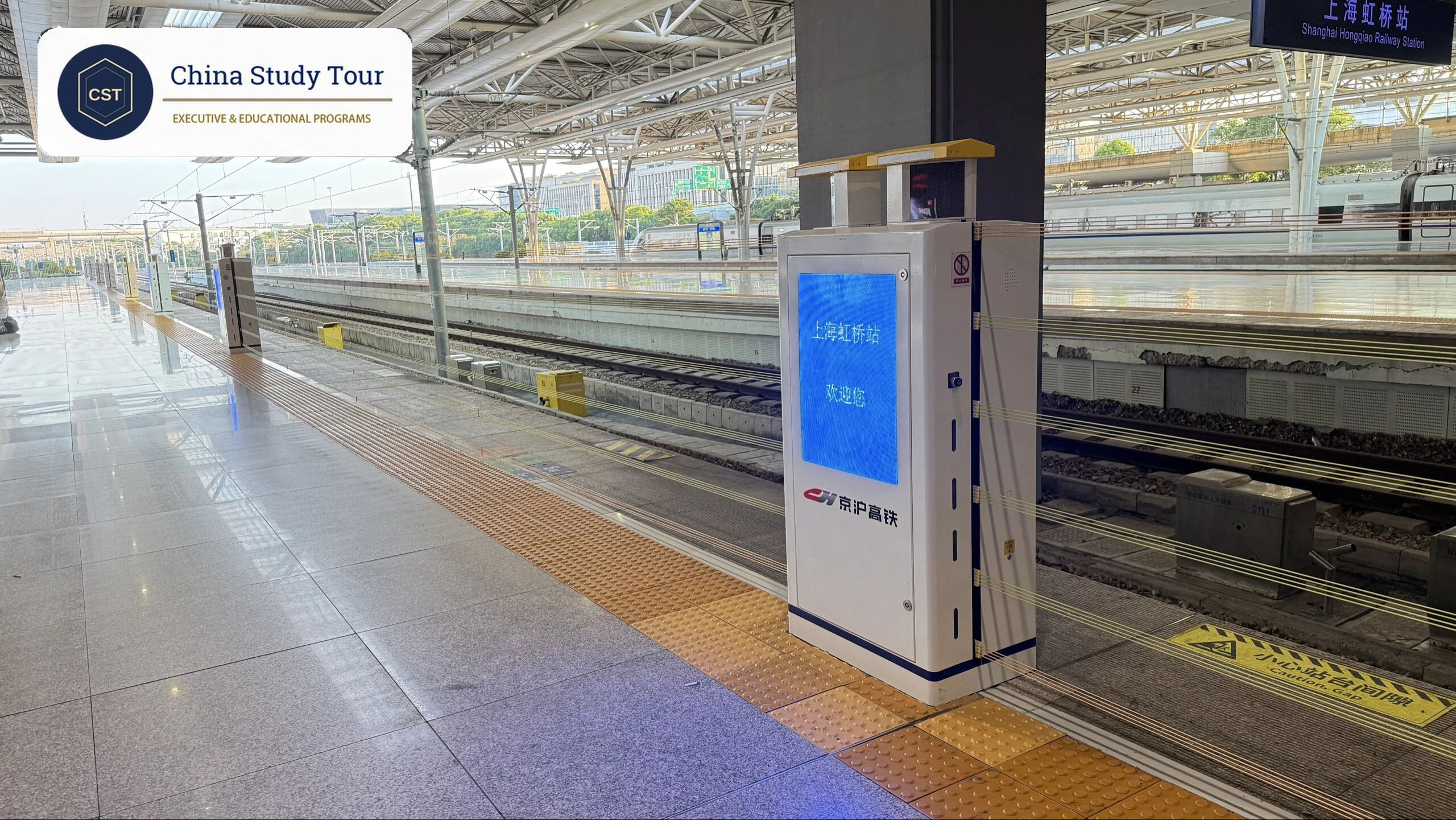
To see what each city offers, read our China study tour destinations guide. It pairs every city with the company and campus visits available there.
The Beijing-Shanghai-Shenzhen Corridor
Most first-time delegations want the same three cities. Beijing offers policy and AI companies such as ByteDance and Baidu. Shanghai offers finance, the Lujiazui district and carmakers such as NIO. Shenzhen offers hardware: BYD, DJI, Tencent and Huawei are all within one city. Beijing to Shanghai is an easy decision, because the train takes 4h18m and departs every 20 minutes or so during the working day.
Shanghai to Shenzhen needs a deliberate choice. Since July 2026, the fastest train takes 6h34m, but most services take 7 to 12 hours because they stop along the coast. There are two good options. If the program has a full travel day, ride the train and stop in Hangzhou on the way. If the schedule is tight, fly in about 2.5 hours and use the saved time for a company visit. We avoid the rushed half-day transfer, because it gives the group neither the view nor the meeting.
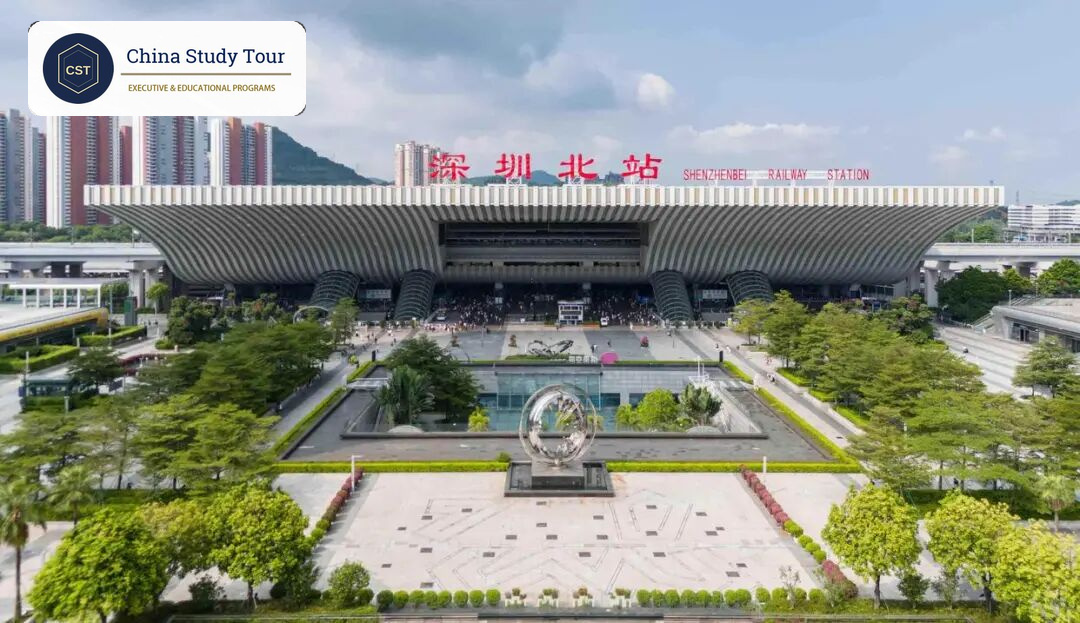
Beijing to Shenzhen is about 2,400 km. The fastest day train takes 7h50m, and an overnight train takes about 12 hours. Some groups choose the overnight train to save a hotel night. On a 7-day program, however, we usually fly this leg. The real limit on the schedule is host availability, not train seats.
How Group Bookings Work
China Railway changed the booking rules on October 25, 2025, and the changes help groups. First, one online booking order can now include up to 19 tickets, up from 9. Second, one account can now save 30 passengers, up from 15. That covers most MBA classes and executive delegations without a special process.
Group tickets for 20 or more
Formal group tickets start at 20 passengers on the same date and the same train. You book online at least 3 days before departure, with every passenger's ID details. The railway checks seats and confirms the group order. Unpaid orders cancel automatically, so pay as soon as the order is confirmed.
Two problems for foreign groups
Two problems remain. First, every passport needs a one-time identity check before it can be used for online booking, and this check can take time. Second, holiday seats sell out fast. Tickets go on sale about 15 days before departure. Around Golden Week or Chinese New Year, a block of 20 seats on a good train can disappear within minutes.
This is why most groups let their operator handle tickets. We collect the passport list at sign-up, book the seat block when sales open, and a guide meets the group at the station. In fact, the tickets are the easy part. The company visits that justify the trip need 8 to 12 weeks of planning, and that is the real deadline.
Send us your cities, dates and group size. We will check which company visits are open in that window, plan the train legs around them and send an itemized quote within 24 hours. Contact the CST planning team.
What to Expect on Board
Most G trains have three classes. Second class has 3+2 seating, like an airline, with a power outlet at every seat. First class has 2+2 seating and enough legroom to work on a laptop. Business class has 1+2 lie-flat seats, a meal and lounge access at major stations. However, many trains have fewer than 10 business class seats, so they sell out first. Fares vary by train, route and class, so exact costs depend on the itinerary.
| Class | Layout | Comfort | Best for |
|---|---|---|---|
| Second class | 3+2 | Standard, clean and reliable | Student groups, large cohorts |
| First class | 2+2 | Wider seats, more legroom | Executive delegations working on board |
| Business class | 1+2, lie-flat | Lie-flat seat, meal, lounge | Two or three senior leaders |
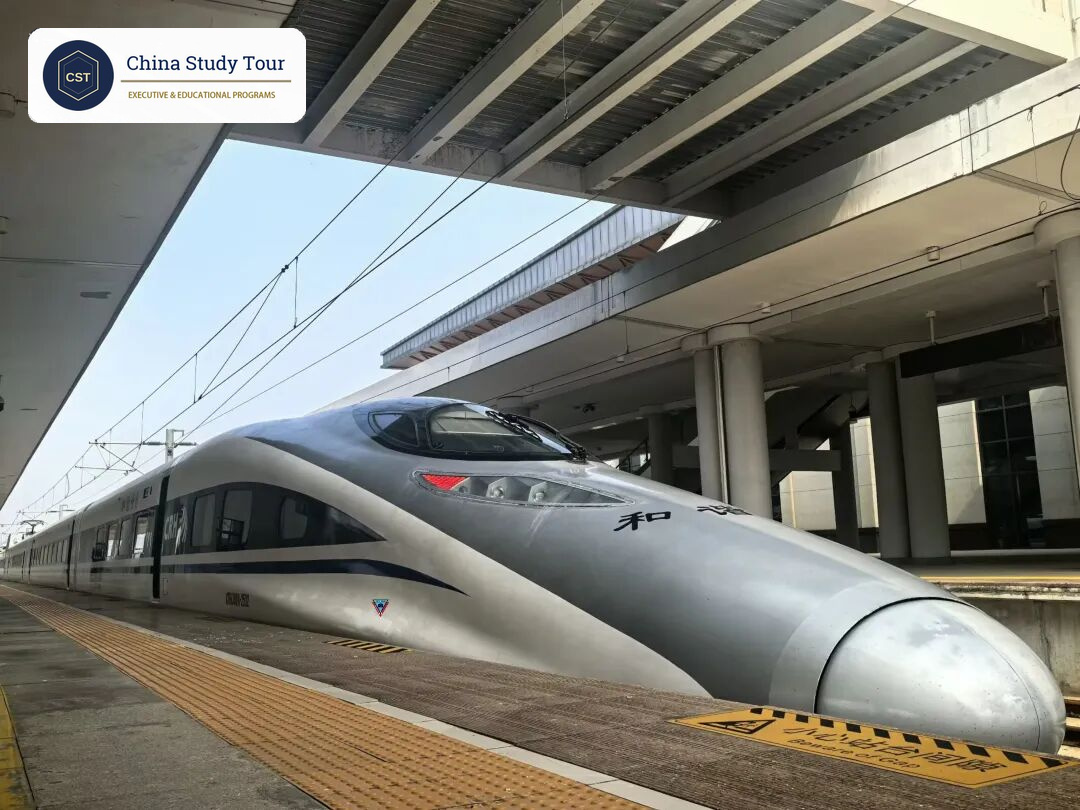
Station security is like an airport, but faster. There is no checked luggage, and each adult may carry up to 20 kg onto the train. Even so, groups should arrive 45 to 60 minutes early, because moving 20 people through security takes time. Foreign passengers scan their passport at the gate or use the staffed lane. On board, the ride is quiet and smooth. You can also order hot meals to your seat at many major stations, and some routes offer quiet carriages.
Five Tips for Executive Groups
- Book business class the day sales open, or skip it. With so few seats, late bookings mean senior leaders ride in first class anyway. A first class block is the reliable choice.
- Use the ride as a debrief session. Four hours with the whole delegation seated together is the best time to discuss what the group learned. Put the discussion questions in the pre-trip pack.
- Choose the mode by distance, not by habit. Take the train for trips under 5 hours, and fly above that. The Beijing-Shenzhen day train is a good experience but a poor use of a tight schedule.
- Check the calendar before the timetable. We avoid Golden Week (October 1 to 7) and Chinese New Year. The Canton Fair also fills Guangzhou trains and hotels from mid-April to early May and from mid-October to early November. Our China visa, timing and budget guide has the full calendar.
- Let one party own the tickets. One operator should hold the passport list, the identity checks and the seat block. Otherwise, your delegation may end up in three different carriages. CST guides travel with the group and support English, Chinese, Spanish, Portuguese, and Japanese. All guides are bilingual, and additional language support is available upon request.
China High-Speed Rail for Groups vs Flying
The comparison most people ask about is Beijing to Shanghai. The flight is about 2 hours 15 minutes in the air. However, the full trip also includes the drive to Daxing or Capital airport, check-in and security, and the ride in from Pudong or Hongqiao. Door to door, that often adds up to 5 hours or more. The train arrives at Shanghai Hongqiao, which has three metro lines, and the total trip is similar or shorter. For a group of 20, the benefits add up: no check-in desk, no lost seat assignments and luggage that stays with you.
Flying wins on long distances. Beijing to Shenzhen is about 3.5 hours in the air against 7h50m on the fastest train, and station convenience cannot close that gap. Overnight trains are a separate case. They make sense when the schedule is relaxed and the night on the train replaces a hotel night. In short, China high-speed rail for groups works best on trips of 5 hours or less.
This guide is written by the CST program team, which plans intercity travel for groups from offices in Beijing, Shanghai and Shenzhen. Network figures come from China State Railway Group and Xinhua reports from December 2025 and January 2026. The booking rules come from China Railway's official notice of October 25, 2025. Train times come from public timetables and are a snapshot as of October 2026. They change with each timetable update, so check before you book.
FAQ
How do groups book high-speed rail tickets in China?
Small groups can book online, where one order covers up to 19 tickets and one account holds 30 passengers. Groups of 20 or more on the same train can book group tickets online at least 3 days ahead. Most study tour groups let their operator handle this.
Can foreigners book China high-speed rail tickets with a passport?
Yes. A passport is a valid ID for rail travel in China, but it needs a one-time identity check, online or at a station window, before online booking. Tickets are electronic, and foreign passengers scan their passport at the gate or use the staffed lane. Organized groups usually leave this step to their operator.
Is high-speed rail faster than flying for business trips in China?
On routes under about 5 hours by rail, usually yes. Beijing to Shanghai takes 4h18m by train against about 2h15m in the air, but stations are in city centers and security is quick. For long routes such as Beijing to Shenzhen, 7h50m by train against 3.5 hours by air, flying is the better choice.
How far in advance should a group book train tickets in China?
Tickets go on sale about 15 days before departure, and group tickets need at least 3 days. In practice, plan the whole program 8 to 12 weeks ahead, because company visits take longer to confirm than seats. Around Golden Week, Chinese New Year and the Canton Fair, trains and hotels sell out early.
Which seat class should executive groups choose on Chinese high-speed trains?
Second class (3+2 seats) is clean and reliable, and it suits large student groups. First class (2+2) gives more space for working on board. Business class has lie-flat seats but often fewer than 10 per train. A common choice is a first class block for the delegation and business class for two or three senior leaders.
See which cities and company visits fit your group, then tell us your group size and dates. We will design the train legs around the visits and reply with an itemized quote within 24 hours.
Explore Destinations and Itineraries →
Ready to talk? Request a custom proposal or compare China study tour programs.
Email: info@chinastudytour.ai·WhatsApp / WeChat: +86 131 6180 6706
Related reading: China study tour program guide · China study tour vs business trip · China visa, timing and budget guide