
Beijing to Shanghai Study Tour: What a Brazilian Delegation Learned
This Beijing to Shanghai study tour was for the Trezotech delegation, a group of Brazilian entrepreneurs. In October 2026 they spent their Beijing days with humanoid robots and at Xiaomi's car plant, then took the train south to Shanghai. Their suitcases flew. On that travel day two things went wrong with the luggage, and this report covers those as well as the visits, because that is the part most brochures leave out.
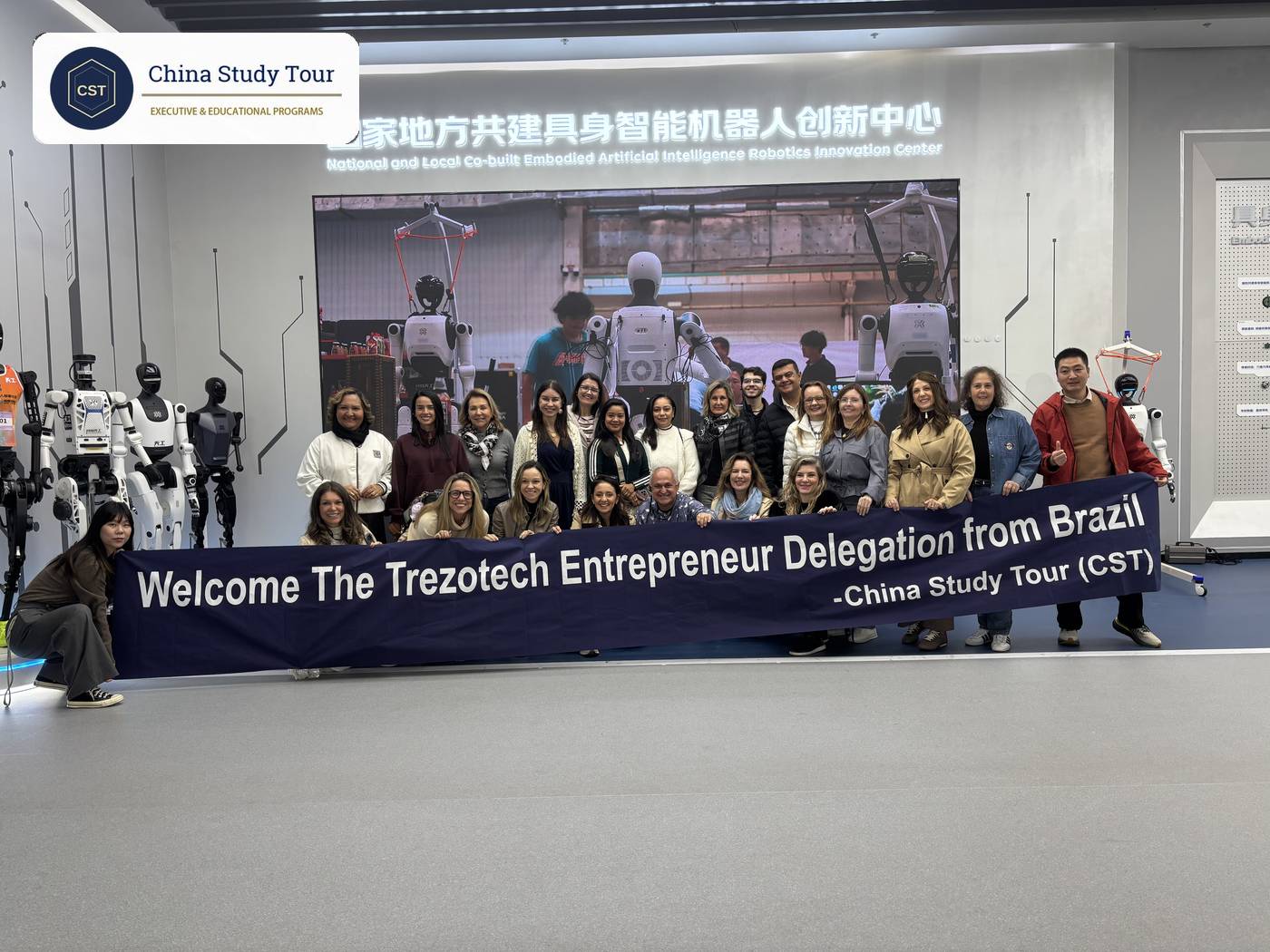
In October 2026, China Study Tour (CST) ran a two-city program for a Brazilian entrepreneurs' delegation. In Beijing they visited the national embodied AI robot center in Yizhuang, including its data collection base, then Xiaomi's EV showroom, plant and test track. The group went to Shanghai by high-speed train while their suitcases went by air and arrived the same day. In Shanghai they took a Huangpu River cruise and joined Disney's Approach to Quality Service. A dirty pickup van and some restricted items in the cases were both dealt with before anyone left China.
Key Takeaways
- Beijing for technology, Shanghai for service. The robots and the Xiaomi line showed what is being built. The Disney session was about running service well, day after day.
- The data base was the highlight. The group talked more about the room where robots are trained than about the robots on stage.
- Heavy bags can fly while people take the train. On a Beijing to Shanghai study tour where guests bring two large cases each, this makes the transfer day much easier.
- Batteries and magnets will be pulled out. Power banks, tracking tags and magnets found in air-freighted cases are removed at screening and need to be sent on by courier.
- Someone has to be at the curb. The group manager saw the vehicle was not good enough, turned it down and switched to a better one right away, so the luggage still made its flight.
Who the group was and what they wanted
Most of the Trezotech travelers run their own companies, and they work in different industries. A group like that does not want three days on one sector. They want to see for themselves what Chinese manufacturing and embodied AI look like up close, and then decide what is relevant to their own business.
So we built the program around two contrasts:
- Early research next to mass production. First a national robot center that is still working out what humanoid robots are for. Then a car plant that, at full speed, finishes a car every 76 seconds.
- Technology next to service. Beijing showed what Chinese companies can build. Shanghai was there for the other question business owners ask: how do you deliver the same good service to thousands of people every day?
The route followed from that: company visits in Beijing, a rail transfer, then Shanghai. We kept sightseeing to the one river cruise on arrival night.
The humanoid robot center in Yizhuang
The first stop was the National-Local Joint Innovation Center for Embodied Intelligent Robots in Beijing Yizhuang. It started as the Beijing Humanoid Robot Innovation Center in November 2023, with backers including Jingcheng Machinery, UBTECH, Xiaomi and Yizhuang Robot. On 10 October 2024 it became a national-local joint center, unveiled by the Ministry of Industry and Information Technology and the Beijing city government. For visitors, that status tells you something. Much of the shared platform work and public data for China's humanoid robot sector comes out of this building.
Two platforms come up again and again during the visit. Tiangong is the center's general-purpose humanoid robot. HuiSi KaiWu is its embodied intelligence platform, the software that lets one "brain" run different robot bodies. The center's own phrase is "one brain, multiple machines." In the end, the center is betting on that shared software layer more than on any single robot.
The exhibition hall
We started in the hall, where several generations of Tiangong robots stand in a row. For most of the group, this was the first time they had stood next to a full-size humanoid robot. The questions came quickly. How much does it weigh? How long does the battery last? What happens when it falls? Who is buying these?
Next the group got to interact with the robots, then watched a live show of walking, balance and fast movement. On video this looks like a stunt. In the room you notice that the robot is catching itself after a push, many times a second. Every real job people in the group had in mind, from moving boxes to working in a store, depends on that.
The working areas
From there we walked through areas where robots do actual tasks: handling parts, sorting items, and simple service work. This is where the conversation changed. The founders stopped asking whether a robot could replace a worker and started asking which of their own processes are repetitive and steady enough to be worth trying.
The center receives organized groups by arrangement only, with a full name list sent in advance and a confirmed time slot. You cannot buy a ticket. For fixed travel dates, ask six to eight weeks ahead. The center, not CST, confirms what the group will see on the day.
The data collection base
The last part of the morning was the center's embodied intelligence data collection and training base. Afterwards, this was the room the group kept talking about.
Inside, the floor is split into mock real-world settings: a home, supermarket aisles, an office, an assembly line, a chemistry lab and a care setting. There is also a motion capture stage of about 200 square meters. Nothing is fixed in place. Staff move objects, change the lighting and change the paths people walk, so the robots learn from the messy, unusual cases where they tend to fail.
The robots being trained come from many makers, not only the center. Tiangong and Tianyi models work next to wheeled, two-armed and humanoid robots from other companies, so the data is not tied to one body design. Operators record the data with head-mounted cameras, sensor grippers, motion capture suits, gloves and remote-control stations.
The center gave us two figures as of our visit: a data pass rate above 95% and more than 500 hours of data collected per day. Those numbers changed how the group saw humanoid robots. The hard part is not building the robot. The hard part is the slow, expensive work of teaching it, for example, how to pick up and fold a shirt.
Groups that only see the robot show usually leave asking when robots will get cheap. Groups that also see the training base leave asking how much data their own use case would need. That second question is far more useful, and it leads to a real conversation with the center's team.
Xiaomi: showroom, plant and test track
The second Beijing visit was Xiaomi. One planning note first: Xiaomi's headquarters and its car plant are separate sites, and each needs its own visit request. This group saw the showroom first and then the E-Town plant, which gives you both the product and the production line.
The E-Town site covers 718,000 square meters, with six main workshops, a 2.5-kilometer test track and a test building with 29 labs. Xiaomi delivered 411,082 vehicles in 2025, and the plant has had more than 250,000 visitors since it opened.
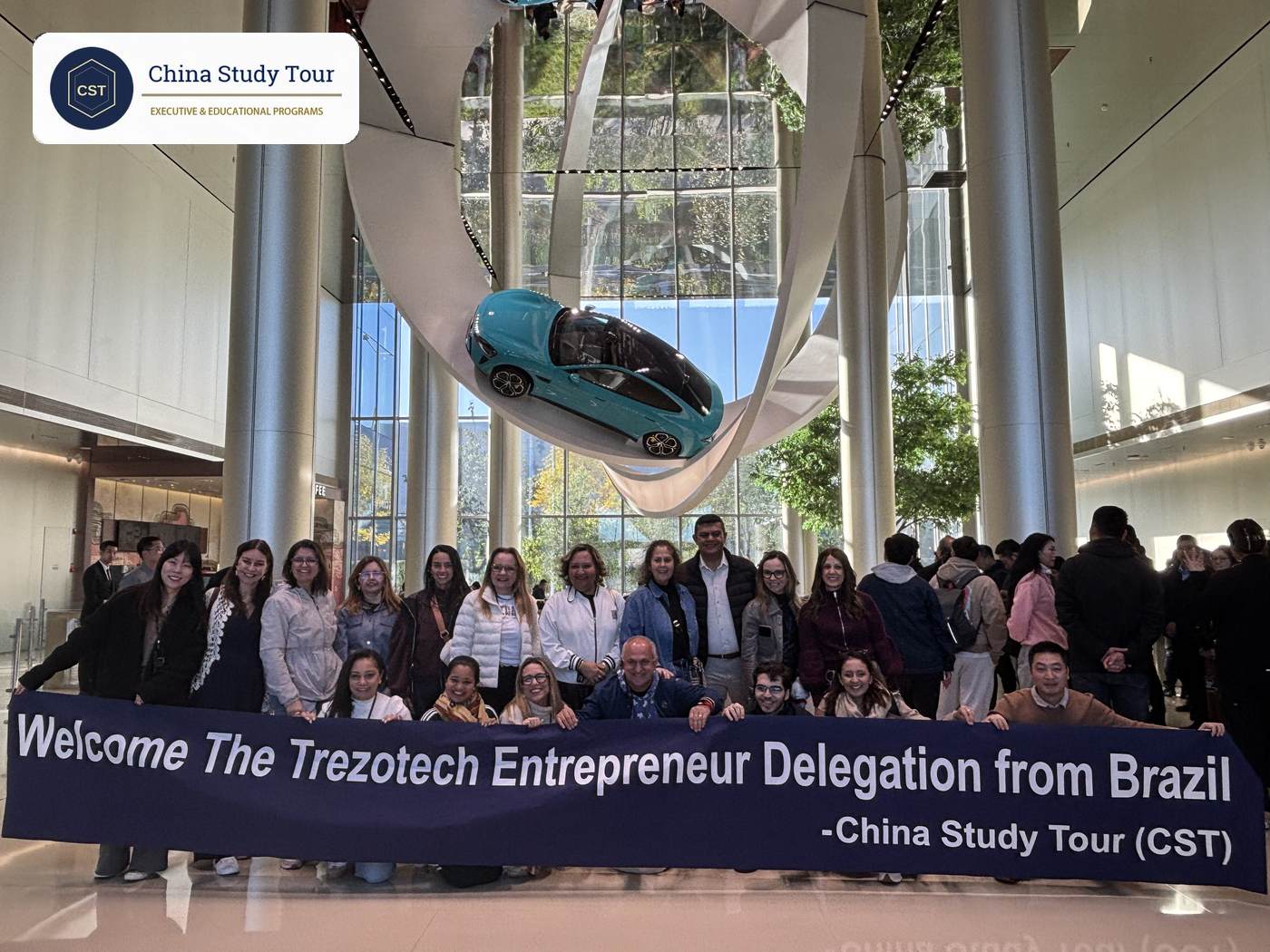
The showroom
Starting with the cars works well. The group sat in the SU7 and the YU7, opened the doors, tried the seats and asked a lot of product questions. Most of them had never seen these cars in person, and after fifteen minutes nobody was asking whether a phone company could make a decent car. The showroom also explains how Xiaomi thinks about the car. It connects to the same system as the customer's phone and home devices, so it works like the biggest device in their account.
Inside the plant: no cameras
The plant needs some explaining before the day. Visitors do not walk the production floor. You ride a shuttle through selected workshops, and which ones are open depends on what is running that day. Photography is restricted, and banned in some zones. We told the group this in advance, so phones stayed in pockets and nobody was surprised at the door.
What they saw from the shuttle was enough. The body shop alone has more than 700 industrial robots for welding, gluing and assembly. Self-driving carts move parts between stations, and the plant's overall automation rate is 91%. At full output, a finished car comes off the line every 76 seconds. In the die-casting area, a 9,100-ton machine makes the whole rear underbody in about 100 seconds. A conventional line builds that part from 72 stamped pieces and 840 welds. An AI-based X-ray system then checks each casting for hidden defects.
For the Brazilian manufacturers in the group, the 76 seconds stuck more than any robot count. It is a number you can compare directly with your own line.
The test drive
The visit ended with a test drive on the plant's 2.5-kilometer track. According to Xiaomi, the new SU7 Max reaches 100 km/h in 3.08 seconds. Feeling that from the passenger seat is more convincing than any spec sheet.
Xiaomi's standard route usually shows car bodies being welded, not cars being finished. Final assembly, the paint shop and the battery workshop are generally not included, and access changes with production that day. A group that knows this in advance enjoys the visit. A group that finds out at the gate tends to feel short-changed. The same goes for photo rules, which the guide sets on the day.
Beijing to Shanghai study tour travel day: people by train, bags by air
The fastest Beijing to Shanghai train takes about 4 hours 18 minutes, and there are more than 50 departures on a normal day. Both main stations are in the city, so the train is usually as quick as flying, door to door. The train made sense for the group. It made less sense for their luggage.
China Railway allows 20 kg of free luggage per adult on high-speed trains, and each piece should be no more than 130 cm in length, width and height combined. A 28-inch suitcase is already near that limit. Staff at the gate rarely measure, but space is the real problem. If a group of 30 each brings two large cases, that is 60 big cases and nowhere on the train to put them.
This group had a lot of heavy luggage, so we split people from bags. The group went to the station with carry-on only. The large cases were picked up at the Beijing hotel in the morning, screened, flown to Shanghai and delivered to the Shanghai hotel the same day.
| Option | What happens on the day | Best for |
|---|---|---|
| All bags on the train | Everyone takes their own cases through the station, onto the train and off again. Fine for carry-on, hard work with two large cases each. | Small groups, light packers, short trips |
| Bags by air, group by rail | Collection at the hotel in the morning, screening, flight, then delivery to the next hotel the same day. Guests only carry what they need on the train. | Larger groups, two large cases per person, multi-city programs |
| Bags by road | Cheaper and slower, and traffic on a 1,200 km route is hard to predict. Fine for next-day delivery, not for same-day. | Flexible dates, nothing urgent |
For air freight to work, two things need to be in place. The airline must accept the cases as cargo with the right paperwork. And every guest must know what cannot go inside. On this trip, both caused us work.
Problem one: the vehicle we replaced
The air freight company sent a vehicle to the Beijing hotel to take the luggage to the airport. Our group manager went out to check it before anything was loaded. The vehicle was dirty, and there was already someone else's cargo inside. We turned it down on the spot.
Our guests' belongings were about to go in that vehicle. A dirty vehicle with mixed cargo is a real risk of damage or loss, and saving a few minutes does not justify it. Some guests were also standing at the hotel entrance, and that vehicle was their first look at how their bags would be handled.
We did not wait for it to be fixed. We called the freight company right away and asked for a better vehicle. They could not find a suitable one in time, so we booked one ourselves. The cases went to the airport and were flown to Shanghai as planned, and the group made its train.
- At the curbThe vehicle for the luggage arrives. It is dirty and already has other cargo inside. We turn it down before loading.
- Minutes laterWe ask the freight company for a better vehicle. They cannot find a suitable one in time.
- Same hourWe book a better vehicle ourselves. The cases go to the airport, are screened and fly to Shanghai on schedule.
- That eveningThe cases arrive in Shanghai and are delivered to the group's hotel.
Things like this will happen sometimes, and it is fair for a client to expect it. What matters is that someone from our side is standing there, sees it, and has the authority to say no and fix it. On every CST program, that person is the group manager who travels with the delegation from start to finish.
Problem two: trackers and power banks in the cases
The second problem came up at screening. We had told the guests more than once that power banks, lithium batteries, magnets and magnetic devices cannot go in luggage sent by air. Even so, a few of these items ended up in the suitcases, including tracking tags tucked into inside pockets.
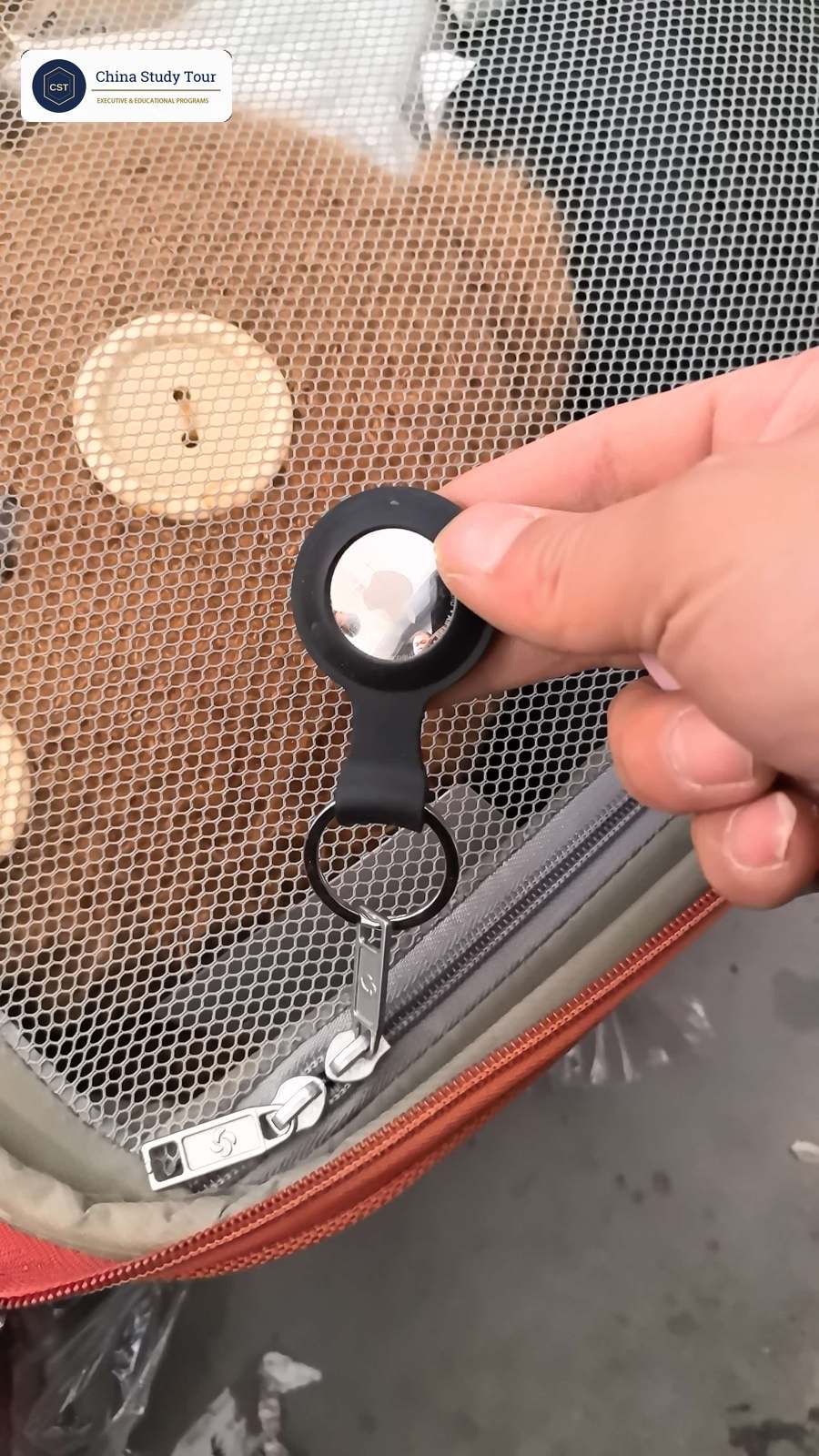
There is a safety reason for the rule. Chinese aviation rules require power banks and lithium batteries to travel with the passenger in the cabin, because a damaged battery in a cargo hold is a fire risk nobody can reach. Tracking tags carry a small battery, so they fall under the same rule for air cargo. Magnets and magnetic mounts are checked and removed as well.
Screening staff took the items out. That left us with a practical problem. The guests were on their way to Shanghai, their things were still in Beijing, and the group was flying home from Shanghai a few days later.
- The next day: the items were sent from Beijing by domestic courier and arrived in Shanghai the next day.
- Before departure: we sent each item on to its owner by SF Express. Every guest had their electronics back before leaving China.
Nobody lost anything. To us, this kind of small detail is a big deal for the guest, because it is their property and their trip. A good service company is not one that never has problems. It is one that sorts them out quickly, while the client is still there.
Shanghai, that evening
The group reached Shanghai in the evening, and we met them at the station. Their cases were already at the hotel. Several guests told us how happy they were with the way the day had been handled, which after a day like that was good to hear.
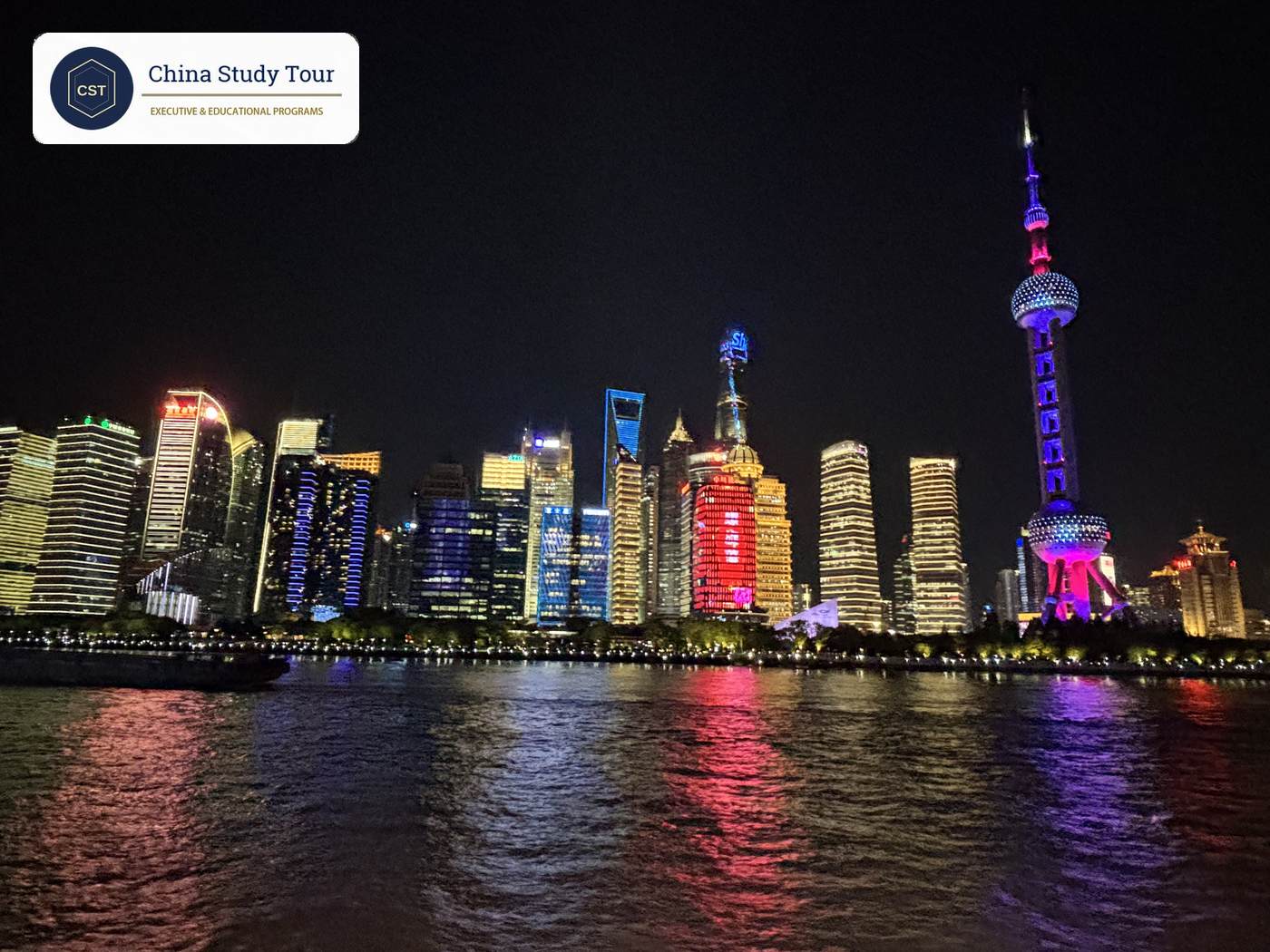
From there we took the group on a Huangpu River night cruise. It is the usual first evening in Shanghai, and for good reason. In about an hour you see the Bund on one side and Lujiazui on the other, and nobody has to walk anywhere after a day of trains and luggage.
A tip for other groups: do the cruise on your first night, not your last. On the first night it helps people settle into the city. On the last night it competes with packing.
Disney's Approach to Quality Service
The group's last stop was Shanghai Disney Resort. They stayed at a Disney hotel, and the next day they joined a facilitated session called Disney's Approach to Quality Service.
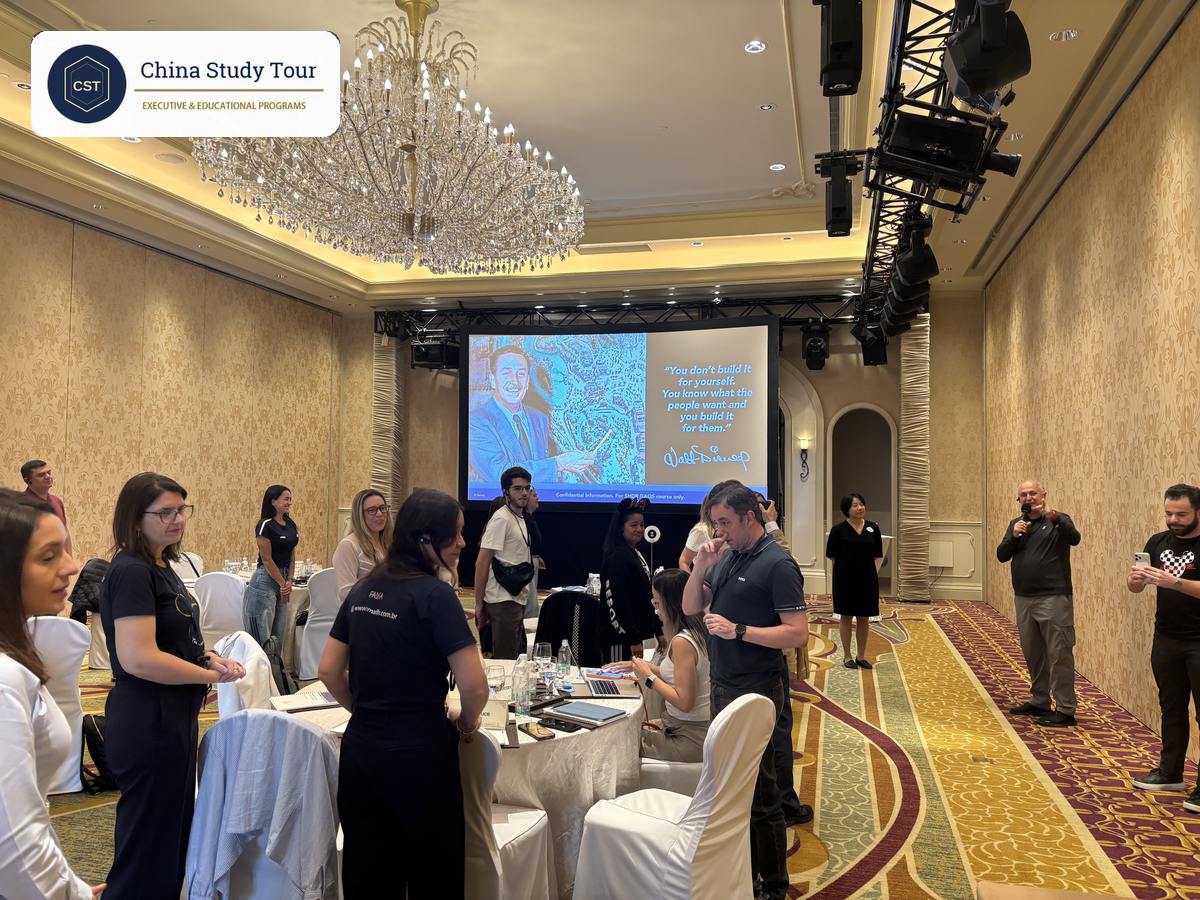
The session is not a park tour. It explains how Disney runs service in its parks, using what Disney calls its Five Keys: safety, courtesy, inclusion, show and efficiency. Disney added inclusion in 2020; for years there were only four keys. The order matters. Efficiency comes last on purpose. If a company speeds things up before safety and courtesy are right, it is speeding up the wrong things. The framework makes that point with real operating examples, not slogans.
The session ran about four and a half hours, and the group sat at round tables instead of in rows. That format matters. People talk at a round table, and they end up discussing their own companies instead of just listening.
When the session ended, the group went into the park and tried one of the attractions. After a morning of hearing how the system works, they could watch it running with real crowds.
After days of watching automation, it is easy to think that running a business well is mostly about buying better machines. The Disney day pushes back on that. The Beijing plants work because of their systems: standard work, measurement, and doing the same process right every time. Good service businesses are built the same way.
What we took from this trip
We are not claiming this Beijing to Shanghai study tour went perfectly. Two problems hit on the same day, in the middle of a city-to-city transfer. Neither one turned into a problem for the guests, and that is what we would point to.
- A real person travels with the group. Not a hotline. Our group manager is on the bus, at the curb and at the station, and can spend money to fix something without waiting for approval.
- Suppliers still get checked on the day. The freight company was under contract and still sent a vehicle that was not good enough. The check at the curb caught it, and we replaced it at once.
- Backups are ready. Another vehicle, a courier account, and a list of whose item is whose. None of this is hard to set up, but it is very hard to improvise at 7 a.m.
- Rules are repeated, then followed up. Guests heard the battery rule more than once. Some items still got packed, so there was already a plan to get them back.
- Heavy luggage gets its own plan. From now on, when guests tell us they are bringing two large cases each, we will suggest air freight for the bags.
If your group travels with two large cases
This checklist comes from this Beijing to Shanghai study tour, but it applies to any multi-city China itinerary with a train leg.
| Item | What to do |
|---|---|
| Case count | Ask each person, in writing, before the trip. Two large cases each changes the transport plan and the cost. |
| Rail limits | 20 kg per adult and 130 cm combined size per piece on high-speed trains. Plan around this instead of testing it at the gate. |
| Air freight | Book it together with the train tickets. Same-day delivery needs a morning collection, and the hotel has to help with that. |
| Power banks | Carry-on only, never in the shipped case. This applies to every guest. |
| Trackers and magnets | Take out tracking tags, magnetic mounts and anything with a magnet before the case leaves the hotel. If it has a battery, it goes in your carry-on. |
| Vehicle check | Check the vehicle before loading: clean, empty, no other cargo. If it falls short, replace it right away, so have a second option ready. |
Related planning guides: China high-speed rail for groups, what groups can and can't see on a Xiaomi factory tour, and robotics factory visits in China.
The CST group manager who traveled with the Trezotech delegation from Brazil on this Beijing to Shanghai study tour in October 2026 wrote this report from the program record. Photos were taken by the CST team. Xiaomi did not allow photos inside its production workshops. Figures for the robot center and Xiaomi's plant reflect what the hosts presented and published as of October 2026.
FAQ
Can a group send its luggage separately from Beijing to Shanghai?
Yes. The group takes the high-speed train with carry-on bags, and the big suitcases go by air freight. A vehicle collects them at the Beijing hotel in the morning, they are screened and flown, and they reach the Shanghai hotel the same day. We suggest it when guests travel with two large cases each, because there is little room for that many cases on a train.
Why can't power banks, trackers and magnets go in luggage sent by air?
Chinese aviation rules say power banks and lithium batteries must stay with the passenger in the cabin. Tracking tags contain a small battery, so they are treated the same way in air cargo. Magnets and magnetic mounts are also checked and taken out. Anything found at screening is removed from the case and has to travel separately by courier.
Can a foreign business group visit the humanoid robot center in Beijing?
Yes, by arrangement only. The National-Local Joint Innovation Center for Embodied Intelligent Robots in Beijing Yizhuang receives organized groups with a name list sent in advance and a confirmed time slot. There is no ticket to buy. We ask for dates six to eight weeks ahead, and the center decides what the group will see on the day.
What can a group photograph at Xiaomi's plant?
Photos are usually fine in the showroom and the vehicle hall. Inside the workshops, photography is restricted or banned, depending on the zone, and the guide sets the rules on the day. If your group wants pictures, take them in the halls before boarding the shuttle.
How long does Beijing to Shanghai take?
The fastest high-speed trains take about 4 hours 18 minutes, and there are more than 50 trains on a normal day. Both main stations are in the city, so door to door the train is usually as fast as flying. The Brazilian group in this report left Beijing after the morning luggage handover and reached Shanghai in the evening.
What happens at a Disney service session in Shanghai?
Disney's Approach to Quality Service is a facilitated session on how Disney runs service in its parks, built around its Five Keys: safety, courtesy, inclusion, show and efficiency. The session this group joined ran about four and a half hours with table discussion. It is booked in advance for organized groups and is not part of a park ticket.
What does CST do when something goes wrong mid-program?
Every CST program has a group manager who travels with the delegation from arrival to departure. That person can turn away a supplier, book a replacement and send items by courier on the spot, without waiting for an office to approve it. Problems get fixed while the group is still in China.
Tell us your group size, cities, dates and how many cases people are bringing. We will send back a route with the transfers and luggage plan included, with the option to fly the bags ahead.
Get a Custom Proposal in 24 Hours →
Email: info@chinastudytour.ai·WhatsApp / WeChat: +86 131 6180 6706