
China Study Tour (CST) for UK and European Business Delegations
A UK business delegation no longer needs a Chinese visa for a short trip, and most EU groups have not needed one since 2024. That removes the old excuse, but it does not open any factory doors. This guide covers what changed in 2026, which company visits can actually be booked, the European deadlines worth taking into the room, and how to plan the flights, costs and calendar.
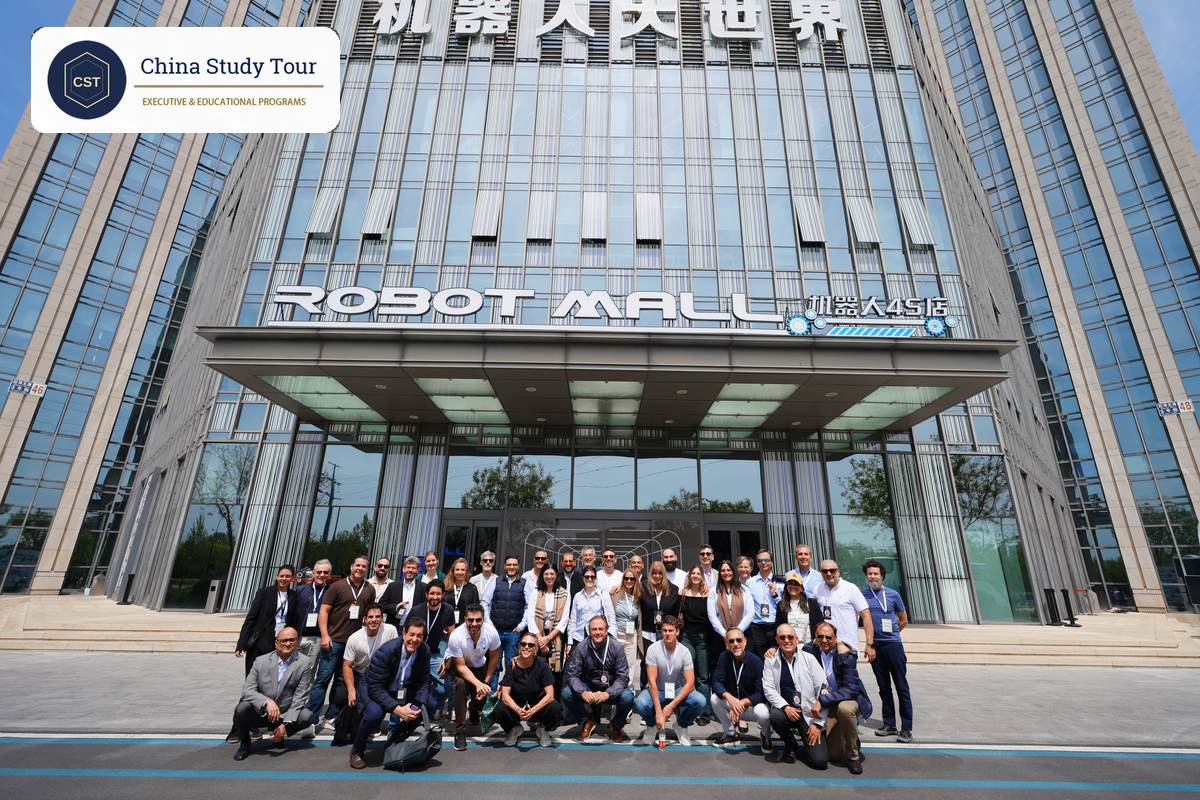
The best time for a British or European business delegation is March to May or September to November, booked eight to twelve weeks ahead. British passports have had 30 days visa-free since 17 February 2026, and 25 of the 27 EU member states are on the same scheme. The scheme currently ends on 31 December 2026, so 2027 trips need a backup plan. Midday flights from London reach Shanghai the next morning, and a seven-day program costs USD 2,500 to USD 8,000 per person on the ground.
Key Takeaways
- The visa is no longer the barrier. UK passports joined China's 30-day visa-free list in February 2026. Czechia and Lithuania are the only EU states not on it, and the whole scheme ends on 31 December 2026 unless China extends it.
- Access did not change. BYD, Huawei, DJI and Tencent still do not answer cold email. A visa-free passport helps you arrive, not get inside.
- The reason to go has shifted. Chinese car and battery plants are now opening in Hungary, Spain and Austria. The useful question is who will supply them inside Europe.
- Two carbon deadlines now matter. The EU carbon border charge moved into its paid phase on 1 January 2026. The UK version starts on 1 January 2027.
- The calendar is the real risk. Chinese New Year and the European August holiday cause more failed programs than the ten-hour flight.
Why a UK Business Delegation to China Makes Sense Now
Trade explains part of the interest. According to China's official figures, China and the EU traded USD 828.11 billion of goods in 2025, up 5.4 percent. In the first half of 2026, that trade grew 14.2 percent to USD 447.88 billion. The UK sits outside the EU, but its goods trade with China reached about USD 103.7 billion in 2025, with services trade of around USD 30 billion.
The bigger change in 2026 was political. Keir Starmer landed in Beijing on 28 January, the first visit by a British prime minister since 2018. Senior executives from more than 50 British companies traveled with him. In late February, Friedrich Merz made his first trip to China as German chancellor, with executives from Volkswagen, BMW and Mercedes-Benz in his delegation. Finland's prime minister had visited in January, and France's president in December 2025. When governments travel, boards usually follow. Many companies that called China "uninvestable" for three years are now approving a week in Shenzhen.
From exports to factories inside Europe
The relationship has also stopped being a simple export story. In 2024, the EU put extra anti-subsidy duties on Chinese-built battery electric cars for five years. As a result, Chinese makers started building behind the tariff wall:
- BYD began trial production at Szeged, Hungary, in February 2026, with volume production planned for the fourth quarter.
- Leapmotor started building its B10 at Stellantis' Zaragoza plant in Spain in October 2026.
- XPeng cars are assembled by Magna Steyr in Graz, Austria, and Chery took over the former Nissan plant in Barcelona with Ebro.
- SAIC, the owner of MG, announced its first European car plant, in Galicia, Spain, in June 2026.
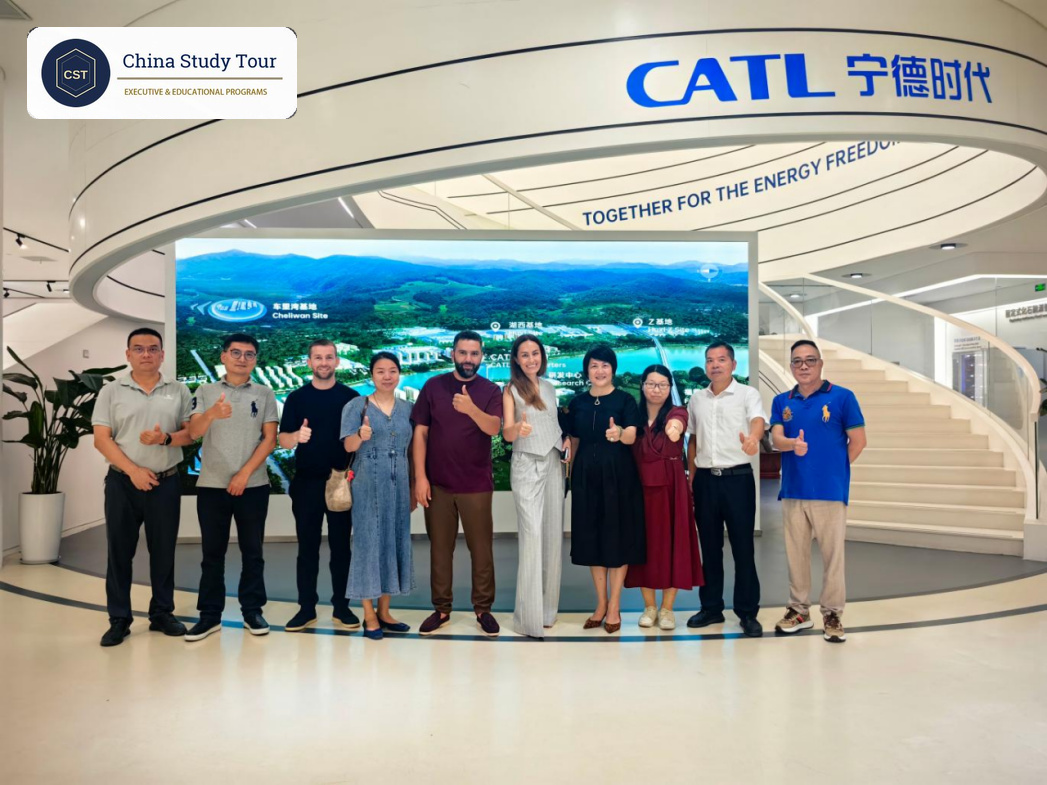
- CATL is building battery capacity in Debrecen, Hungary, and with Stellantis at Zaragoza.
This is the real reason a European group goes now. Delegates want to understand a cost structure that survives a tariff and still costs less. They also want to meet the suppliers that will soon serve their competitors inside the single market. A delegation that expects a tour of showrooms comes back with photographs. In contrast, a delegation that goes to price a bill of materials comes back with a decision.
This is a guide to company visits and institutional briefings for working professionals. It is not a study-abroad pathway. China Study Tour (CST) does not place students in Chinese universities. European inquiries sometimes mix the two, so it helps to separate them early.
Four Sectors Worth Seeing, and the European Reason for Each
China has enough industry to fill any itinerary. What narrows the choice is your own regulatory calendar. Four clusters account for most of the serious interest we see from British and European groups, and each one has a European date attached to it.
| Sector | The European pressure | What China already runs at scale | Where to see it |
|---|---|---|---|
| Automotive | EU law still requires a 100 percent cut in new car CO2 by 2035. The Commission proposed 90 percent in December 2025. Parliament plans its vote in December 2026. The UK zero emission vehicle mandate asks for 33 percent in 2026 and 80 percent by 2030. | Battery packs, thermal management, integrated die-casting, and the tier-one suppliers that make local European production possible. | Shenzhen, Guangzhou, Changzhou, Hefei |
| Industrial carbon | The EU carbon border charge (CBAM) entered its paid phase on 1 January 2026 for cement, iron and steel, aluminum, fertilizers, electricity and hydrogen. The UK version starts on 1 January 2027 for five of those. | Electric arc steelmaking, scrap sorting and recycling, industrial energy management, and green power contracts for export factories. | Shanghai, Suzhou, Shenzhen |
| Energy storage | European buyers now negotiate with Chinese supply chains even when they buy locally, because the plants that serve Europe sit inside it. | LFP (lithium iron phosphate) cells, containerized storage, inverters, and the commissioning model behind large grid projects. | Shenzhen, Changzhou, Hefei, Suzhou |
| Robotics | European machine builders are losing on cost and lead time. Chancellor Merz's own itinerary showed it: in Hangzhou he was scheduled to visit Unitree, a humanoid robot maker. | Humanoid and collaborative robots, automated guided vehicles in logistics, machine vision, and suppliers that let a buyer re-source a line in months. | Shenzhen, Hangzhou, Suzhou, Shanghai |
Seeing the battery supply chain at home
Why the automotive cluster comes first
Chinese brands took more than 10 percent of Western European new car sales in the first eight months of 2026, about 820,000 cars, according to Schmidt Automotive Research. In August alone, their share reached a record 11.5 percent. In the UK, Chinese brands took about 15 percent of new car sales in the first half of 2026. These numbers arrived while extra EU duties of 17.0 percent for BYD and 35.3 percent for SAIC sat on top of the standard 10 percent import tariff.
That is why the cost structure is worth inspecting, not just admiring. If a group has time for one theme, automotive is the one. If it has time for two, pair it with industrial carbon. The carbon border charge turns a supply chain question into an accounting question, and European buyers can no longer leave it to procurement alone.
Where UK and European Delegations Actually Go
Public itineraries are a better guide than any brochure, because heads of government publish theirs.
Merz's two days are the most useful template. In Beijing, he met China's leadership and visited a Mercedes-Benz plant, where he tested a self-driving car. In Hangzhou, his schedule included Siemens Energy and Unitree. The structure is simple: one policy session, one legacy manufacturer that already works in Europe, and one new technology company that European industry is watching closely. All of it fit into two cities and two days.
The British record so far
The British record is smaller but points the same way. In June 2026, Foreign Secretary Yvette Cooper held the 11th China-UK Strategic Dialogue in Beijing. After Beijing, she traveled to Shenzhen. For a UK group with an industrial or technology agenda, Shenzhen is where many of the answers are.
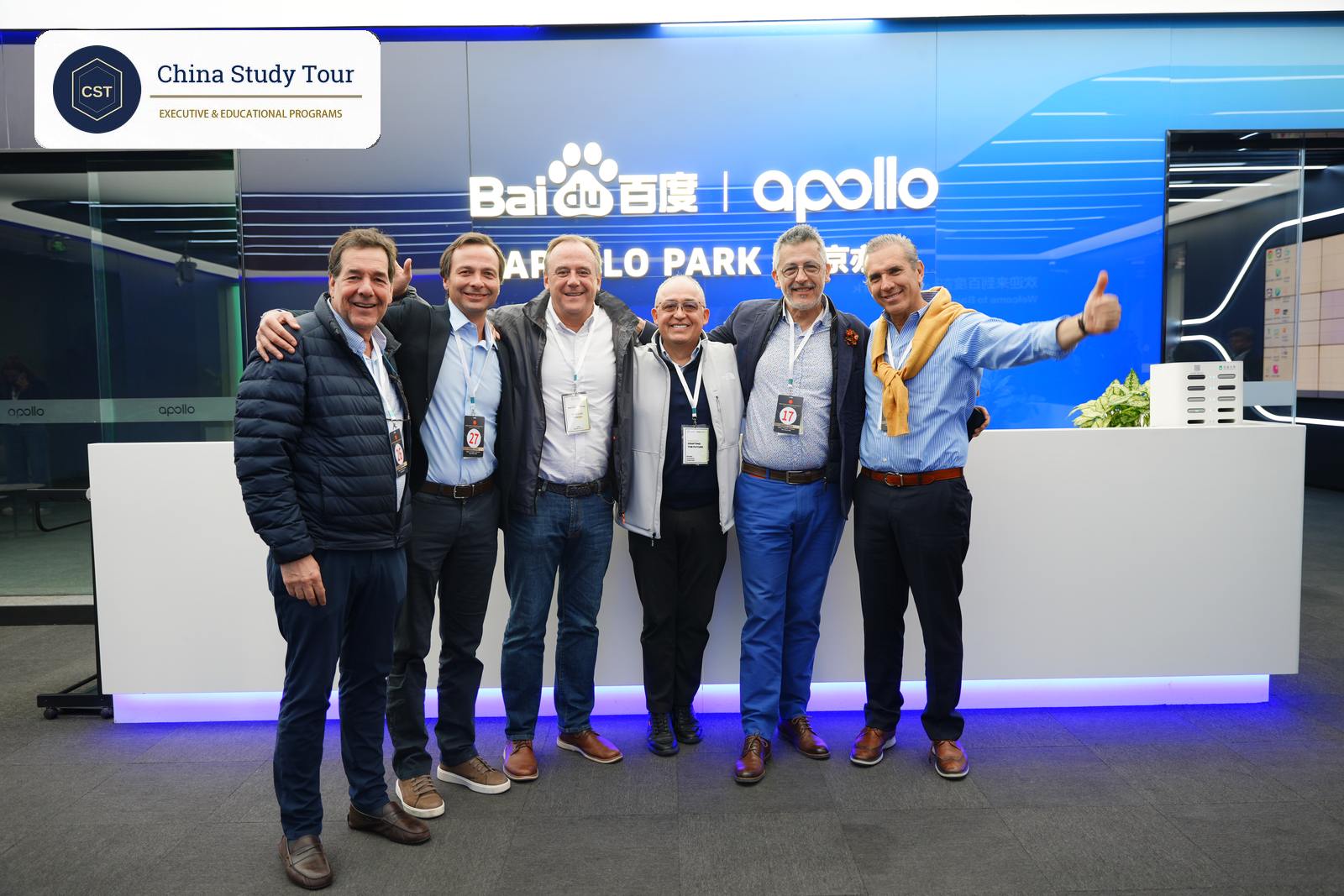
Three lessons follow. First, nobody spends a morning on a factory floor for the photograph. Second, the mix matters more than the famous name: a legacy manufacturer plus a young technology company in one city teaches more than two factories. Third, the cities are consistent. Beijing is for policy, Shanghai and the Yangtze River Delta are for manufacturing depth, and Shenzhen is for hardware, batteries and robotics. A seven-day program picks two of these, not three.
Which Chinese Companies Will Accept Your Group
This is where most European inquiries go wrong, and a UK business delegation is no exception. The companies at the top of a board's wish list are usually the ones with no public visit channel. BYD, Huawei, DJI and Tencent do not respond to cold email, and persistence does not change that. Access depends on who is asking, why, and how the visit is structured. A visa-free passport changes your ability to arrive. It changes nothing about your ability to get in.
We group access into three tiers. It is worth knowing which tier each name sits in before anything is promised to a board.
| Access tier | What it means in practice | Lead time |
|---|---|---|
| Public route | The company sells tickets or takes bookings from individuals and small groups. No introduction is needed. These are mostly showrooms, museums and visitor centers, not live production lines. | Days to two weeks |
| Group application | No public booking, but the company receives organized groups on application. It needs a named organization, a stated purpose, a delegate list and often a letter. A tourism agency cannot open this door alone. | Four to six weeks |
| Invitation only | Hosted access to working plants and R&D (research and development) sites. It depends on relationships and production schedules, and it can be withdrawn close to the date. | Eight to twelve weeks or longer |
Why direct outreach rarely works
China's leading companies accept outside groups through vetted partners with a track record, not through cold outreach. Several Chinese robotics and AI companies have also said publicly that they do not sell paid visits, and that they never authorized any third party to sell tours in their name. If a broker quotes a per-person price to enter a named company, ask for that company's own written confirmation. A real program charges for design and coordination, not for a ticket. CST's access rests on 13+ years of hosted relationships. The full rules are in our guide to which Chinese companies accept corporate visitors.
Entry Rules: What Changed, and What Still Catches People Out
For most readers, the visa section is now short. China runs a 30-day visa-free scheme for ordinary passports from 50 countries, according to the National Immigration Administration country list. It covers business, tourism, family visits, exchanges and transit. British passports were added on 17 February 2026. Twenty-five of the 27 EU member states are on the list. Czech and Lithuanian citizens still need a visa, usually the M (business) visa, with an invitation letter that the program organizer arranges.
The 31 December 2026 deadline
The scheme was extended once, in November 2025, to 31 December 2026. As of early November 2026, no further extension has been announced. A program in November or December 2026 is safe. A program in early 2027 is not, unless China extends the scheme again. Plan 2027 trips as if a visa may be needed: add three to four weeks to the timeline, include the visa fee, and check the rule eight weeks before departure. If the scheme is extended, you lose nothing.
Four practical points still cost programs time:
- Thirty days covers business, not work. Meetings, site visits, negotiations, trade fairs and factory tours are fine. Paid work, study and journalism need the correct visa.
- The clock counts calendar days. It starts at midnight on the day after arrival. A twelve-day program is comfortable, but a four-week stay plus a week of personal travel is not.
- Fingerprints are waived until 31 December 2026 for most short-stay visa applicants. This only matters if you need a visa after all.
- The 240-hour transit rule is a backup. Citizens of 57 countries, including the UK, Czechia and Lithuania, can transit for up to ten days without a visa. It only works when you fly on to a third country.
One more point explains some of the paperwork. The UK and the Schengen states have added more steps for Chinese visitors over the past two years. As a result, your Chinese counterpart faces more friction visiting you than you face visiting them. If they ask for an invitation letter, send it quickly. It takes ten minutes and builds goodwill.
Flights: Ten Hours, and the Morning Arrival
Europe is well connected to China, and the timings work in your favor. London has nonstop service to Beijing, Shanghai and Guangzhou. Frankfurt, Munich, Paris and Amsterdam also fly nonstop to Beijing or Shanghai. The table shows the current pattern from London. Airlines change schedules by season, so confirm times when you book.
| Route | Departs | Arrives | Flight time |
|---|---|---|---|
| Heathrow to Shanghai Pudong (British Airways, winter 2026/27) | 12:15 | 09:10 next day | About 12 hours 55 minutes |
| Gatwick to Beijing Capital (Air China, summer 2026) | 12:35 | 05:45 next day | About 10 hours |
| Gatwick to Shanghai Pudong (Air China, summer 2026) | 11:15 | 05:45 next day | About 11 hours 30 minutes |
Chinese carriers fly shorter routes across Russia, so their flights are often two to three hours faster than British Airways. China runs eight hours ahead of the UK in winter and seven in summer. That is why the arithmetic helps on the way out. A midday flight from Heathrow lands in Shanghai in the morning. The group can be at the hotel by lunchtime, hold a 90-minute briefing in the afternoon, and start site visits the next day on local time.
Going home is harder, because you lose the day instead of gaining it. The last working day should end with a closing session, not a site visit. Also, nobody should book the overnight flight after a farewell dinner.
A Seven-Day Program for a UK Business Delegation
The plan below is what a British or European group of ten to twenty people usually ends up with. We test it against flight times, host availability and the fact that most delegates keep working during the trip. Two site visits a day is the working maximum.
| Day | City | Content |
|---|---|---|
| 0 | In transit | Midday departure from London, overnight in the air. |
| 1 | Shanghai | Morning arrival, hotel check-in, 90-minute opening briefing, welcome dinner with a sector contact. No site visits. |
| 2 | Shanghai | Automotive joint venture or EV supply chain in the morning, component supplier after lunch, 45-minute debrief. |
| 3 | Shanghai | Energy storage or industrial carbon in the morning, briefing with a trade body or chamber in the afternoon. |
| 4 | Shenzhen | Morning flight of about two and a half hours, afternoon visit in hardware, electronics or robotics. |
| 5 | Shenzhen | Battery, EV or contract manufacturing: two visits, plus a walk through the Huaqiangbei electronics market with a technical guide. |
| 6 | Shenzhen | Follow-up meetings with the companies the group wants to pursue, then a closing session that produces the written report. |
| 7 | In transit | Return, or an extension to Beijing by air or high-speed rail for policy meetings. |
Two variations on the plan

Two variations are worth knowing. If policy is the main goal, spend three nights in Shanghai and three in Beijing, and take the train between them. The fastest service takes about 4 hours 18 minutes. If sourcing is the main goal, do not add supplier audits to this plan. A sourcing trip runs at a different speed, with fewer structured meetings and more negotiation. Instead, add a separate three-day sourcing module before or after the main program. For the full planning order, see our step-by-step delegation planning guide.
Traveling Alone, or as a Team of Three
Many British and European inquiries come from one person, or from a founder and two colleagues. A UK business delegation of three works well. However, many operators handle it badly, because their pricing assumes a full coach.
Here is the honest math. A car and driver, a bilingual guide, an interpreter and the coordination behind four company visits cost about the same for three people or fifteen. Split across three people, the cost per person can be two to three times the group rate. Nobody is overcharging you. The fixed cost simply has fewer people to share it.
Three ways bring the cost down without losing access:
- Join a fixed monthly departure. We run group programs of 20 to 30 people on set dates. One or two delegates can take a seat, which spreads the fixed cost.
- Stay in one city. Shanghai alone supports three or four days of serious visits. Dropping the second city removes a flight, a hotel move and half a day of travel.
- Choose depth over breadth. Two half-day visits with real executive conversation beat five quick walk-throughs, and they cost less to coordinate.
What we do not sell is a cheap seat on a sightseeing bus with one factory stop. If the budget only covers that, a trade fair plus a self-arranged meeting will serve you better, and we will tell you so.
What a UK or European Delegation Program Costs
For a UK business delegation, seven-day programs usually cost USD 2,500 to USD 8,000 per person on the ground. Four things decide where a group lands: the number of cities, the number of company visits, the hotel level and the group size. A twenty-person group doing ten visits in two cities with four-star hotels sits near the bottom. A six-person group doing fourteen visits in three cities with senior meetings sits near the top.
The price includes hotels, transport inside China (including domestic flights and high-speed rail), bilingual guides and interpreters, company visit coordination, industry briefings and the closing report. It excludes international flights, visa fees where they apply, insurance, personal costs and single room supplements.
Our quotes are in US dollars, while your budget is probably in pounds or euros. A change in the exchange rate between approval and deposit can reopen a budget you thought was closed. Two habits help: approve the dollar quote with a stated validity period, and pay the deposit in the same week the approval clears.
We send itemized written quotes within 24 hours of a brief that includes group size, sector focus, preferred dates and budget range. The quote is free and carries no obligation. If the numbers do not work, we would rather say so now than three weeks before departure.
When to Come, and When Not To
A UK business delegation or a European group must fit two calendars. China's holidays decide whether factories are running. Europe's holidays decide whether the right people are on the plane.
| Window | Verdict | Reason |
|---|---|---|
| March to May | Best | Mild weather in all three cities and normal factory shifts. The spring Canton Fair runs from mid-April, so check its dates first. |
| September to November | Best | The strongest window for manufacturing and technology visits. The China International Import Expo runs in Shanghai from 5 to 10 November 2026, which pushes up hotel prices. |
| Late July and August | Avoid | Southern China is hot, humid and in typhoon season, and most European boards are on holiday. |
| 1 to 7 October | Avoid | National Day holiday. Trains, hotels and airports are crowded, and many host companies run small teams. |
| Early to mid February 2027 | Avoid | Chinese New Year falls on 6 February 2027. Factory workers travel home for weeks around it, so lines may not be fully staffed. |
| Mid December to mid January | Not recommended | China is working, but Europe is not, so approvals stall. Late January works well, between the European break and Chinese New Year. |
One more date sits outside the weather and the holidays. The visa-free scheme currently ends on 31 December 2026. For a 2027 program, treat a visa as possible until an extension is announced, and build the lead time into the plan.
Six Questions to Ask Any Organizer
Whether you work with us or someone else, these questions separate a program from a promise. A vague answer to any of them is an answer.
- Is each visit confirmed in writing, and when? A spoken yes in week two is not a confirmed visit in week ten. A screenshot of a WeChat message is not a confirmation either.
- How long is each visit, and how many people can the host take? Two to three hours is realistic. A 45-minute walk-through is a showroom, not a company visit.
- What happens if a host cancels two weeks out? Ask for the substitution policy in writing, and ask which named alternatives are on hold.
- Who runs the debrief, and what does the written report look like? If the answer is a photo album, you are buying a tour.
- Have you hosted UK or European groups? Ask how they handle the eight-hour time gap, and the paperwork a works council needs before anyone flies.
- What is your view on the visa-free scheme for my dates? An organizer who has not thought about 31 December 2026 has not thought about your program.
Our own answers, for comparison: every visit is confirmed in writing and reconfirmed before departure. Where an invitation-only visit looks fragile, we hold a named substitute before you fly. The closing report arrives within five working days of your return. For 2027 dates, we plan with a visa in the timeline and remove it if the scheme is extended.
Planning Checklist
| Item | What to plan for |
|---|---|
| Lead time | Eight to twelve weeks for a standard UK business delegation program with confirmed visits. Three to four months for 20+ people or senior meetings. Under four weeks, invitation-only access becomes unlikely. |
| Entry | 30 days visa-free for UK and most EU passports, currently to 31 December 2026. Czech and Lithuanian citizens need an M visa with an invitation letter. |
| Flights | Nonstop from London to Beijing, Shanghai and Guangzhou. Midday departures land in the morning. |
| Group size | One person to 30+. Best value from about ten people; fixed costs rise sharply below six. |
| Language | English, Chinese, Spanish, Portuguese, and Japanese. All guides are bilingual, and additional language support is available upon request. |
| Who can join | Company executives and owners, industry associations, chambers of commerce, business schools and government trade missions. |
| What to send us | Group size, priority sectors, the decision the trip should support, date window and budget per person. |
Related guides
For related reading, see executive study tours to China, our BYD company visit guide for the automotive detail, and the corporate visit FAQ. Groups from Southern Africa should read the South Africa business delegation guide, which covers a different visa position.
CST program managers in Shanghai and Shenzhen wrote this guide from programs run for European and other international groups. Trade figures come from China's Ministry of Commerce and Ministry of Foreign Affairs. Vehicle data comes from Schmidt Automotive Research and the UK's SMMT. Carbon border rules come from the European Commission and HM Revenue and Customs. Flight times come from published airline schedules. Entry rules, schedules and company access policies change without notice, and all figures are a snapshot as of November 2026.
Frequently Asked Questions
Does a UK business delegation need a visa for China?
No, not for a short trip. British ordinary passports have had 30 days visa-free since 17 February 2026, and 25 of the 27 EU states are on the same scheme. Czechia and Lithuania are the exceptions. The scheme covers business visits but not paid work, study or journalism, and it currently ends on 31 December 2026.
What happens if the visa-free scheme is not extended past 31 December 2026?
British and EU travelers would apply for an M (business) visa through a visa application center. That usually takes three to four weeks once the invitation letter is ready. China extended the scheme once in November 2025 and added the UK in February 2026. Even so, plan 2027 trips with a visa in the timeline and check the rule eight weeks before departure.
Is there a direct flight from the UK to China?
Yes. London has nonstop flights to Beijing, Shanghai and Guangzhou from Heathrow and Gatwick. Flights take about 10 to 13 hours, depending on the airline's route. The arrival time matters more than the flight time: midday departures from London land in China the next morning, so the first day is usable.
What is the best time of year for a UK or European delegation to visit China?
March to May and September to November. The weather is mild in Beijing, Shanghai and Shenzhen, factories run normal shifts, and European decision-makers are at work. Avoid 1 to 7 October, early to mid February 2027 for Chinese New Year, and late July and August, when southern China is hot and European boards are on holiday.
How much does a 7-day China study tour cost for a UK or European group?
Most seven-day programs cost USD 2,500 to USD 8,000 per person on the ground. That covers hotels, transport inside China, bilingual guides and interpreters, company visit coordination, briefings and the closing report. International flights, visa fees where they apply, insurance and single supplements are extra. Itemized quotes arrive within 24 hours of a written brief.
Can one person or a small team join a China company visit program?
Yes. Single travelers and teams of two to five are welcome, and the limit is cost rather than access. A car, guide and interpreter cost the same for three people or fifteen, so the price per person rises below six. The cheaper options are a seat on a fixed monthly departure of 20 to 30 people, or a three-day program in one city.
Is this a study-abroad or student placement service?
No. China Study Tour (CST) does not place students in Chinese universities or sell degree pathways. Programs are company visits, factory floors and institutional briefings for working professionals, corporate teams and delegations. The only student product is a short educational tour for school and university groups traveling with their own teachers.
Which cities should a UK or European delegation choose?
Start with Shanghai, because the London flight lands there in the morning and automotive, finance and supply chain hosts sit within two hours. Add Shenzhen for hardware, batteries and robotics, or Beijing for policy and state-owned company headquarters. In seven days, choose two cities. Three is possible but almost always too rushed.
Send your sector focus, dates and group size. We will confirm what access is realistic, flag the entry and carbon deadlines that affect your dates, and return an itemized proposal.
Get a Custom Proposal in 24 Hours →
Email: info@chinastudytour.ai·WhatsApp / WeChat: +86 131 6180 6706