Short China Study Tour (CST): How to Plan a 2-3 Day Pilot Before a Full Delegation
A short China study tour of two to three days is the safest way to test an operator before you commit to a full delegation. Many corporate clients do not want one trip. Instead, they want a series of delegations over a year or more. A small pilot group goes first, sees the real access level, and reports back. Then the company decides whether the series is worth the budget. This guide explains how to plan that pilot, what it can prove, what it costs and when to scale up.
Plan a short China study tour as two to three days in one city, with one theme and no more than two company visits a day. Book six to eight weeks ahead, because company approval sets the timeline, not the length of the trip. Use the pilot to test four things: the access level, the operator, your own team and the debrief report. Finally, keep the same operator for the full delegation, and expect a lower total cost but not a much lower cost per person.
Key Takeaways
- Shape: Three days is the practical length. Two days works only with one city and one theme. One day is too thin to judge an operator.
- Lead time: Plan six to eight weeks ahead. Companies do not shorten their approval process because your group is small or your trip is short.
- Daily pace: A corporate visit runs two to three hours. Two visits a day is the limit once you add travel, interpretation and a debrief.
- What it proves: A pilot tests the operator, the access level and your own team. It does not prove that a nine-day, three-city program will work.
- Cost: The total cost drops, but the cost per person does not fall in proportion. The guide, vehicle, coordination and report are largely fixed.
Why Corporate Buyers Start With a Pilot
A nine-day delegation to three Chinese cities is a serious commitment. It takes senior people away from work for almost two weeks. It also needs board-level budget approval. In addition, it carries a risk that is hard to undo: the access may turn out to be a showroom walk with a coffee break. Most groups that hesitate are not unsure about China. They are unsure about the operator.
For this reason, many groups send a small team first. The team spends two or three days in one city. The goal is not to learn much about China in three days. Rather, the goal is to find out whether the operator can put the group in front of the right people, and whether your own executives will engage.
This matters even more when the real plan is a series. For example, a company may want to send a new group of managers every quarter, or a business association may plan one delegation each year. In those cases, the pilot is the entry point to every later trip. A weak operator costs you once on a pilot, but many times on a series.
Foreign interest in this kind of travel is growing fast. The Asia Business Daily reported in September 2026 that Baiguan, a Shanghai research firm, charges up to US$15,000 for a five-day China company tour. The same report says more than 250,000 people have visited Xiaomi's electric vehicle plant in Beijing since March 2024 (The Asia Business Daily, September 4, 2026). With prices and demand at that level, a pilot is a cheap way to check what you are buying.
What a Short China Study Tour (CST) Proves and What It Does Not
The most common mistake is to treat a pilot as a cheap sample of the full program. It is not a sample. It is a test with a different subject, and the ways it can fail are different too.
| A pilot can show you | A pilot cannot show you |
|---|---|
| Whether the access is real. Within 20 minutes of arriving, you will know if you are meeting an engineer or a public relations officer. | Whether a nine-day, three-city plan works. Routing, pace and group energy are different problems. |
| Whether the operator handles a live problem. Hosts reschedule, and someone often gets ill. How the operator responds tells you more than a brochure. | Whether a larger group will get the same access. Some hosts limit group size or switch to a general briefing for big groups. |
| Whether your executives engage. A short program shows a passive group early, while it is still cheap to fix. | Whether nine days will hold their attention. Fatigue does not show in a pilot. |
| Whether your questions get real answers. Questions sent in advance either produce useful answers or they do not. | Whether the operator is strong in a second or third city. You tested one city only. |
| Whether the debrief and report are useful. Ask for a sample report when you sign, not after the trip. | Whether your company will approve the larger budget. That is an internal question, not a travel one. |
The pattern behind the table
Look at the two columns together and one pattern appears. Everything on the left is about the operator and the people. Everything on the right is about scale. So a pilot is a good test of the first and no test at all of the second. For that reason, a pilot should never be the only basis for approving a long program.
Designing the Shape: One City, One Theme
Geography is the biggest decision in a pilot, and groups often get it wrong the first time. They arrive with a wish list for Shanghai, Shenzhen and Hangzhou and try to fit it into three days. As a result, they spend the pilot on trains.
Choose one city. The only good reason for two cities is a short rail trip. Around Shanghai, this is easy. Suzhou is about half an hour away by high-speed rail, and Hangzhou is about an hour away, so either one works as a day trip. Shenzhen does not. The fastest train from Shenzhen to Shanghai still takes about six and a half hours, so a pilot that tries to cover both cities loses a full day.
Next, choose one theme. Two to three days can cover one theme well, or two themes badly. Here are two themes that each fit one city:
- Hardware and robotics in Shenzhen: drones, consumer electronics and service robots, with suppliers nearby. See our guides to a DJI company visit and a Shenzhen business visit.
- Artificial intelligence (AI) in Shanghai: AI software and robotics companies, plus a day trip to Hangzhou or Suzhou. See our Shanghai corporate visit guide.
How many people should go on the pilot
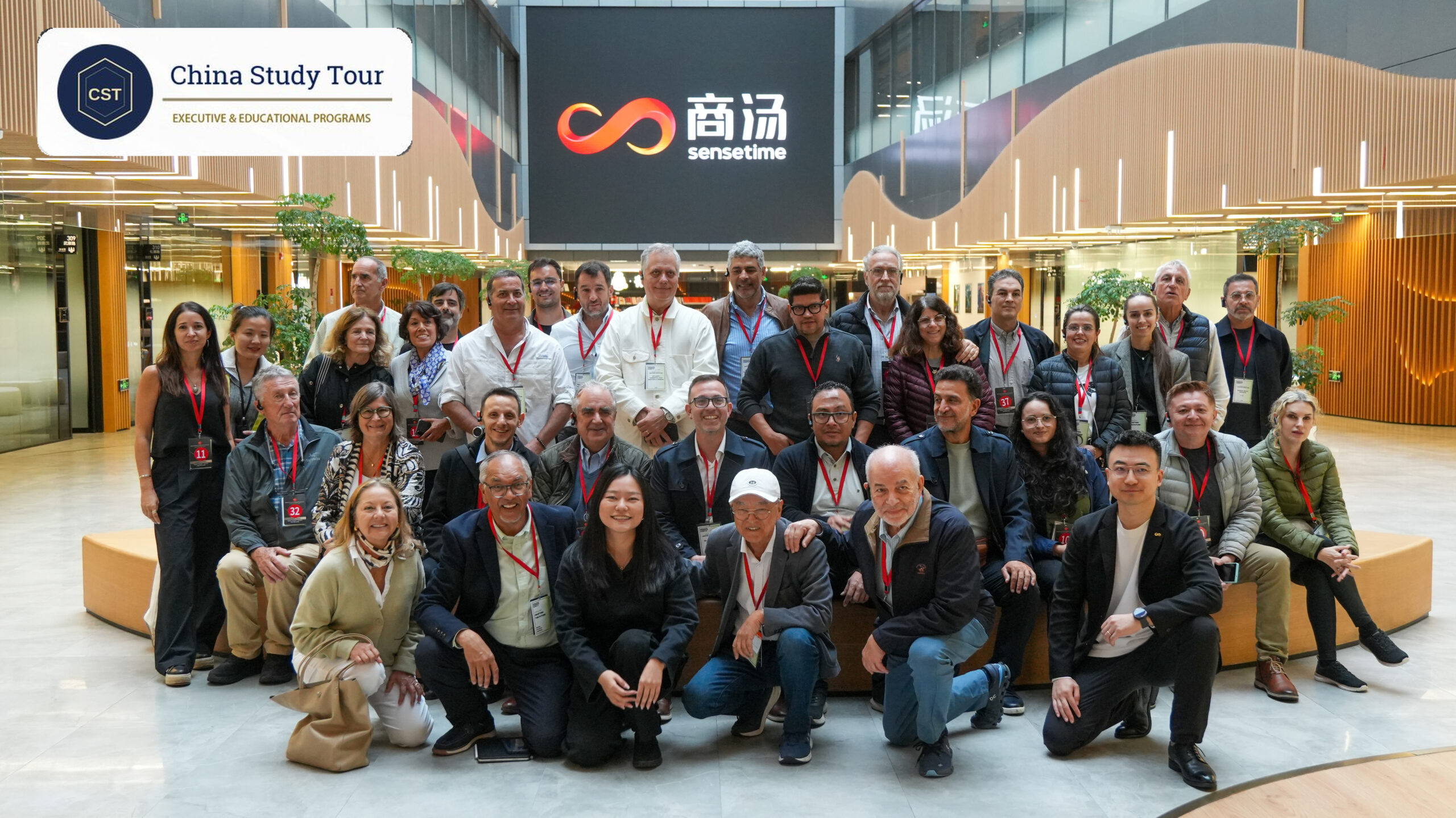
For full corporate programs, the sweet spot is 8 to 18 people. Even so, we have run groups as small as three. A pilot is often smaller than the full delegation, and that is fine. The rule is simple: send the people who will decide on the full program, or who will lead it. A pilot run by people who will not go again teaches the organization very little. Also, ask the operator whether each host receives small groups at the same level as large ones.
A Three-Day Pilot Plan
The table below shows the structure we use most often for a three-day corporate pilot in Shenzhen. It is a framework, not a package. The actual hosts depend on your sector and on what is available on your dates.
| Day | Morning | Afternoon | What it tests |
|---|---|---|---|
| Day 1 | Arrival, hotel check-in and an opening briefing on the local industry | First main visit: company overview and site walk, two to three hours with interpretation | Whether the briefing is specific to your sector or generic |
| Day 2 | Second main visit: a different company from another part of the supply chain | Supporting stop, such as an innovation park or a supplier, then a structured debrief | Whether two visits a day suits your group, and how the debrief lands |
| Day 3 | Optional third visit if the group is engaged, or a review session | Departure. The written report follows after the group leaves | Whether the report arrives on time and is good enough for your board |
Two design notes come from experience, not theory.
First, hold the debrief at the end of day 2, not day 3. A debrief while the visits are still fresh turns notes into decisions. It is also the first thing people cut when a schedule gets tight. If your operator suggests dropping it, take note.
Second, send your questions to the hosts in advance. Companies answer prepared questions well and improvised ones badly. The operator should collect your questions about two weeks before the trip, agree them with each host and send a short list. Ask how this works before you pay.
Lead Time: The Constraint Nobody Expects
Groups often book a three-day trip two weeks ahead and expect it to work. It usually does, but only because the list shrinks to sites that need no approval. The problem is built into the system. It is not bad luck.
In a China corporate program, the delay sits in company approval, not in your plan. For example, BYD approves every participant in advance for visits to its Shenzhen headquarters, and the names must match each passport. We plan 30 to 45 days for that step. A company does not shorten its process because your group is small. In fact, a small group can take longer, because it carries less weight with the host.
| Planning window | What you can usually secure | What to expect |
|---|---|---|
| Under 4 weeks | Sites with an open booking channel or public visitor hall | A useful trip, but few or no well-known host companies |
| 6 to 8 weeks | The normal target for a single-city pilot: one or two well-known hosts plus supporting visits | Enough time to plan visits around host availability |
| 8 to 12 weeks | Our general recommendation for corporate visits, and needed for high-demand hosts or senior meetings | The window to use if the pilot must preview the access level of the full delegation |
Peak months and dates to avoid
March to May and September to November are the busiest months, so a pilot in those months needs the longer end of each range. We avoid two periods. The first is the Spring Festival, when many companies close; in 2027, the Lunar New Year falls on February 6. The second is Golden Week, October 1 to 7. Our guide to how far in advance to book a China study tour covers timing in more detail.
Visa rules for a short trip
Short trips are easier than they were a few years ago. As of October 2026, citizens of about 50 countries, including most of Europe, can enter China without a visa for up to 30 days for business, tourism or exchange visits. For most of these countries, the policy runs until December 31, 2026. For Russia, it was extended to December 31, 2027. Citizens of the United States and India are not on that list. However, US citizens can use the 240-hour visa-free transit policy when they travel on to a third country. These rules change often, so check with your embassy before you book. Our China visa-free guide for business travel has the details.
What a Short China Study Tour (CST) Costs and Why
This is where a clear answer helps more than a brochure. A short China study tour has almost the same fixed costs as a long one. The bilingual guide and the private vehicle are booked for the whole program. Company coordination, briefing research and the post-tour report are work that does not halve because the trip is shorter. What does drop is hotels, meals and daily ground costs.
For reference, most of our 7-day programs cost between US$2,500 and US$8,000 per person. A five-day program for a small delegation is typically US$2,000 to US$6,000 per person. A two to three day pilot costs less than these in total. However, it will not cost a third of a five-day program per person.
Beyond the price, ask how the operator treats the pilot commercially. Two questions matter. First, is the pilot fee credited against the full delegation if you go ahead? Second, if you do not go ahead, what do you keep? A written report with named contacts has value even when the answer is no. Our corporate visits FAQ explains what our post-tour report contains. It is delivered within five business days.
When to Scale Up and When to Stop
Agree on a decision rule before the pilot leaves, not after it returns. Write down what would make you go ahead with the full delegation and what would make you stop. Then stick to it. The table shows how that decision usually goes.
| What you saw on the pilot | What it means | What to do next |
|---|---|---|
| Access matched the pitch, questions got real answers, and the debrief started a real debate | The operator and the agenda work | Scale up to the full program or series. Allow 8 to 12 weeks and add cities |
| Access was weaker than described, but the operator warned you early and offered other hosts | Not a failure. Honesty about limits is what you were testing | Stay with the operator, agree a new host list and book the high-demand hosts early |
| Access was weaker than described, and you only found out on arrival | The operator oversold. This is the failure the pilot was there to catch | Stop. Do not scale up. Ask any new operator for a sample report and a reference call |
| The hosts were good, but your own executives did not engage | The problem is inside your team. A longer trip will not fix it | Improve the brief and the preparation before paying for a longer program |
There is one more possible outcome. The pilot can show that your question is different from what you thought. Groups often arrive wanting a three-city tour. Then they leave knowing that their real question is about supply chains, which suits Shenzhen, or about AI adoption, which suits Shanghai and Hangzhou. Learning that in three days is a cheap correction.
An option for very small teams
If your scouting team is only one to five people, there is another option. Our monthly group tours run on fixed dates for 20 to 30 participants from several organizations, and individuals and small groups can join. This lowers the cost per person, but the agenda is fixed. For a group of six or more with specific goals, a private program usually fits better. Our sample itineraries show the five, seven and ten-day programs that a pilot is meant to test.
Eight Questions to Ask an Operator First
These questions work whether or not you are talking to us. In fact, we would rather you asked them of every operator.
- Which hosts are you requesting, and at what access level? "A company visit" is not an answer. Ask whether it is a campus tour, a site walk, a production line or a briefing only.
- Who is my contact at each host? If every visit is handled by a public relations office, the access is light. Price it that way.
- What is the backup if a host cancels? A serious operator names an alternative for each main visit. "We will find something" is not a plan.
- How do my questions reach the host? Ask to see the process and the deadline.
- Who writes the report, and can I see a sample? Ask for an anonymized sample before you pay. The report is the part that lasts after the trip.
- What is not included? International flights and visa fees are normally excluded, and sometimes meals are too. A quote without a list of exclusions is not finished.
- Is the pilot fee credited against the full delegation? This is open to negotiation, so ask.
- What happens if one visit fails on the day? Get the answer before you travel, not during the trip.
Two more checks take only a minute. First, confirm that the operator is registered in China and can issue a business invitation letter from a Chinese company, which your visa applications may need. Second, confirm who your guide is: a named person with a phone number, or whoever is free that week.
How to Spot a Paid-Visit Scam
The pilot format attracts some of the wrong sellers, so this check belongs here. Popular companies receive far more requests than they can host. As a result, some sellers offer "guaranteed" visits that the company never approved.
Here is the simple test. If a company says on its own website or social media that it has not authorized any third party to sell visits, then an operator selling a paid visit to that company is not inside the system. That tells you about the operator's compliance, not its network. Scarce slots are also a warning sign. For example, visits to Xiaomi's Beijing EV plant are allocated by lottery, and some slots have been resold online for up to RMB 2,000 (about US$280). If someone offers you a guaranteed slot there, ask where it came from. Our guide to Chinese companies that accept corporate visitors shows which companies publish their own booking route.
Pilot Planning Checklist
| Item | Recommendation |
|---|---|
| Length | 3 days, or 2 days with one city and one theme |
| Cities | One base city; day trips only within about an hour by rail |
| Company visits | Two main visits a day at most, two to three hours each |
| Lead time | 6 to 8 weeks; 8 to 12 weeks for high-demand hosts |
| Who goes | The people who will approve or lead the full delegation |
| Questions | Sent to hosts about two weeks before the trip |
| Debrief | End of day 2, while the visits are fresh |
| Report | Written report within five business days |
| Decision rule | Agreed in writing before departure |
| Avoid | Spring Festival and Golden Week (October 1 to 7) |
Languages: English, Chinese, Spanish, Portuguese, and Japanese. All guides are bilingual, and additional language support is available upon request.
Who can run a pilot: corporate leadership teams, industry associations, business schools, investor groups and government trade missions.
Once the pilot works, our China executive study tour programs show what a full delegation looks like. Our guide on how to plan a China business delegation covers the full planning sequence, and the Shenzhen and Shanghai destination pages cover the two most common pilot cities.
China Study Tour (CST) wrote this guide. Our team works from offices in Beijing, Shanghai and Shenzhen. The pilot structure, lead times and cost logic come from programs CST has delivered since 2013 and from CST's published planning ranges. Market figures come from the outside source linked in the text. Company access is confirmed case by case and depends on each host's schedule and your group's profile. Prices, visa rules and figures are a snapshot as of October 2026.
Frequently Asked Questions
How short can a China study tour be and still work?
Three days is the practical minimum for a corporate pilot. Two days works if you keep to one city and one theme. A corporate visit runs two to three hours, so three days fits two main visits, a supporting stop and a debrief. One day buys a single briefing, which is too little to judge an operator.
How far in advance should we book a 2-3 day pilot?
Plan six to eight weeks ahead, and eight to twelve weeks if you want high-demand hosts or senior meetings. Company approval sets the timeline, not the length of your trip. Under four weeks, the list usually shrinks to sites with an open visitor hall or public booking channel.
Is a short China study tour cheaper per person than a full delegation?
It is cheaper in total, but not much cheaper per person. The guide, vehicle, company coordination, briefing research and report cost about the same for a short trip. Most of our 7-day programs cost US$2,500 to US$8,000 per person. A pilot costs less in total, but never a third of that per person.
Should the pilot use the same operator as the full delegation?
Yes, if the pilot is meant to reduce risk on the full delegation. If you change operator, the host relationships the pilot built start again from zero. To compare operators, run two separate pilots with the same agenda, rather than a pilot with one operator and the full trip with another.
How many people should go on a pilot?
Send the people who will approve or lead the full delegation, even if that is only three or four. For full programs, our recommended group size is 8 to 18 people. We have run groups as small as three. Ask the operator whether each host receives a small group at the same level.
Can we combine a pilot with the Canton Fair?
Yes, and it is a good use of a short program. The spring 2027 Canton Fair in Guangzhou is scheduled in three phases: April 15 to 19, April 23 to 27 and May 1 to 5. The halls close between phases, and those changeover days suit factory visits. Our Canton Fair factory visit guide explains how.
What do we keep if we decide not to scale up?
You should keep a written report with the main findings, the hosts you met and named contacts. That has value even when the answer is no. Ask at contract stage whether the pilot fee is credited against a full delegation if you go ahead later, because terms differ between operators.
Tell us your sector, your preferred city and the decision the pilot needs to inform. We will tell you what a two to three day program can realistically deliver, with an itemized proposal within 24 hours.
Email: info@chinastudytour.ai·WhatsApp / WeChat: +86 131 6180 6706