China Study Tour (CST) Itinerary: Sample 7-Day Executive Program
A China study tour itinerary lives or dies on four choices: city order, daily rhythm, visit density, and what gets cut. Here is how a working one-week executive program is built.
- 📍 Shanghai · Shenzhen · Beijing
- 👥 8–25 delegates
- 📅 7 days · 6 nights
- 🏭 AI · EV · Robotics · Policy
- ✍ Updated August 2026
A typical 7-day China study tour itinerary covers 2–3 cities and 3–5 anchor company visits, with expert briefings and debriefs filling the remaining slots. The sample below shows how each day is structured, from morning briefings to evening networking. It also shows what to change for your sector.
What Makes a Good China Study Tour (CST) Itinerary
Most weak programs fail for the same three reasons: too many cities, too many visits, and no time to think. A strong China study tour itinerary is built backwards from one question: what does the group need to decide when they get home?
Four rules keep a week from collapsing into a blur:
- Two to three cities, no more. Each additional city costs roughly half a working day in transfers, security lines and hotel changes.
- One anchor visit per day. A serious factory or R&D visit runs three to four hours with travel. Stacking two into one day means seeing both badly.
- Protect the debrief. A structured 45-minute discussion after each visit is where observations turn into decisions. It is the first thing groups cut and the first thing they regret cutting.
- Sequence by argument, not by geography. Cities should build on each other — market scale first, hardware execution second, policy context last.
This sample follows Shanghai → Shenzhen → Beijing for that reason. You arrive through China's largest international gateway and see the commercial and manufacturing story first. The week then closes in the policy capital, where the questions raised earlier get answered. Want the reverse case? Our 7-day CEO delegation itinerary runs Beijing first and is built around a denser 8–12 session schedule.
Sample 7-Day Program, Day by Day
Every element below is real and repeatable. Company names are typical examples of what a program at this level includes; final hosts are confirmed in writing before departure.
| Day | City | Morning | Afternoon | Evening |
|---|---|---|---|---|
| 1 | Shanghai | Arrival, airport transfer, hotel check-in | Orientation briefing: China market structure and week ahead | Welcome dinner and objective setting |
| 2 | Shanghai | Anchor visit: fintech or digital commerce platform | Expert briefing: consumer behavior and payments | Free evening or optional Bund walk |
| 3 | Shanghai | Anchor visit: smart factory or automotive supplier | Structured debrief, then flight to Shenzhen (≈2h) | Arrival dinner, Shenzhen |
| 4 | Shenzhen | Anchor visit: EV manufacturer, production line and battery plant | Test drive and technology roadmap briefing | Group debrief dinner |
| 5 | Shenzhen | Anchor visit: hardware or drone campus | Innovation district walk, supplier ecosystem briefing | Flight to Beijing (≈3h) |
| 6 | Beijing | Policy briefing: industrial strategy and regulation | AI lab or autonomous driving demonstration | Closing dinner and takeaways session |
| 7 | Beijing | Optional cultural morning or supplier meetings | Airport transfer and departures | — |
Days 1–3: Shanghai — Market Scale, Finance and Smart Manufacturing
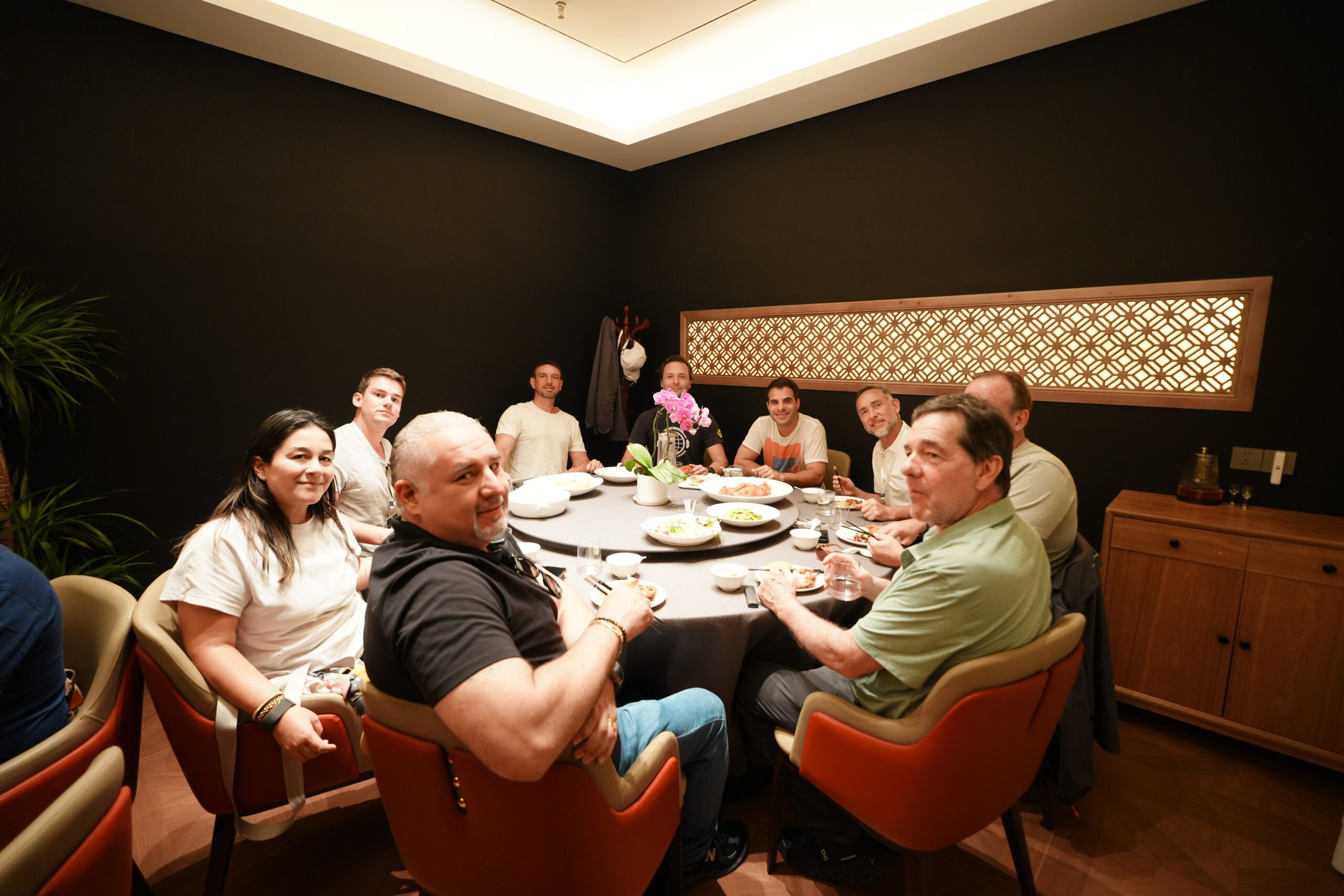
Shanghai is the softest landing for a group arriving from Europe or the Americas: the largest international gateway, the deepest English-speaking business layer, and the clearest view of Chinese consumer scale. It is also where jet lag does the least damage. That is why the first anchor visit sits on day two, not day one.
The three days follow a deliberate arc. Day one is orientation only — a briefing that gives the group shared vocabulary before anyone walks into a company. Day two covers demand: payments, e-commerce, and how a Chinese consumer actually behaves. Day three covers supply: a smart factory or automotive supplier that shows what the demand side is being served by.
Groups with a finance or retail mandate often extend Shanghai to four days and drop one Shenzhen day. See the Shanghai destination guide for what else fits the schedule.
Days 4–5: Shenzhen — EV, Hardware and Supply Chain Depth
Shenzhen is where the week stops being abstract. Within a 60-kilometer radius sit EV assembly, battery production, drone manufacturing and contract electronics. The component markets that feed all of them are in the same city. Nothing in a slide deck survives contact with an EV final assembly line running at full rate.
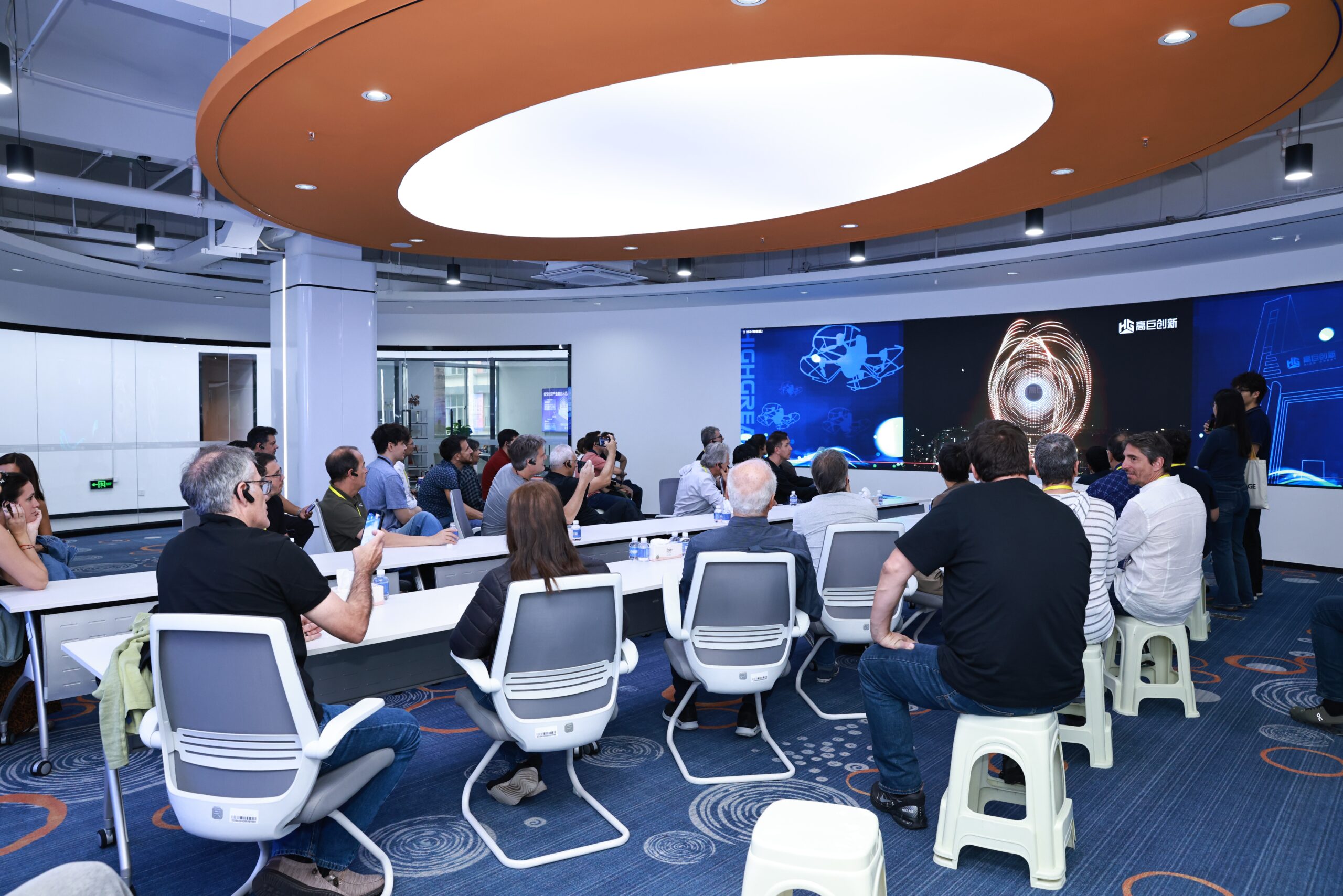
Day four is the EV day: production line, battery technology and a roadmap briefing. A test drive usually closes it, because executives argue differently about a vehicle they have driven. Our BYD company visit guide sets out what one of these days covers and how far ahead it has to be booked. Day five moves to hardware and the surrounding ecosystem. A drone or consumer electronics campus fills the morning. A walk through the innovation district then puts that density in physical terms.
Sector variants swap cleanly here: robotics groups substitute an automation facility, and healthcare groups substitute a medtech manufacturer. Our EV and new energy tours and robotics and manufacturing tours pages list the standing options, and the Shenzhen destination guide covers logistics.
Days 6–7: Beijing — Policy, AI and the Closing Argument
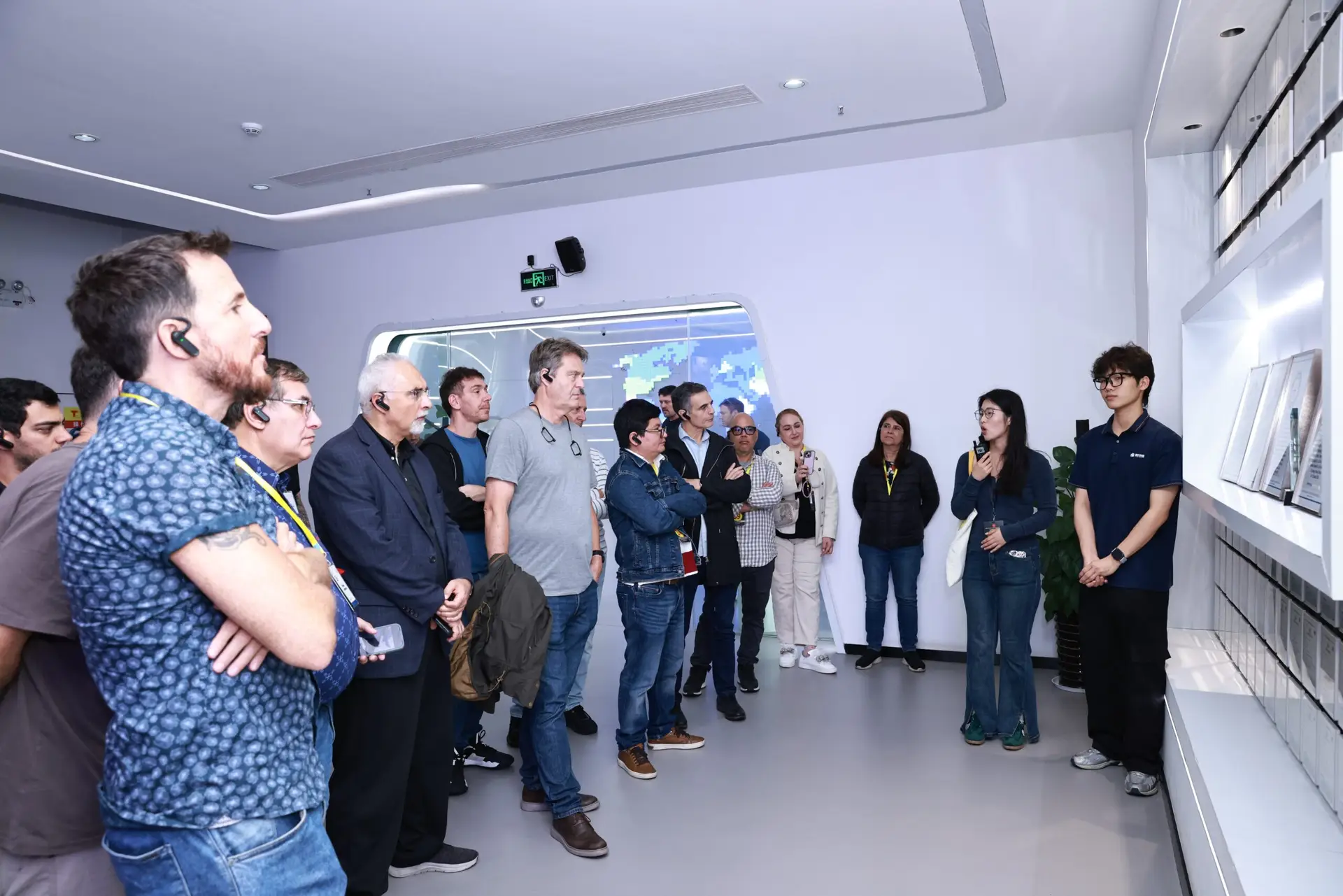
Beijing goes last on purpose. By day six the group has seen enough to ask sharp questions. Beijing is where those questions get answered: industrial policy, regulation, data governance, and state support for AI and advanced manufacturing.
The morning is typically a closed-room policy briefing rather than a company visit. A China technology or trade specialist works through what the group saw in Shanghai and Shenzhen. The afternoon returns to the ground with an AI lab visit or an autonomous driving demonstration. The closing dinner is a working session, not a formality: what changes on Monday, and who owns it.
Day seven stays deliberately light. Groups with late flights add a cultural morning; groups with commercial follow-ups use it for supplier meetings. See the Beijing destination guide and our AI and technology tours.
Program Logistics at a Glance
| Group size | 8–25 delegates; larger delegations arranged on request |
|---|---|
| Accommodation | Four- and five-star business hotels in all three cities, central to visit locations |
| Intercity transport | Domestic flights or high-speed rail, selected per schedule; private coach for all ground transfers |
| Program director | One bilingual director accompanies the group for all seven days |
| Languages | English, Chinese, Spanish, Portuguese, and Japanese. All guides are bilingual, and additional language support is available upon request. |
| Visa support | Official invitation letters for every delegate; entry rules vary by nationality — see our visa information page |
| Lead time | Three to six months for best access and pricing; shorter timelines possible |
| Not included | International flights, travel insurance, personal expenses |
How to Customize the Itinerary for Your Sector
The seven-day structure holds; what changes is which anchor visits fill it. Common variants:
| Format | Shape | Best for |
|---|---|---|
| 3–4 days | Single city, two anchor visits | Tight executive schedules; one focused sector |
| 5 days | Two cities, three anchor visits | The most common compromise: Shenzhen plus one other city |
| 7 days | Three cities, four anchor visits (this itinerary) | Cross-sector overview with policy context |
| 10–14 days | Four or more cities, deep sector immersion | Government trade missions; university cohorts |
Sector swaps are handled the same way for corporate groups, school and university cohorts, and government trade missions. University programs follow a different rhythm and are covered in our university study tour planning guide.
Company Visit Selection Guide
Company visits are the scarcest resource in the week. Choose them against criteria, not brand recognition:
- Pick for the process, not the logo. A mid-size supplier that opens its production floor teaches more than a famous showroom tour.
- Match seniority. A board-level delegation should be meeting decision-makers, not receiving a visitor-center presentation.
- Confirm what you will actually see. Ask whether the visit includes the line, the lab, or only the exhibition hall — the difference is the whole point of traveling.
- Leave one slot flexible. Host schedules move. A week with no slack becomes a week with a hole in it.
China's leading firms accept outside visitors through pre-vetted partners with verified credentials. Independent cold outreach almost never succeeds. When it does, it usually produces a showroom visit rather than a working session. CST's access is built on 13+ years of relationships. Details of how a program is assembled are on our how it works page.
Frequently Asked Questions
How long should a China study tour be?
Seven days is the most common length for executive groups because it fits three cities and four anchor visits without a rest day. Five days works well for a two-city program, and anything under four days should stay in one city. Beyond ten days, groups typically split into sector tracks.
What does a typical day on a China study tour look like?
One anchor company visit lasting three to four hours including travel, an expert briefing or second site in the other half of the day, a structured 45-minute debrief, and a group dinner. Mornings start between 8:30 and 9:00 to clear city traffic before the first visit.
Is a 5-day China study tour itinerary possible?
Yes, and it is the second most requested format. The usual build is two cities and three anchor visits — most often Shenzhen paired with either Shanghai or Beijing. You lose the policy layer or the market-scale layer, so decide in advance which of the two matters more to your group.
How many company visits fit into a 7-day program?
Three to five anchor visits is the realistic range for an executive group that wants working sessions and time to debrief. Denser delegation formats can reach eight to twelve scheduled sessions when expert briefings, demonstrations and short site tours are counted alongside full company visits.
How far in advance should we book a China study tour?
Three to six months gives the best company access and pricing, since host approvals take time. Shorter timelines can be accommodated. Avoid Golden Week in early October, when most corporate hosts are closed.
Can the itinerary be customized for our sector?
Every program is custom-designed; this sample is a starting structure. The city sequence and daily rhythm usually stay, while anchor visits are swapped for your sector — EV, robotics, AI, healthcare, green economy or manufacturing. Send your objectives and dates and we will propose specific hosts.
More company visits: BYD · Shenzhen · EV & New Energy · Robotics · Contact
Get This Itinerary Built Around Your Group
Tell us your sector, group size and travel window. We will come back with a specific program — named host options, city sequence and costs — at no charge.
Request a Custom Itinerary →More sample structures: sample itineraries · corporate visit FAQ · planning guide: timing and budget