
Huawei Company Visit Guide for International Delegations
A Huawei company visit is open only to organized delegations, and it is booked through approved partners, not directly with Huawei. This guide is for the executive or chief of staff who is planning one. It explains which campus your group will see, how far ahead to book, what to prepare, and how to bring real decisions home.
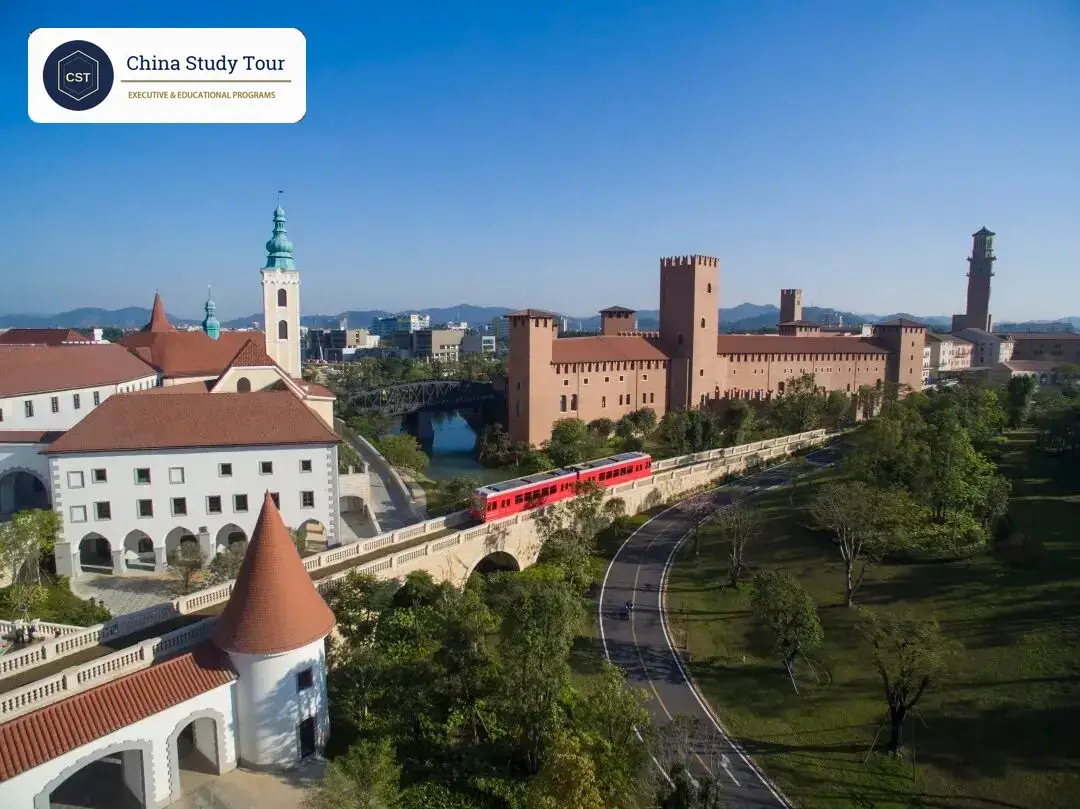
Plan a Huawei company visit 4 to 6 weeks ahead, and allow 2 to 3 more weeks in busy periods such as the Canton Fair. Groups visit either the Bantian headquarters in Shenzhen or the Ox Horn research campus in Dongguan. The core of the day is a 2 to 3 hour management session with a senior Huawei expert, followed by questions. Access goes through approved partners, so individual walk-in visits are not possible.
Key Takeaways
- Delegations only. Huawei accepts organized groups with a clear business or learning purpose. About 8 people is the working minimum.
- Two campuses. Bantian in Shenzhen is the headquarters. The Ox Horn campus in Dongguan is the research campus with European-style buildings.
- Lead time decides success. Most visits that fail start too late. Begin 4 to 6 weeks ahead, longer in exhibition and holiday periods.
- The session is the real value. The campus tour gives context, but the management session is where your team learns the most.
- Combine companies. A 2 to 3 day route with BYD and DJI gives better comparison and protects the trip if one slot moves.
What a Huawei Company Visit Includes
A standard visit has three parts. First, the group tours the exhibition hall, where Huawei shows its work in networks, cloud, devices and smart industry. Then the group walks a set route through the campus with a guide. Finally, the delegation joins a management sharing session, which is the working part of the day.
In the standard format, a Huawei expert with 15 or more years inside the company gives an internal talk on one topic. After the talk, the delegation asks questions for the rest of the session. The topic and the speaker's seniority depend on your group's purpose, so a clear purpose gets a better speaker.

Bantian Headquarters or the Ox Horn Campus?
Huawei's global headquarters is in Bantian, in the Longgang District of Shenzhen. Many people search for "Huawei headquarters", but the Ox Horn campus is often the more memorable stop. It sits beside Songshan Lake in Dongguan, about one hour by road from Bantian.
The Ox Horn campus is a research and development (R&D) campus. Its buildings are grouped into blocks styled after European towns, and a small red train runs between them. Because of this, visitors get a clear picture of how Huawei houses and organizes its engineers.
| Campus | Location | Best fit when |
|---|---|---|
| Bantian headquarters | Longgang District, Shenzhen | Your team wants the corporate story, the exhibition hall and an easy link to other Shenzhen companies. |
| Ox Horn campus | Songshan Lake, Dongguan | Your team cares about R&D, talent and how a large engineering workforce is organized. |
Huawei confirms the campus with the partner after it reviews your scope. So name a preferred campus and your reason, but expect the final route to come from Huawei.

Lead Time: Why Most Visits Fail on the Calendar
Most delegations that miss a Huawei slot do not fail on the request itself. Instead, they fail on the calendar. A team treats Huawei like a museum booking, writes three weeks before the trip, and then finds the speaker calendar is full.
For a normal Tuesday to Thursday outside exhibition seasons, 4 to 6 weeks is enough. However, the periods below need more time or should be avoided.
| Period | Lead time | Why |
|---|---|---|
| Normal weeks | 4 to 6 weeks | Standard approval cycle. Speaker matching fits inside this window. |
| Canton Fair (April to May, October to November) | 6 to 8 weeks | Hotels and transport in Guangzhou and Shenzhen fill up, and speaker calendars get tight. |
| CIIE week in Shanghai (early November) | 6 to 8 weeks | Many executives move to Shanghai for the import expo, so plan dates with care. |
| National Day holiday (October 1 to 7) | Visit before or after | The campus runs a reduced calendar during the holiday week. |
| Chinese New Year (late January to February) | Visit before or after | The campus closes for the holiday, and China Study Tour (CST) does not run Huawei visits then. |
| Huawei product launch periods | Add 2 to 3 weeks | Internal events take speakers' time and can change campus routes. |
For a wider view of seasons, visas and budgets, see the China visa, timing and budget guide.
Huawei and China's other leading firms only accept outside visitors through pre-vetted partners with verified credentials. Independent cold outreach almost never succeeds. CST's access is built on 13+ years of relationships, not a cold contact list. The partner also carries your scope through Huawei's internal approval, which is where most direct requests stop.
Three Things to Prepare Before the Trip
Huawei approves visits from three documents. If one is missing, approval usually slips by about a week.
- A one-page delegation profile. List the organization, the role of each person, the business reason for the visit and the topics your team wants covered. Huawei uses this page to match the speaker.
- A signed scope. Fix the date, the preferred campus, the session topic and the speaker profile. Be specific. "We want to learn about R&D" is too general. "A 90-minute talk on Integrated Product Development (IPD), then questions with a product line director" can be matched.
- Passport data for every attendee. Campus registration runs from this list. Therefore, any change of name inside two weeks of the visit needs new data.
All three should reach the partner at least four weeks before the visit, or six weeks in busy periods. After the scope is signed, a change of topic, campus or speaker profile restarts the matching process.
Choosing the Management Session Topic
Huawei matches the speaker to the topic after the scope is signed. So start from the question your team already has, then pick the topic that answers it.
| Session topic | Best fit when your question is | Typical speaker |
|---|---|---|
| Customer-centric culture | How does a large technology company keep the customer's voice alive at scale? | Senior culture or HR leader |
| Cadre (leadership) management | How do you find and promote the next generation of leaders? | Senior HR or organization development director |
| Strategy to execution (DSTE) | How does strategy become a working plan across a very large portfolio? | Strategy or planning office director |
| Global talent development | How does Huawei hire and grow talent outside China, region by region? | Global HR or overseas talent director |
| Performance and incentives | How are pay and promotion tied to results, down to individual staff? | Compensation and benefits director |
| Huawei's transformation journey | How did the company work through US restrictions from 2019, and how does it run today? | Senior executive, often a business unit head |
DSTE stands for "Develop Strategy to Execute", Huawei's process for turning strategy into plans. Two notes from running these sessions since 2013. First, the transformation topic is the most requested, so it gets the most senior speakers and needs the most lead time. Second, two topics in one session rarely work well. Pick one topic, and use your questions to cover the rest.
Eight Questions to Bring to the Session
The questions your delegation brings shape what it takes home. These eight have given useful answers in past sessions.
Strategy and structure
- How does Huawei make a portfolio decision today that it would not have made in 2018?
- Which bets has Huawei stopped in the last three years, and how was that decision made?
How the company runs
- With about 208,000 employees, how does a decision move from a working group to the top team? (Huawei's headcount at the end of 2024, per its annual report.)
- How does Huawei place a person in a role: by skill, by rotation, or by the next problem they should grow into?
Customers and partners
- How does Huawei keep the customer's voice alive inside such a large company?
- How does Huawei decide which ecosystem partners to invest in, and which to leave to the market?
Reflection
- What did Huawei get wrong in the last five years that leaders now discuss openly?
- What is one decision you would make differently, knowing what you know now?
Eight questions is a practical limit for a 2 to 3 hour session. With fewer, the discussion drifts. With more, people stop listening to answers because they are waiting to ask.
On the Day: Rules for Your Team
Brief these rules before the team flies. Each one comes from a real delegation that learned it the hard way.
- Follow the photo rules. Rules differ by building, and some areas allow no photos at all. Your guide says where cameras must go away. Drones are not allowed.
- Do not record the session without written consent from the speaker and the partner.
- Stay on the route. R&D buildings are closed to visitors.
- Be on time for the bus, the session and lunch. One late person delays the whole group.
- Wear business clothes. This is a working day, not a sightseeing tour.
- Ask the prepared questions. Unplanned questions often get the standard public answer.
- Take notes. The written report after the visit is built from these notes.
A Standalone Huawei Day or a Shenzhen Route?
A Huawei-only day is possible. For most international delegations, however, a 2 to 3 day route through Shenzhen and Dongguan works better, for three reasons.
Comparison is where the learning is. Seeing Huawei, BYD company visits for electric vehicles and batteries, and DJI company visits for drones shows how three Chinese technology firms handle R&D, manufacturing and global growth under the same conditions.
Fixed costs are shared. Transport, the interpreter and planning time are fixed costs. Spread over more visits, each visit costs less per person.
The trip is safer. Confirmed Huawei slots sometimes move. A multi-company route still works if one slot changes, while a single-company trip does not.
For what BYD's Shenzhen headquarters looks like from the inside, read the BYD headquarters tour report. For hotels, transport and other visits in the city, see the Shenzhen study tour destination guide. Senior teams can also build Huawei into a full China executive study tour.
After the Visit: Turn the Day Into Decisions
The day itself is not the result. The result is what your team can act on when it gets back to the office.
CST writes a post-visit report within five working days. It covers the session content, the answers to your questions and any open items the speaker offered to follow up on. Then, test the visit against one standard: can the team name three to five decisions it enabled? If yes, the visit was a study trip, not a tour.
Who Can Visit Huawei
Huawei welcomes organized groups with a clear purpose. These include corporate leadership teams, business school and university groups, industry associations, and government trade missions. Groups smaller than about 8 people can usually join one of CST's monthly group tours with corporate visits instead.
CST supports delegations in English, Chinese, Spanish, Portuguese, and Japanese. All guides are bilingual, and additional language support is available upon request.
| Planning item | What to do |
|---|---|
| Group size | About 8 people or more, or join a monthly group tour |
| Lead time | 4 to 6 weeks, or 6 to 8 weeks in busy periods |
| Documents | Delegation profile, signed scope, passport data |
| Session | One topic, 2 to 3 hours, up to eight prepared questions |
| Route | Add BYD and DJI for a 2 to 3 day Shenzhen and Dongguan program |
| Follow-up | A written report within five working days |
This guide is written by the CST program team, which has arranged company visits in Shenzhen since 2013. The process, lead times and session topics come from CST's own delegation planning, not from Huawei's public website. Huawei decides the final campus, route and speaker for each visit, and rules can change. Information is current as of October 2026. For one delegation's first-hand account, read the report on an Argentine delegation's Huawei campus visit.
Frequently Asked Questions
How far in advance should we book a Huawei company visit?
Plan for 4 to 6 weeks between the signed scope and the visit day. Add 2 to 3 weeks during the Canton Fair, the CIIE in Shanghai or a Huawei product launch. Avoid the National Day holiday in early October and Chinese New Year, when the campus runs a reduced calendar or closes.
Can an individual executive visit Huawei without a delegation?
No. Huawei does not accept walk-in or single-person visit requests. Access is for organized delegations with a clear business or learning purpose, usually about 8 people or more. A solo executive can form a small group or join an existing monthly group tour run by an approved partner.
Which Huawei campus will our delegation visit?
Usually the Bantian headquarters in Shenzhen or the Ox Horn research campus at Songshan Lake in Dongguan. The two are about one hour apart by road. You can state a preference and a reason in your scope, but Huawei confirms the final campus and route.
What documents does our delegation need to prepare?
Three items: a one-page delegation profile with each person's role and the purpose of the visit, a signed scope that fixes the date, campus, topic and speaker profile, and passport data for every attendee. Huawei's internal approval runs from the scope, so make it specific.
How long is the management sharing session, and who leads it?
In the standard format, the session runs 2 to 3 hours. A Huawei expert with 15 or more years in the company gives an internal talk on one topic, then takes questions. Huawei matches the speaker to the topic after the scope is signed.
Are photos allowed during a Huawei company visit?
Only in some areas. Photo rules differ by building, and some buildings allow no photos at all. Drones are not allowed, and recording the management session needs written consent. The guide tells the group where cameras must go away.
Can we combine Huawei with BYD and DJI in one trip?
Yes, and for most delegations this is the better plan. A 2 to 3 day route through Shenzhen and Dongguan covers Huawei for technology and R&D, BYD for electric vehicles and batteries, and DJI for drones. The trip also still works if one company changes its slot.
What happens if Huawei moves a confirmed slot?
Confirmed slots sometimes move because of internal events, exhibitions or product launches. CST reconfirms the slot ten days and again three days before the visit. Building a route with more than one company means a single change does not cancel the trip.
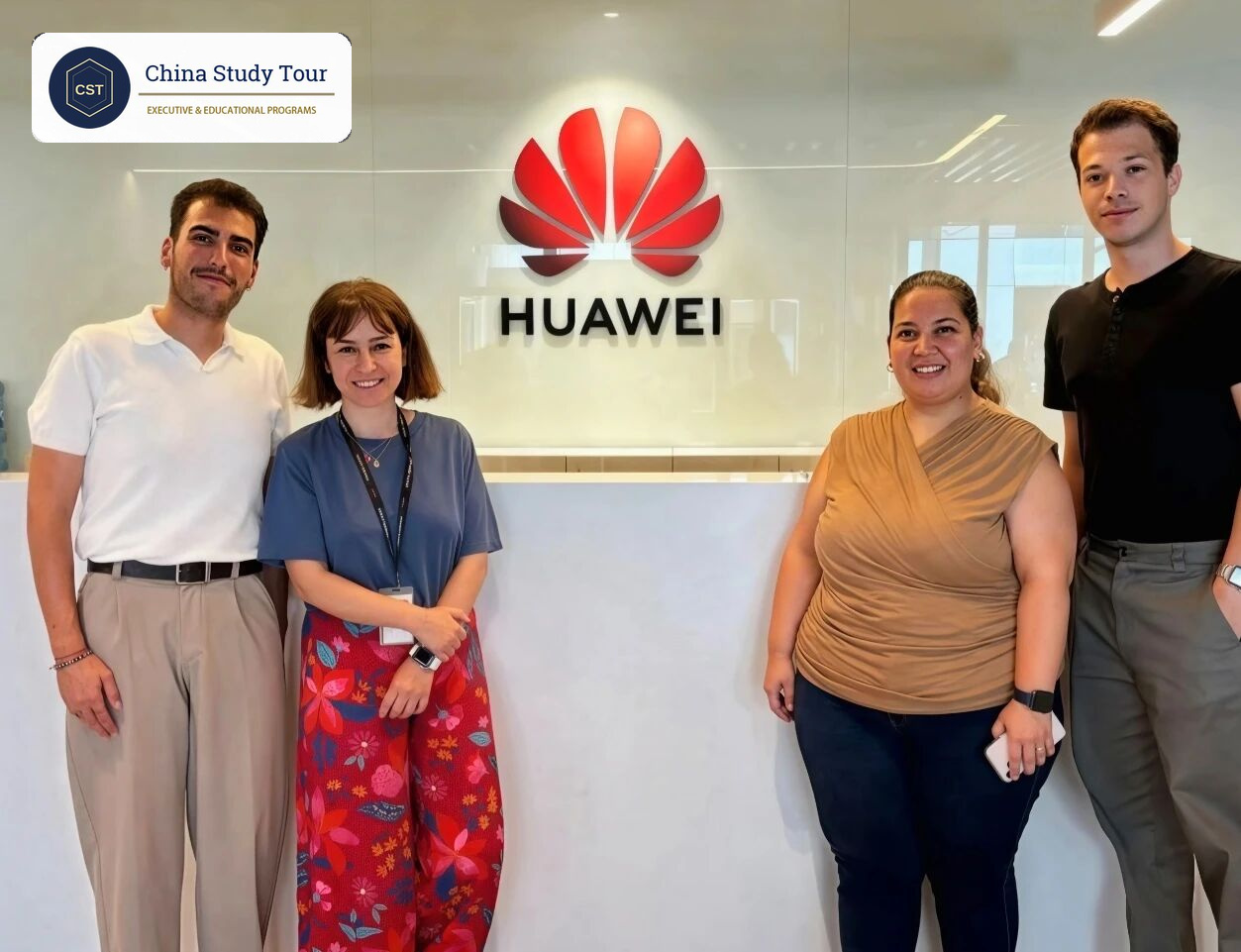
Tell us your dates, your group size and the question your team wants answered. We will send a written scope with the campus, the session topic and the speaker profile matched to your goals.
Email: info@chinastudytour.ai·WhatsApp / WeChat: +86 131 6180 6706