China Green Economy Study Tour: What You See, Who You Meet, How to Plan
A China green economy study tour takes you past the headlines and into the places where the change is actually happening: solar headquarters, battery recycling lines, waste-to-energy plants and the country's carbon exchange. For universities, corporate ESG teams and sustainability professionals, it is the quickest way to see how renewable energy, EVs and ESG practice work at scale. China Study Tour (CST) designs these programs for international groups. This guide names the hosts, the people you will meet, and how a typical week runs.
Key Takeaways
- Solar overtook coal in installed capacity in July 2026 (1,286 GW vs 1,285 GW), though coal still generates more electricity.
- China's binding target for 2026–2030 is a 17% cut in carbon intensity. No absolute cap on total emissions has been set yet.
- BYD's Shenzhen headquarters currently shows visitors its exhibition hall and museum, not production workshops.
- Solar overcapacity and supply chain emissions are the two debates worth raising with every host.
- Why study China's green economy on the ground
- China's green economy at a glance
- Debates worth raising with your hosts
- Why this matters for your business
- Which companies can international groups visit
- Who you meet and what to ask
- Sample 5-day itinerary
- Planning your trip
- Who is this study tour for
- FAQ
Why Study China's Green Economy on the Ground?
You can read every ESG report BYD and CATL have published and still not know how any of it gets done. The numbers are online. The reasoning behind them is not.
On site, a group can ask an operations manager how long an energy retrofit took to pay back. They can ask a sustainability lead how a carbon target reaches the factory floor, or what went wrong the first time.
| Online research | On a study tour |
|---|---|
| Read ESG reports | Discuss ESG with the teams who write them |
| Study renewable energy statistics | Visit a solar leader's headquarters and ask about pricing |
| Read about EV manufacturing | See production where hosts allow |
| Learn about battery recycling | See where batteries are taken apart and recovered |
| Read about carbon markets | Hear how trading works at the national exchange |
The value of a study tour is not simply seeing China. It is understanding how China's green economy works in practice.
What Participants Can Learn
- How Chinese companies measure and manage carbon emissions
- How renewable power is built into manufacturing
- How EV batteries are collected, recycled and reused
- How a carbon market sets a price on emissions
- How ESG targets are tied to executive pay and business results
- How fast-growing companies balance expansion with decarbonization
China's Green Economy at a Glance
The policy direction has shifted from controlling energy use to controlling carbon. Beijing now talks about "dual control" of both total carbon emissions and carbon intensity. For 2026 to 2030, though, the binding target is intensity: carbon per unit of GDP must fall 17%. An absolute cap on total emissions has not been given a number yet, so if the economy grows fast, total emissions can still rise (Carbon Brief).
Renewable Energy
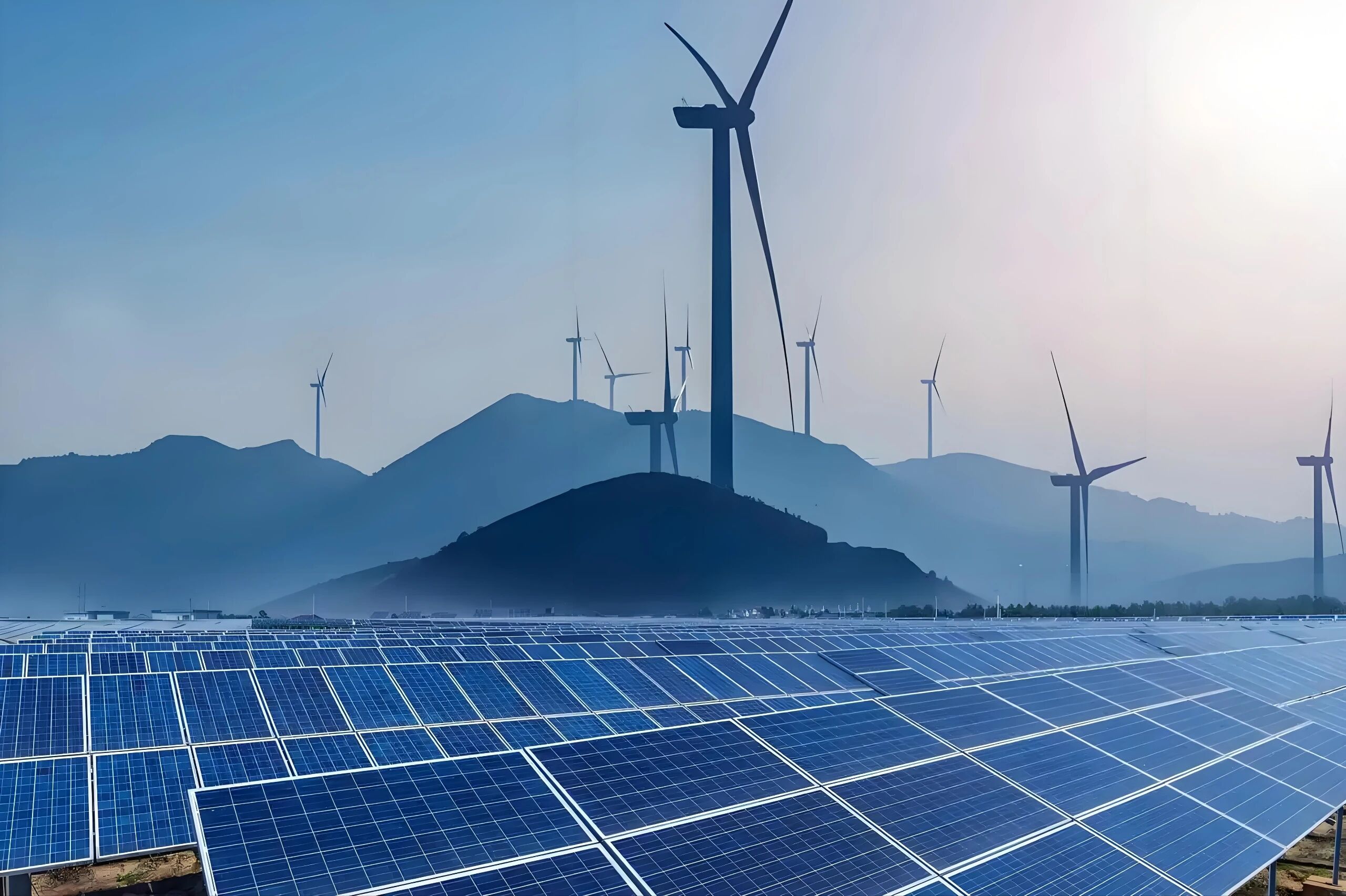
According to the National Energy Administration, solar capacity reached 1,286 GW at the end of July 2026, just ahead of coal at 1,285 GW. Installed capacity is not the same as generation, though. Solar panels produce power for far fewer hours a year than coal plants, so coal still supplies more of China's electricity: solar covered about 13% of national electricity consumption from January to July 2026, while coal's share of generation, though it fell below 50% for the first time in the first half of the year, remains the largest single source. A China renewable energy study tour lets you ask producers how they plan for that gap.
EVs and Batteries
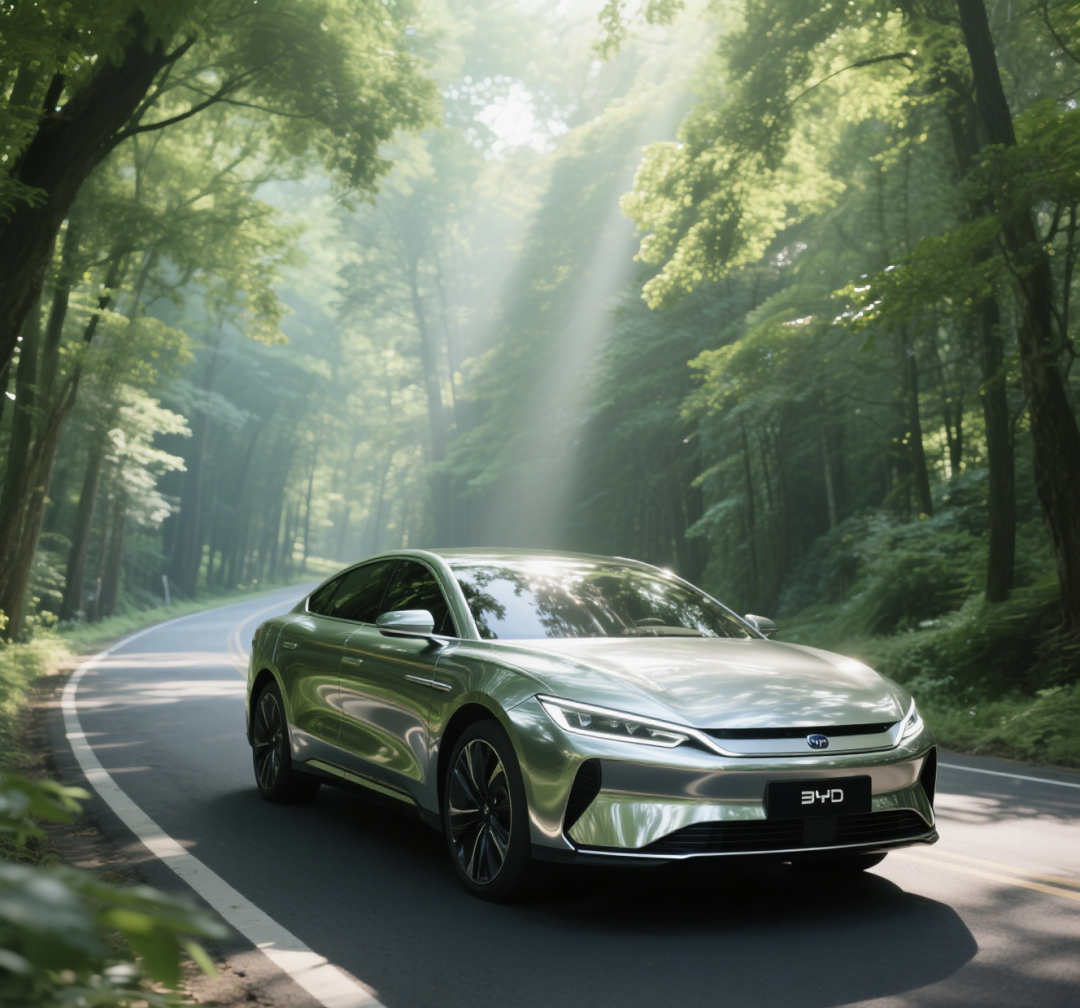
BYD sold 4.6 million new energy vehicles in 2025, and its Scope 1 and 2 emissions rose that year to about 123 million tonnes, as global expansion brought new plants online. The company's targets are a 50% cut in operational carbon intensity by 2030 against 2023, and carbon neutrality across the whole value chain by 2045. At its Shenzhen headquarters, groups currently see the exhibition hall and museum rather than production workshops. Read what a Saudi delegation learned at BYD headquarters for a first-hand account.
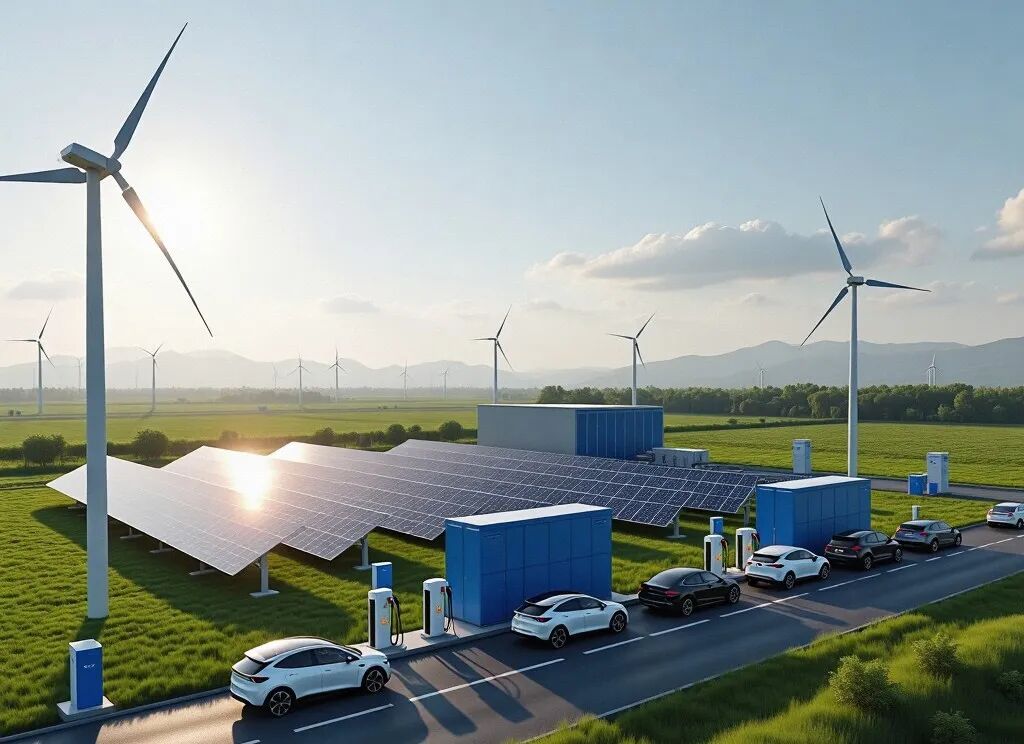
CATL says its core operations reached carbon neutrality by the end of 2025, with all 20 of its battery plants certified under ISO 14068-1 and residual emissions offset by verified carbon credits. Its carbon intensity fell about 77% between 2022 and 2025. The harder goal is its supply chain, which accounts for more than 80% of its products' lifecycle emissions, over five times its own operations. CATL targets a carbon-neutral battery value chain by 2035.
Circular Economy
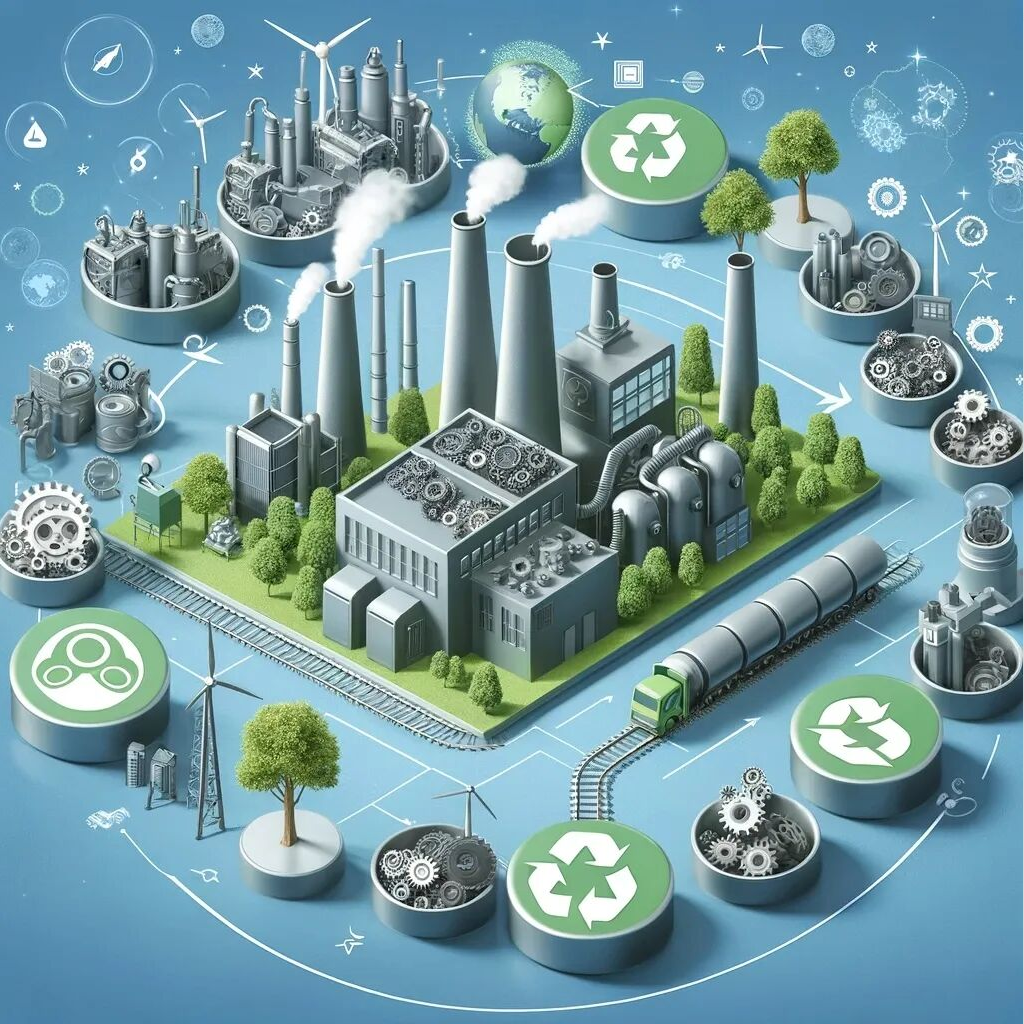
Millions of EV batteries will retire over the next decade, and China is building the systems to recover them. Brunp Recycling in Foshan, part of CATL, processed about 210,000 tonnes of spent batteries and materials in 2025 and reports nickel, cobalt and manganese recovery rates of 99.6%, with roughly 80% of the recovered materials going straight back into CATL's battery production. GEM in Shenzhen works across battery materials and urban waste. Groups on a China green manufacturing study tour can visit both with advance booking.
Low-Carbon Cities: The Shenzhen Model
Shenzhen was the first Chinese city to commit to "dual control" of carbon emissions, setting city-level caps earlier than national policy. In 2024, clean energy made up about 47% of its primary energy use, and the Daya Bay nuclear plant is its largest local power source. The city electrified its entire public bus fleet by the end of 2017, then its taxis; about 77% of new cars sold in Shenzhen in 2024 were new energy vehicles, against a national average of 48%. Its Longgang Energy Ecology Park turns household waste into electricity and has hosted international delegations. Carbon Brief's explainer covers the policy side in more detail.
Debates Worth Raising With Your Hosts
Solar Overcapacity and the Price War
China can make far more panels than the world installs. Prices have collapsed and margins with them. New installations in the first half of 2026 fell about 66% year on year, partly because 2025 saw a rush ahead of a pricing reform. Ask solar hosts how they plan to survive the shake-out.
Supply Chain Emissions
BYD's Scope 3 emissions, mostly from its supply chain, are around 140 million tonnes, far larger than its Scope 1 and 2 total. CATL faces the same gap. The tension between rapid growth and deep decarbonization is where the most useful conversations happen.
Why This Matters for Your Business
The EU's Carbon Border Adjustment Mechanism (CBAM) moved from reporting into its definitive phase on January 1, 2026. Importers of steel, aluminum, cement, fertilizers, hydrogen and electricity now carry a carbon cost on what they bring in. For buyers in Europe, Turkey and other markets that trade heavily with the EU, supplier carbon data has become a commercial requirement, not a nice-to-have.
That makes a China sustainability study tour practical. Procurement and ESG teams can see how Chinese suppliers measure emissions, what data they can share, and how their reports are verified, before the next contract round. If your team is preparing for CBAM, tell us your supplier base and we will build the week around it, with a proposal within 24 hours.
Which Companies Can International Groups Visit?
Below are hosts CST can arrange, by city. All need advance booking and each host's approval. Some other companies in this guide, such as CATL and Midea, appear as case studies in briefings rather than site visits.
| City | Host | Sector | What you see |
|---|---|---|---|
| Shenzhen | BYD headquarters | EVs and batteries | Exhibition hall and museum (no production workshops) |
| Shenzhen | GEM | Recycling and battery materials | Recycling operations and briefing |
| Shenzhen | Longgang Energy Ecology Park | Waste-to-energy | Waste incineration power plant |
| Foshan | Brunp Recycling (CATL) | Battery recycling | Recovery of metals from spent batteries |
| Shanghai | Shanghai Environment and Energy Exchange | Carbon market | Briefing at the national carbon market's trading platform |
| Changzhou | Trina Solar headquarters | Solar | Headquarters visit and briefing |
What each host shows can change at short notice. We confirm the exact program when the booking is approved.
China's leading manufacturers accept outside visitors mainly through pre-vetted partners with verified credentials. Independent cold outreach almost never succeeds. CST's access rests on 13+ years of relationships with companies and local governments, built across 300+ programs for 500+ executives from 30+ countries, not a cold contact list.
Who You Meet and What to Ask
| Who | Questions worth asking |
|---|---|
| Plant and operations managers |
|
| Sustainability and ESG leads |
|
| Carbon exchange analysts |
|
| Policy experts and local officials |
|
| University researchers |
|
Sample 5-Day China Green Economy Study Tour Itinerary
| Day | City | Focus | Possible visit |
|---|---|---|---|
| 1 | Shenzhen | EVs and policy | BYD exhibition hall and museum, policy briefing |
| 2 | Shenzhen | Recycling and low-carbon city | GEM, Longgang Energy Ecology Park |
| 3 | Foshan | Battery recycling | Brunp Recycling; evening flight to Shanghai |
| 4 | Shanghai | Carbon market and ESG | Shanghai Environment and Energy Exchange |
| 5 | Changzhou | Solar | Trina Solar headquarters; return to Shanghai |
Why These Four Cities?
- Shenzhen: EVs, recycling and China's best-known low-carbon city model.
- Foshan: large-scale manufacturing and battery recycling.
- Shanghai: the national carbon market, green finance and corporate sustainability teams.
- Changzhou: Trina Solar's home and one of China's fastest-growing new energy clusters.
Leadership teams short on time often use a trimmed version as an executive delegation itinerary in China: three days, one cluster, and senior-level meetings. Every route is customized to your goals and group size.
Planning Your Trip
- Lead time: start at least 6 to 8 weeks ahead. Host approvals take the longest.
- Group size: many hosts prefer groups of 30 or fewer per visit. Larger groups can be split.
- Registration: hosts usually need a visitor list with passport details in advance. Some ask for a confidentiality agreement.
- On site: wear closed shoes. Hosts provide safety gear where needed. Photography is often banned in production areas.
- Best months: March to May and September to November. Avoid Chinese New Year and the first week of October, when many offices close.
- Cost: every program is quoted to order, based on group size, cities, hosts and hotels.
Who Is This Study Tour For?
- University sustainability programs and sustainability researchers
- MBA and EMBA groups
- Corporate ESG and procurement teams preparing for CBAM
- Energy and automotive companies
- Investment institutions
- Government delegations and trade missions
Why China Study Tour (CST) for Sustainability Study Tours?
Industry-focused routes. Programs follow the value chain, from EVs and solar to recycling, carbon markets and ESG. There is no sightseeing filler.
Named hosts. Trina Solar, Brunp, GEM, the Longgang Energy Ecology Park and the Shanghai exchange, arranged through relationships we have built since 2013.
Built for professional groups. A China ESG study tour for investors looks very different from a class trip, and we plan accordingly.
Local coordination. We handle host approvals, translation, transport and hosting. Language support covers English, Chinese, Spanish, Portuguese, and Japanese. All guides are bilingual, and additional language support is available upon request.
FAQ
About the Program
What is a China green economy study tour?
It is a structured professional program built around China's clean energy transition. Groups visit EV makers, solar and recycling companies, waste-to-energy plants and the national carbon exchange, and meet the people who run them. Expert briefings and a closing debrief turn the visits into lessons your team can apply at home.
Who can join a China sustainability study tour?
Most groups are university sustainability programs, MBA and EMBA cohorts, corporate ESG teams, energy and automotive companies, investors, researchers and government delegations. Programs are built for groups rather than individual travelers, and the agenda is adjusted to the group's industry and level of seniority.
Which Chinese companies can international groups visit?
Hosts we can arrange with advance booking include Trina Solar in Changzhou, Brunp Recycling in Foshan, GEM and the Longgang Energy Ecology Park in Shenzhen, and the Shanghai Environment and Energy Exchange. BYD's Shenzhen headquarters currently opens its exhibition hall and museum, not its production workshops. Every visit needs the host's approval.
How long should a China sustainability study tour last?
Five days is enough to cover two industrial regions with one or two visits a day. Seven days adds room for a university exchange or a second factory in the same sector. A three-day executive delegation itinerary in China suits leadership teams with a single focus, such as solar or recycling.
Planning and Cost
Which cities are best for a China green economy study tour?
Shenzhen covers EVs, recycling and low-carbon city policy. Foshan is home to large-scale manufacturing and battery recycling. Shanghai hosts the national carbon market and many corporate sustainability teams. Changzhou is the headquarters of Trina Solar and one of China's fastest-growing new energy clusters. Together they cover the whole chain.
Can the program include factory visits and expert meetings?
Yes, where hosts allow it. Some sites open production areas, while others limit groups to exhibition halls and briefing rooms, and rules can change at short notice. Around each visit we schedule sessions with industry experts, university researchers or local officials, so the group hears both the company view and the policy view.
Can a China study tour help with CBAM supplier visits?
Yes. For procurement and ESG teams preparing for the EU's carbon border adjustment mechanism, we schedule meetings focused on how Chinese suppliers measure and verify emissions, what carbon data they can share with overseas buyers, and how their reports are audited. The agenda is built around your supplier base and contract cycle.
Can China Study Tour (CST) customize the itinerary?
Every itinerary is custom. We start from your learning goals, group size and dates, then choose cities, hosts and speakers to match. A supply chain team preparing for CBAM and a university ESG class will get very different weeks, even if both pass through Shenzhen.
How much does a China sustainability study tour cost?
The cost depends on group size, cities, company visits, accommodation, transportation and program requirements. Because every program is built to order, we quote after a short conversation about your goals. Contact China Study Tour (CST) for a customized proposal.
Get Your Green Economy Itinerary
Tell us your industry and goals. We will map the right companies, cities and experts for your group.
Explore Green Economy Tours Get a Custom Proposal in 24 HoursMore company guides: China company visits · BYD · Huawei. Sources: National Energy Administration of China, China Photovoltaic Industry Association, BYD 2025 Sustainability Report, CATL, Carbon Brief, CREA.