
China EV Industry Explained: A 2026 Guide for Business Visitors
The China EV industry is the biggest electric vehicle market on the planet. Even so, it is surprisingly easy to see in one trip. That is because battery makers, carmakers, parts suppliers and charging operators all sit within a few hours of each other. In this guide, we walk through the numbers, the main companies, the policy and the supply chain. After that, it shows how a business group can see the whole system in person.
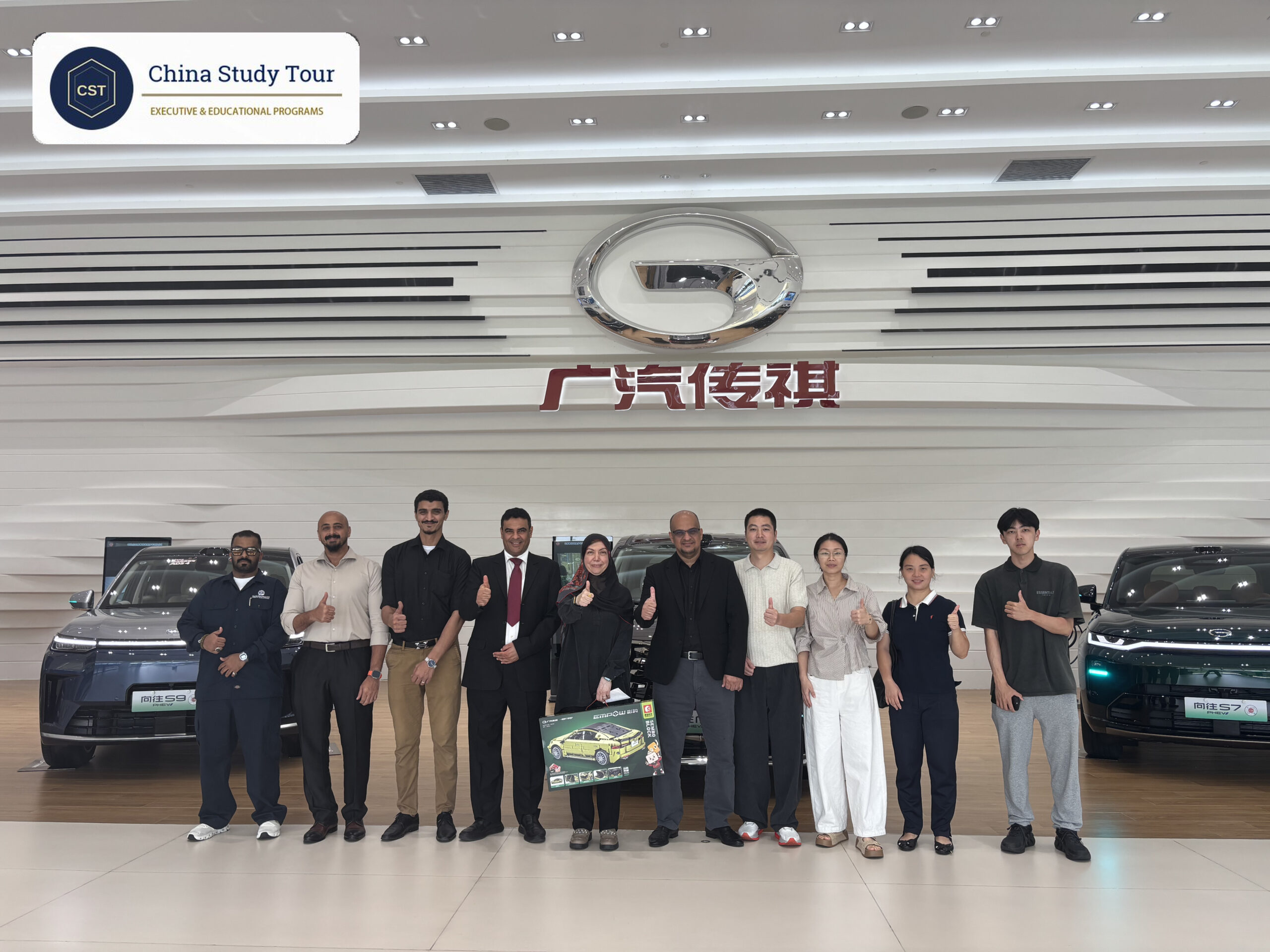
China sold 16.49 million new energy vehicles (NEVs) in 2025, which was 47.9 percent of all new vehicles sold there. By mid-2026, NEVs were taking more than 60 percent of monthly domestic passenger car sales. On top of that, China builds over 60 percent of the world's EVs and more than 70 percent of its EV batteries. As a result, a business group can see the whole China EV industry in about a week. However, plan at least six weeks ahead and avoid Golden Week and Chinese New Year.
Key Takeaways
- Electric is now the majority: In 2025, NEVs reached 50.8 percent of domestic sales. Meanwhile, exports roughly doubled to 2.62 million units.
- Two companies anchor the market: BYD sold 4.6 million NEVs in 2025. Meanwhile, CATL supplied 39.2 percent of the world's EV batteries, its ninth year in first place.
- Subsidies matter less every year: The purchase tax exemption was halved on January 1, 2026. Still, NEV sales grew 7.3 percent in the first half, even though the total car market shrank 4 percent.
- The supply chain is where China really leads: Chinese firms hold over 70 percent of global battery installations. Most mineral refining also happens inside the country.
- None of it is walk-in: BYD, CATL and NIO only receive organized groups through vetted partners. So plan six weeks at minimum, and ideally three to four months.
The China EV Industry in Numbers (2026)
Ask how big the China EV industry is and you will hear three different answers. That is because each number measures something else. One shows last year, one shows this month, and one shows what is actually on the road.
Start with last year. In 2025, China produced 16.63 million NEVs and sold 16.49 million, up 28.2 percent, according to the China Association of Automobile Manufacturers (CAAM). As a result, NEVs took 47.9 percent of all new vehicle sales. In the domestic market alone, the share also passed half for the first time, at 50.8 percent. Since then, the curve has kept climbing. From January to August 2026, NEVs took 52.4 percent of sales. In June alone, they reached 67.2 percent of domestic passenger car sales.
Sales Share vs the Road Fleet
The road fleet, however, moves much more slowly. By the end of June 2026, China had 48.97 million NEVs on its roads. That sounds huge. But it is only about 13 percent of all cars, since older cars stay in use for years. In short, showrooms are years ahead of the street.
| Metric | Latest figure | What it tells you |
|---|---|---|
| NEV sales, 2025 | 16.49 million, up 28.2% (CAAM) | Almost half of all new vehicles sold, so NEVs are mainstream |
| Domestic NEV share, 2025 | 50.8% (CAAM) | For the first time, every second car sold at home is electric or a plug-in hybrid |
| Monthly share, June 2026 | 67.2% of domestic passenger cars (CAAM) | Two in three buyers now choose an NEV when they walk into a showroom |
| NEV exports | 2.62 million in 2025; 3.44 million in January to August 2026, up 124% (CAAM) | Exports have become a second growth engine as well |
| NEVs on the road, June 2026 | 48.97 million, 13.2% of the car fleet (Ministry of Public Security) | The fleet still lags sales, because cars are replaced slowly |
| Charging points | 20.09 million at the end of 2025; 24.22 million by August 2026 (National Energy Administration) | The world's largest network, and it already covers more than 98% of highway service areas |
If you want the latest monthly figures, CNEVPost tracks them closely; see its report on CAAM's NEV sales data and 2026 forecast.
The Key Players
BYD: The Vertically Integrated Giant
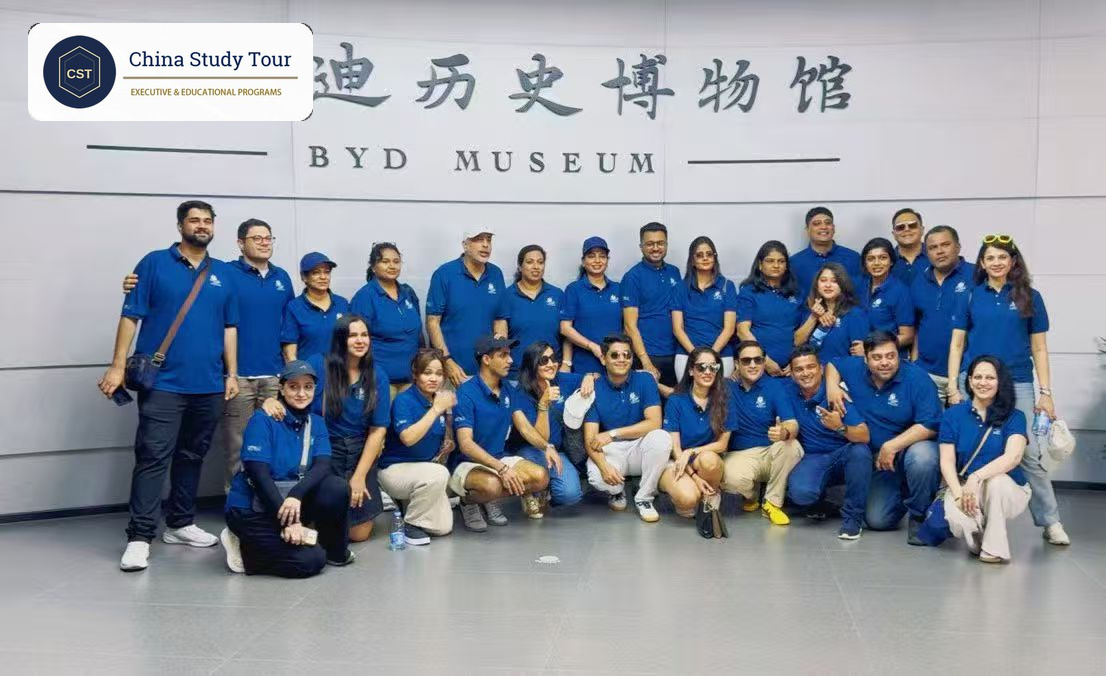
BYD sold 4.6 million NEVs in 2025, more than any other carmaker anywhere. It also passed one million overseas sales for the first time, up 145 percent. Because BYD makes its own batteries, motors, power electronics and chips in-house, its costs behave very differently from those of most Western rivals. Revenue, meanwhile, reached RMB 804 billion (about US$116 billion). Profit, on the other hand, fell about 19 percent to RMB 32.6 billion. BYD chose volume over margin during the domestic price war.
For visitors, BYD is the easiest of the giants to see. At the Shenzhen headquarters, groups spend about two hours in the technology exhibition hall and about an hour in the museum. Highlights include, for example, Blade Battery safety tests behind glass and a -30°C flash charging chamber you can step into. However, the production workshops at the headquarters are closed to visitors. So when a group wants to see a factory floor, we add a separate plant visit, such as GAC in Guangzhou. Our BYD headquarters tour report describes a full day there, and the BYD company visit guide explains how to arrange one.
CATL: The Battery Layer
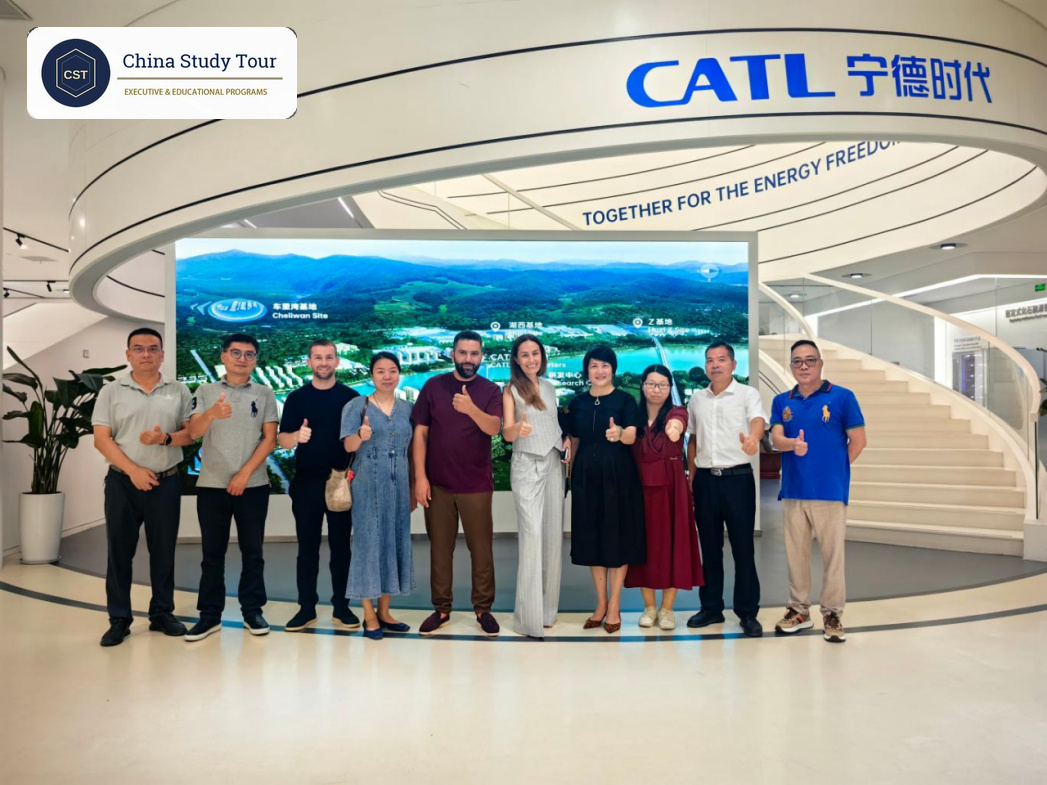
Many foreign visitors underestimate CATL, which is based in Ningde, Fujian. Yet in 2025 it supplied 39.2 percent of all EV batteries installed worldwide, its ninth straight year at number one. In addition, revenue was RMB 423.7 billion, and net profit was RMB 72.2 billion. That works out to a margin of about 17 percent, compared with roughly 4 percent at BYD. Put simply, most of the profit in the China EV industry sits in battery cells rather than in cars.
CATL also works on several battery types at the same time. LFP (lithium iron phosphate) batteries serve cost-sensitive models, while other lines focus on fast charging. Further out, a sodium-ion program looks beyond lithium altogether. Battery technology briefings can be arranged for organized groups, although R&D areas restrict photos and some require a non-disclosure agreement (NDA).
NIO, XPeng, Li Auto and the Newer Brands
Here is something that surprises most visitors: the newer brands that foreign readers know best are no longer the volume leaders. In 2025, for instance, Leapmotor delivered 596,555 vehicles and Huawei-backed HIMA delivered 589,107. XPeng followed with 429,445, while Xiaomi passed 410,000 in its first full year. By comparison, NIO delivered 326,028, and Li Auto actually fell 18.8 percent to 406,343.
| Brand | 2025 deliveries | Change | What visitors usually see |
|---|---|---|---|
| Leapmotor | 596,555 | +103% | A low-price strategy, and abroad it sells through Leapmotor International, a joint venture with Stellantis |
| HIMA (Huawei-backed) | 589,107 | +32% | Smart cabin and driver-assistance software, especially as the main selling point |
| XPeng | 429,445 | +126% | Individual factory tours, which are booked through the company's own app |
| Xiaomi | 410,000+ | First full year | Factory visits by lottery, also through the Xiaomi app |
| Li Auto | 406,343 | -18.8% | A pioneer of range-extender EVs, but now under pressure from plug-in hybrids |
| NIO | 326,028 | +46.9% | Battery swap stations as well as a subscription ownership model |
At the same time, losses across this group are getting smaller. NIO, for example, cut its loss by a third to RMB 14.9 billion, and XPeng is close to breaking even. Consolidation looks like the next stage, so now is a good time to see this market for yourself.
Government Policy Driving Growth
Back in 2001, China picked electric vehicles as a strategic industry. The idea was to leapfrog the established carmakers instead of chasing them. Twenty-five years of industrial policy followed, and in the end it built an industry that no longer needs that support.
The clearest proof came on January 1, 2026, when the NEV purchase tax exemption was halved. Buyers now pay 5 percent tax, and the saving is capped at RMB 15,000 per vehicle instead of RMB 30,000. Around the same time, broad trade-in subsidies were replaced by price-linked programs. So if demand depended on subsidies, sales should have dropped. Instead, the total car market shrank 4 percent in the first half of 2026, while NEV sales grew 7.3 percent. For this reason, CAAM researchers now describe the China EV industry as market-driven.
Charging policy, by contrast, is still pushing hard. For example, a national action plan issued in October 2025 targets 28 million charging points by the end of 2027. China already had 20.09 million at the end of 2025 and 24.22 million by August 2026. So the goal simply continues today's build rate. Looking ahead, industry officials expect NEVs to pass 70 percent of sales by 2030. Therefore, delegations should ask their hosts about cost curves in 2027, not about subsidies.
EV Supply Chain: What's Made in China
The cars are only the part you can see. Further upstream, China's lead is much harder to copy, because no competitor can match it with one or two new factories. Chinese firms hold more than 70 percent of global EV battery installations. In addition, most refining of lithium, cobalt and rare earth inputs happens in China, no matter where the ore is mined.
| Segment | China's position | Who visitors meet |
|---|---|---|
| Battery cells | Over 70% of global installations; 6 of the top 10 makers in 2025 (70.4% combined), and 7 in 2026 data (SNE Research) | CATL, BYD (FinDreams), CALB, Gotion, EVE and SVOLT |
| Mineral processing | Most of the world's refining capacity for lithium, cobalt and rare earth inputs | Materials and processing companies, usually through briefings |
| Components | In the Yangtze River Delta, a carmaker can source a full vehicle's parts within a four-hour drive | Tier-one parts makers as well as electronics suppliers |
| Charging and swapping | 24.22 million charging points by August 2026; BYD plans 20,000 flash charging stations by the end of 2026, while NIO runs the largest swap network | Charging operators, plus live swap demonstrations |
| Vehicles | Over 60% of global EV production | BYD, along with dozens of domestic brands at every price point |
CNEVPost covers BYD's charging plan in detail in its article on BYD's 1,500 kW charger and 20,000-station target. All this concentration is exactly why the China EV industry is so easy to read in one trip. Around Shenzhen and Guangzhou, for instance, a group can follow a vehicle from battery cell to finished car. Along the way, you also meet the suppliers whose capacity quietly sets global prices.
What Business Visitors Typically See
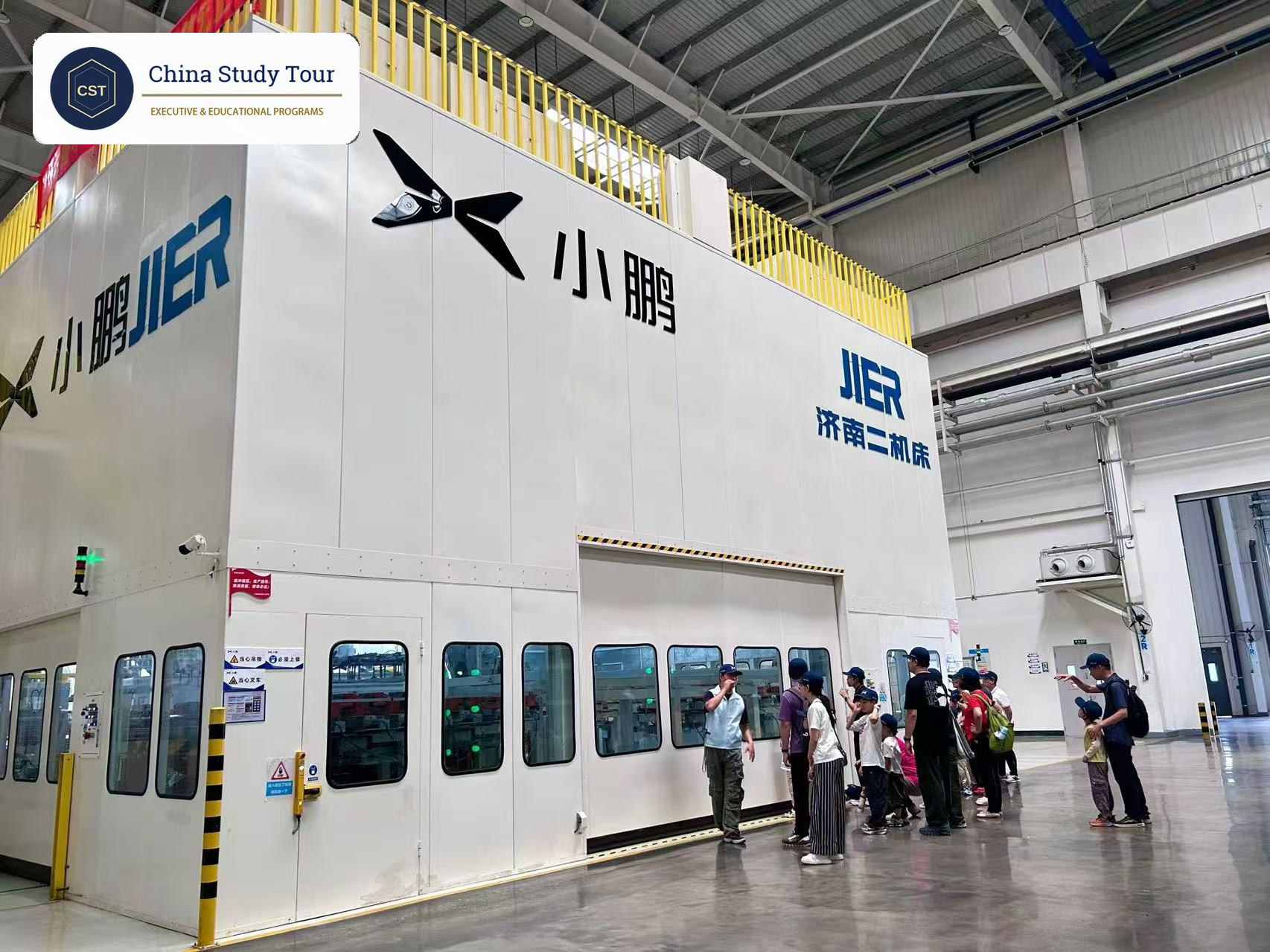
A well-planned EV program puts your group in front of the whole system. In most cases, the visits run roughly in this order:
- BYD headquarters day: You see the technology exhibition hall and the museum, followed by an executive briefing on global expansion. Photos are allowed in the hall, but there is no production floor at the Shenzhen headquarters.
- A vehicle factory: Next comes an assembly line at a plant such as GAC in Guangzhou. That way, the group sees production as well as finished products.
- CATL battery briefing: This covers battery chemistry, fast charging and the solid-state roadmap, although photos are usually limited in R&D areas.
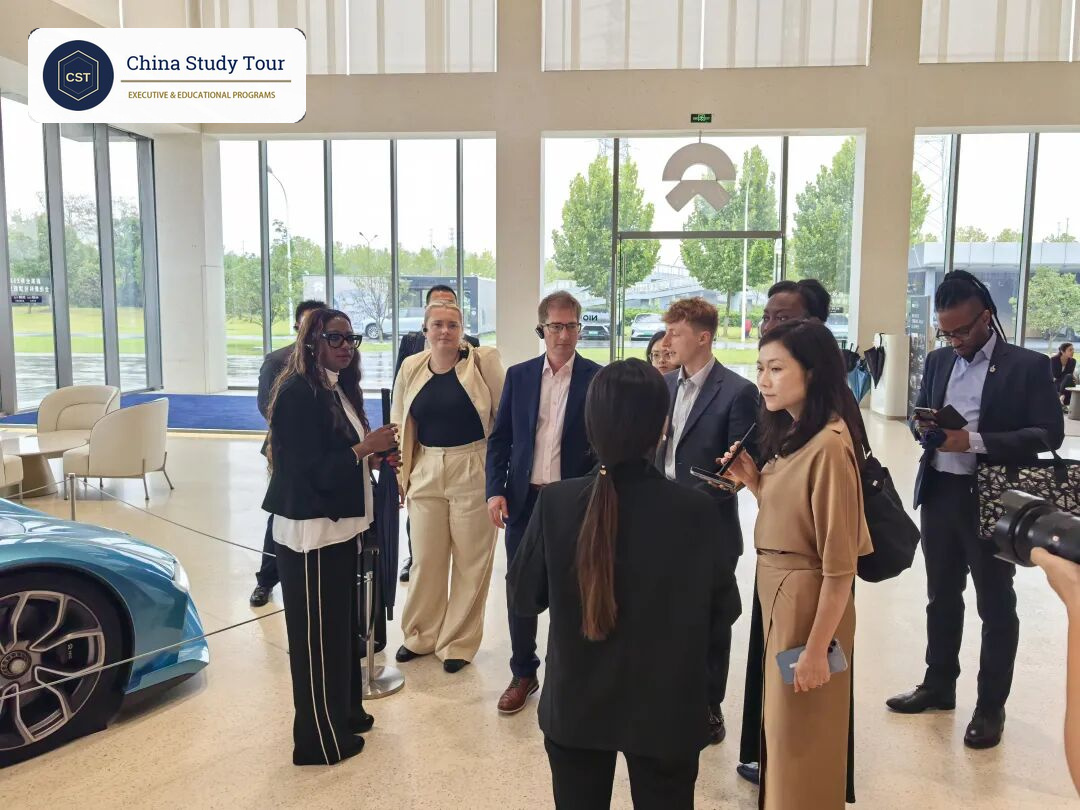
- NIO House and a swap station: Here you watch a live battery swap. You also see how a subscription model changes what "owning" a car means.
- A tier-one supplier: It is the least glamorous stop. Even so, executives often mention it most afterward, because this is where costs are really set.
- A charging network operator: Finally, one hour of questions here explains the economics of public charging better than any report.
One practical note: test drives at BYD require a Chinese driver's license, so most groups ride as passengers instead. Every technical briefing also needs proper bilingual interpretation; otherwise, much of the value gets lost.
How Access Works
In practice, China's leading EV and battery companies only accept outside groups through vetted partners. BYD, for example, approves every participant in advance, and names must match passports. As a result, cold emails from foreign companies rarely get an answer. Our access rests on more than 13 years of working relationships rather than a contact list.
So if you are comparing providers, ask each of them the same question: which of these visits can you confirm in writing today?
Want this itinerary costed for your group? Send us your sector, group size and preferred dates. We will then reply with a tailored EV program proposal within 24 hours. Request an EV program proposal.
How to Structure an EV Study Tour
For almost every group, five to seven days based in Shenzhen works well. Here is how a typical EV program flows:
- Arrival and context (Day 1): After landing, the group joins an industry briefing on policy and the competitive landscape.
- BYD headquarters (Day 2): The whole day goes to the exhibition hall, the museum and an executive briefing at the Shenzhen headquarters.
- The factory floor (Day 3): Then the group travels to Guangzhou for a vehicle plant, such as GAC or XPeng.
- Batteries and swapping (Day 4): The morning brings a CATL technology briefing. Then, in the afternoon, the group visits NIO House and a swap station.
- Supply chain (Day 5): This day pairs a component maker with a charging network operator.
- Optional extras (Days 6 and 7): Some groups add a debrief or a policy session. Others add a visit for their own sector before flying home.
Group Size, Cost and Timing
Groups range from 5 to 30 people, although most business delegations have 8 to 20. In terms of budget, most 7-day programs cost between US$2,500 and US$8,000 per person. That price covers all company visits, a bilingual guide, four-star hotels and transport inside China, but not international flights.
Timing matters a lot in this industry. In southern China, the best months are October to December and March to April. By contrast, Golden Week (October 1 to 7) and the Chinese New Year period are best avoided. During those weeks, plants run reduced schedules and approvals slow down. BYD alone needs 30 to 45 days to approve a visit. A multi-company program therefore needs at least six weeks. Three to four months is better, because battery sites have very few visitor slots.
Languages and Who Can Join
Guides speak English, Chinese, Spanish, Portuguese, and Japanese. All guides are bilingual, and additional language support is available upon request. Programs suit company leadership teams, industry associations, investor groups and universities, as well as government trade missions.
Our EV and new energy study tour program has sample itineraries. For access rules in other sectors, see our guide to Chinese companies that accept corporate visitors. Finally, our Shenzhen destination guide covers the base city.
The China Study Tour (CST) team in Shenzhen wrote this guide. Market figures come from CAAM, the Ministry of Public Security, the National Energy Administration, SNE Research and company reports. Visit details, on the other hand, come from our own programs, including a BYD headquarters and GAC factory program in September 2026. Photos are by the CST team, and all figures are a snapshot as of October 2026.
FAQ
How big is China's EV market in 2026?
China sold 16.49 million new energy vehicles in 2025, up 28.2 percent, which was 47.9 percent of all new vehicles sold. In 2026 the share keeps rising, since NEVs took 52.4 percent of sales from January to August. On the road, however, the fleet reached 48.97 million by June 2026, only about 13 percent of all cars.
Which Chinese EV companies can business visitors actually see?
BYD's Shenzhen headquarters receives organized groups in its exhibition hall and museum, but not in its production workshops. CATL battery briefings and NIO House with a swap demonstration need longer lead times. For a factory floor, GAC and XPeng plants in Guangzhou work well. In addition, Xiaomi and XPeng run individual tours through their own apps.
Is China's EV growth still driven by government subsidies?
Less and less. The purchase tax exemption was halved on January 1, 2026, and the saving is now capped at RMB 15,000 per vehicle. Even so, NEV sales grew 7.3 percent in the first half of 2026, while the total car market shrank 4 percent. Buyers now choose electric cars mainly for features and running costs.
How far in advance should we book EV company visits in China?
BYD needs 30 to 45 days to approve a headquarters visit, and every name must match a passport. A five to seven day program with several companies therefore needs at least six weeks. Even better, allow three to four months. Also avoid Golden Week (October 1 to 7) and Chinese New Year, when plants slow down.
What does a China EV study tour cost?
Most 7-day programs cost between US$2,500 and US$8,000 per person, depending on group size and the visits chosen. The price includes company visits, a bilingual guide, four-star hotels and transport inside China, but not international flights. For an exact figure, send CST your group details and we will prepare a proposal.
Reading about a market of 16 million vehicles a year only takes you so far. Standing in front of a live Blade Battery safety test, on the other hand, changes how you think about the numbers. So tell us your sector, group size and goals. Then we will build an EV and new energy program around them.
Get a Custom Proposal in 24 Hours →
Email: info@chinastudytour.ai·WhatsApp / WeChat: +86 131 6180 6706