Visiting Chinese Factories: A Complete Guide for Foreign Delegations
Key Takeaways
- Most delegations don't actually know which companies they should visit — they know their problem, not the answer. Matching is where the real work happens.
- The realistic timeline from first request to factory gate is 15–45 days. Fifteen is the fastest we've ever responsibly managed.
- Host companies almost always require company background, a full visitor list with titles, and a stated purpose before saying yes.
- Core production lines and R&D are almost never open. What you see: showrooms, automated component workshops, final assembly.
- Giants like Huawei or Alibaba are hard to book; vertical-industry leaders are far more welcoming — many export and genuinely want international exchange.
- For deep industry exchange, plan one company per day: site visit in the morning, technical meeting in the afternoon.
- The Misconception Almost Every Delegation Arrives With
- A Russian Construction Delegation That Taught Me a Lot
- How Matching Actually Works (and Why Your Company Size Matters)
- The Real Booking Timeline: 15–45 Days, Step by Step
- Which Companies Say Yes, Which Say No — and Why
- What a Visit Day Actually Looks Like
- Language, Interpreters, and What "Translation" Really Means
- What Drives the Cost
- What Happens After the Visit
- FAQ
The Misconception Almost Every Delegation Arrives With
After thirteen years of doing this, I can tell you the most common thing foreign delegations get wrong before visiting Chinese factories — and it's not visas, not budgets, not schedules.
It's this: most groups don't actually know which companies they should be visiting.
Some know their business pain point. Some know the question they're trying to answer. Very few arrive with the right list of companies. And that's completely normal — China covers essentially every major industry category, and unless you work inside this ecosystem daily, there's no reason you would know that the best BIM software company for your needs sits in Shanghai, or that the most advanced construction-robotics firm isn't the famous name you read about online.
I used to think my job was logistics. Over the years I learned that the logistics are the easy part. The part that decides whether a trip succeeds or fails happens weeks earlier, in the matching.
A Russian Construction Delegation That Taught Me a Lot
Let me tell you about one group, because this single trip contains almost everything I want you to understand about visiting Chinese factories.
Eight Russian visitors — entrepreneurs from listed construction companies, plus university professors — wanted to come to Shanghai to study China's construction industry. What made this group different was the clarity of their request. They sent us a precise technical wishlist:
- Implementation of Artificial Intelligence (AI) technologies in the construction industry
- Integration of BIM and AI: 4D/5D modeling, schedule management, and cost control
- Digital Twins of construction and infrastructure assets
- Smart construction sites and their practical applications
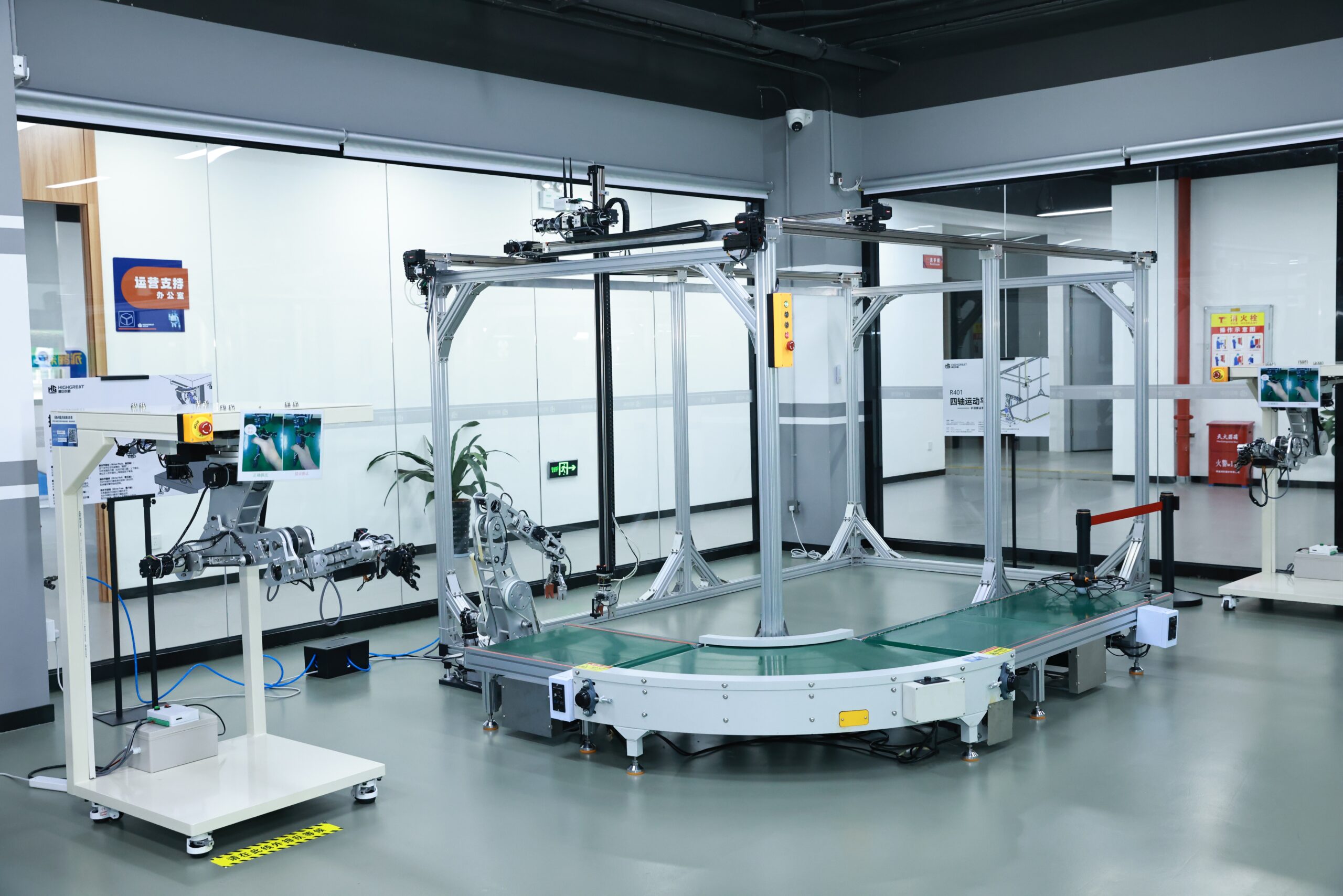
- Robotics in construction processes and autonomous construction equipment
- Drones and computer vision for construction monitoring
- Economic efficiency and ROI of digital technologies in construction
With a brief like that, our commercial team could do real work. Here is roughly how the matching came together:
- Glodon — China's leading construction-digitalisation company, with BIM + AI across the full lifecycle: AI quantity takeoff, 4D construction simulation, 5D dynamic cost control, automatic drawing-clash detection, schedule-delay prediction. Headquartered in Beijing, but with a showroom and branch in Shanghai — which meant the group could see it without changing cities.
- Luban Software — based in Shanghai, specialised in BIM5D for heavy infrastructure: railways, tunnels, bridges. Their platforms run on projects like the Sichuan–Tibet Railway and the Greater Bay Area sea crossings. In BIM for infrastructure, genuinely world-class.
- Pinming — focused on the construction site itself: BIM + AI schedule sequencing, smart cost management, integrated smart-site hardware and software. Based in Hangzhou, close to Shanghai. The delegation rated this visit very highly.
- SenseTime — AI vision algorithms, including the safety-recognition systems used on construction-site platforms. A strategic partner of ours, and one of the most capable AI companies in the country.
- Bright Dream Robotics — China's largest construction-robotics company: plastering, flooring, bricklaying, spraying, surveying and inspection robots, deployed at scale on residential projects.
- Bojiang Robotics — hardware plus its own AI/BIM management platform, able to connect with third-party BIM software.
- DJI Enterprise — construction surveying drones with AI 3D modelling, automatic earthwork measurement, slope-crack identification and aerial progress comparison.
Here's the part I find most interesting. The group originally only wanted to visit Shanghai. After we walked them through what actually existed and where, they agreed to expand the route. In the end they spent six days across Shanghai, Hangzhou, Shenzhen and Guangzhou, visiting seven companies.
I'm not sharing this to show off the itinerary. I'm sharing it because of what made it work: the client gave us accurate, specific information, and our commercial team turned that information into the right list of companies. That exchange — precise needs in, precise matching out — is the entire craft.
How Matching Actually Works (and Why Your Company Size Matters)
When a client says "I want to see construction-industry factories," that sentence alone isn't enough to work with. What I actually need to know is:
- Your specific technical interests — like the seven-point list the Russian group sent. The more precise, the better the match.
- Your company's scale and situation. This one surprises people, so let me be blunt about why it matters.
Imagine you run a small company with a modest purchasing volume, and you insist on visiting one of the top two or three companies in the world in your field. Even if I get you through the door — and sometimes I can — you won't be able to cooperate with them afterwards. The visit happens, but your actual goal doesn't. A well-matched mid-size supplier would have given you a real business outcome; the famous name gives you a photo.
The Russian delegation worked precisely because they told us the truth about themselves: listed companies, clear mandates, senior people. For that profile, "China's most advanced companies" was the correct brief, and we could deliver it. For a different profile, the correct list would look completely different — and it's my job to say so, even when it's not what the client wants to hear.
The Real Booking Timeline: 15–45 Days, Step by Step
The question I'm asked most often is "how fast can this happen?" Here is the honest answer, from hundreds of arranged visits: fifteen days is the absolute fastest we can responsibly do it. Thirty to forty-five days is normal. This is what those days are spent on:
| Step | What happens | Typical time |
|---|---|---|
| 1. Needs & matching | You state your real requirements; we return a matched list of host companies within 48 hours, then refine it with you. | 48h + 48h of back-and-forth |
| 2. Appointments | We approach the companies and lock the visit dates. Deposit confirms the schedule; hotels are booked and visa support begins. | ~48h per company |
| 3. Agenda alignment | We go back and forth on exactly what you want to learn at each stop, and confirm content and timing with each host. | Several days |
| 4. Interpreter preparation | We assign interpreters who know the industry's technical vocabulary and study the relevant technology in advance. | Days, in parallel |
| 5. Execution | Airport pickup, interpreter accompanies throughout, visits begin. | Your trip dates |
Whenever a group asks me to compress this below two weeks, something on that list gets skipped — and it's usually step 3 or 4, which are exactly the steps that decide whether your meetings are substantive or superficial.
Which Companies Say Yes, Which Say No — and Why
Not all Chinese companies are equally reachable, and understanding why saves a lot of disappointment.
Hard to arrange: Huawei, Xiaomi, Tencent, Alibaba and companies of that scale. Two reasons. First, they are flooded with visit requests. Second — and this is the part people underestimate — if there's no concrete technical connection or cooperation prospect between you and them, they simply have little reason to invest a morning in hosting you. Their cooperation level reflects that.
Much easier: vertical-industry leaders. Companies like the ones on the Russian itinerary tend to welcome international guests, for very rational reasons: many have overseas business themselves, they value industry exchange, and a qualified foreign delegation is an opportunity for them too. The openness isn't charity — it's aligned interest.
What hosts ask for before saying yes
Nearly every company asks for the same three things, and I'd encourage you to prepare them before you even contact anyone:
- Your company background
- The full visitor list with names and job titles
- A clear purpose of visit
And yes, refusals happen. In my experience the two most common reasons are: visitors from sensitive countries or regions, and companies or individuals with no relevant industry background — hosts can't see why the visit makes sense, so they decline.
What a Visit Day Actually Looks Like
Delegations often imagine unrestricted access to production floors. The reality is more structured, and honestly, more useful. A standard visit runs like this:
- Reception — company introduction and the visit's ground rules
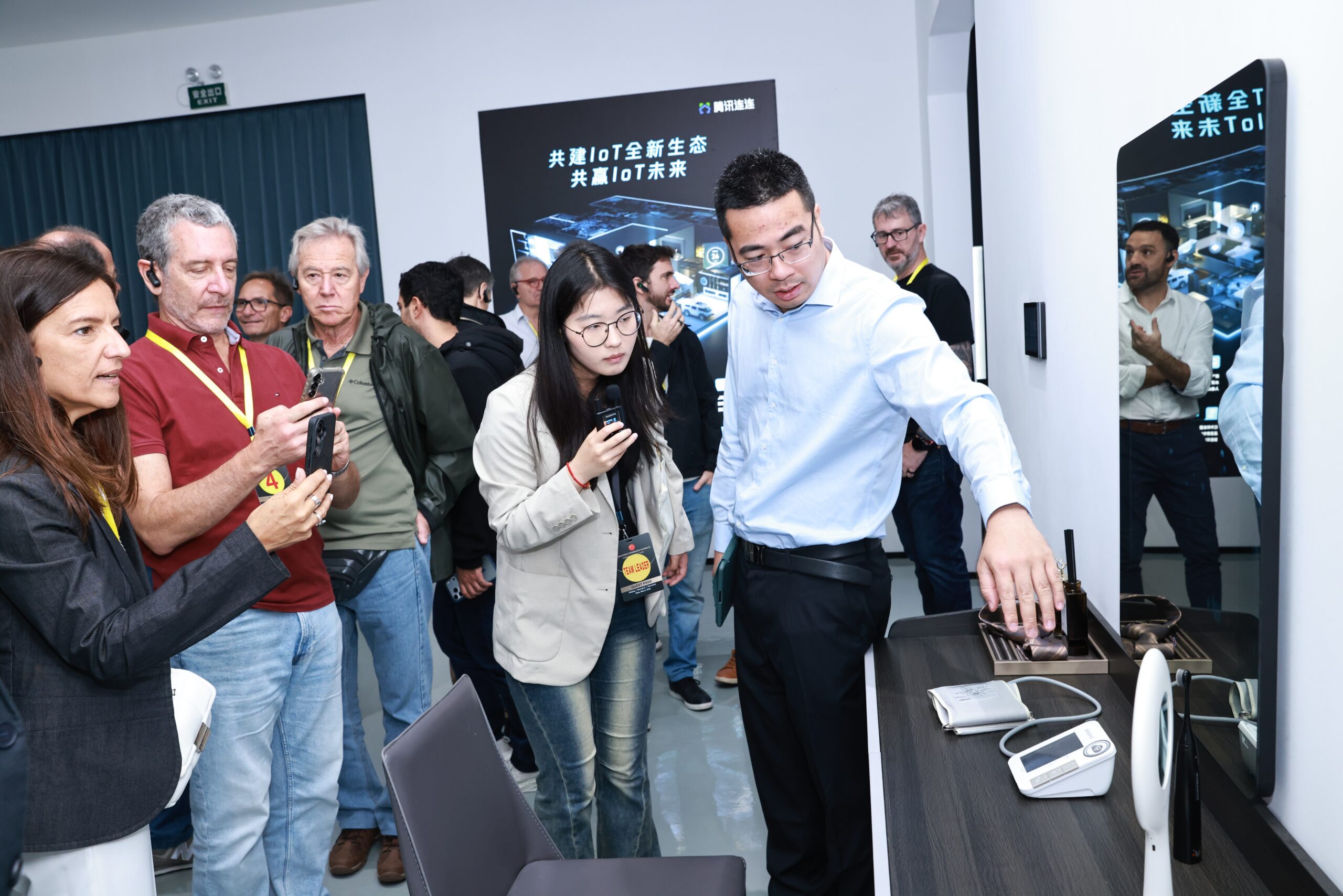
- Showroom tour — photography is normally allowed here
- Factory floor (where applicable) — photography prohibited
- Meeting — a working session on your topics, plus Q&A
- Wrap-up
What you can and cannot see
Let me set expectations plainly, because I'd rather you hear it from me than discover it on site:
- Core production lines are not open to visitors. They're treated as commercial secrets, and every serious company protects them.
- R&D areas are not open either, for the same reason.
- What you will see: the showroom, and typically automated component workshops or fully automated final-assembly areas.
On pacing: for genuine industry exchange, one company per day is right. Showroom and factory in the morning, technical meeting in the afternoon. I've watched groups try to stack three companies into a day; they end each visit just as the conversation is getting somewhere.
Language, Interpreters, and What "Translation" Really Means
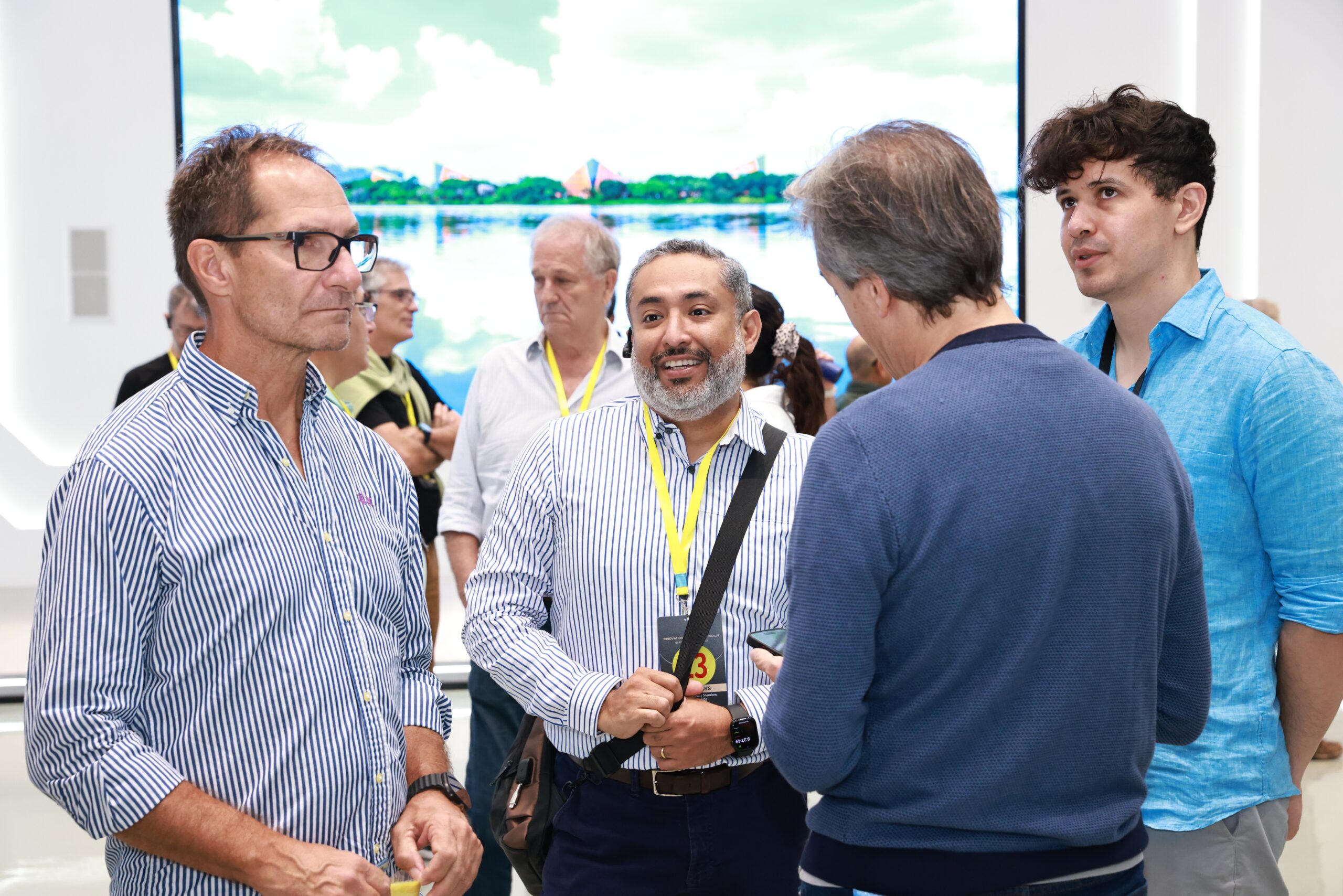
Good news first: most of the companies we work with can communicate directly in English. For delegations working in other languages, a professional interpreter joins.
But here's something I only learned by sitting through hundreds of these meetings: an interpreter's real job is not converting words. Standard word-for-word translation frequently fails to carry the actual meaning of a technical answer. The interpreters we assign do something different — they translate, then summarise and re-explain what the company just said, so the visitor understands the real point, not just the sentence. On technical visits, that difference is everything.
What Drives the Cost
I won't pretend there's a single number, because there isn't. The cost of a factory-visit programme is built from the company visit fees, plus hotels, ground transport and flights — and the total moves mainly with four variables:
| Variable | Why it moves the price |
|---|---|
| Which companies you visit | The biggest factor — visit fees differ substantially between companies |
| Number of cities | Each city adds inter-city travel and hotel nights |
| Number of days | Directly scales interpreters, vehicles, accommodation |
| Group size | Per-person averages shift with headcount |
If someone quotes you a flat price before knowing these four things, be a little suspicious.
What Happens After the Visit
One more thing I want to be transparent about, because it says something about how this should work.
When a delegation finds a company they want to cooperate with, we step out of the way. By the end of the visit you already have direct contact with the company — the follow-up relationship is yours, and we don't insert ourselves into it. If you later need services around that cooperation — factory audits, quality inspections and the like — those can be arranged separately, priced for whatever the specific work is.
I mention this because I think it's the right way around: the visit's purpose is your business outcome, not our ongoing involvement.
FAQ
How long does it take to arrange a factory visit in China?
What do host companies require from a foreign delegation?
Can we see the core production line or R&D?
Why are companies like Huawei and Alibaba so hard to visit?
How many companies should we plan per day?
Will language be a problem?
How is a factory-visit programme priced?
Do we need to go through you to work with a factory afterwards?
About these notes. China Study Tour (CST) has been designing company visits and study programmes in China since 2013 — 500+ delegations from 30+ countries. If you're planning a factory-visit programme and want to talk through matching first, you can reach us at info@chinastudytour.ai or WhatsApp +86 131 6180 6706. Bring the world to China. Connect China to the world.