University Study Tour to China: How to Plan One
A university study tour to China pairs campus visits with company briefings that match what your students are studying. This guide is for international offices, MBA program directors and faculty leaders. It shows how to set the learning goal, pick the cities, book the right hosts and budget for each student.
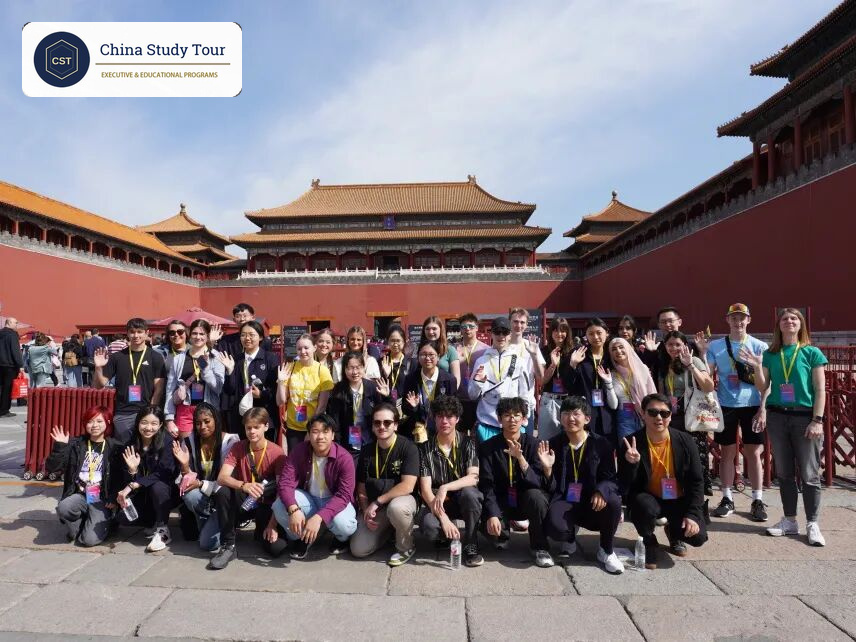
Plan a university study tour to China around three anchors. First, write a one-page learning goal. Next, choose the cities your topic needs: Beijing for policy and AI, Shenzhen for hardware and electric vehicles, Shanghai for finance and biotech. Then build a 7 to 10 day program with one academic partner, one company visit per day and a faculty debrief after each visit.
As of October 2026, budget about USD 3,500 to 7,000 per student, not including international flights. Start 2 to 3 months ahead, or 4 to 6 months for a fixed semester window.
Key Takeaways
- Goal first, itinerary second. One clear sentence on what students should understand decides the cities, companies and campus partner.
- Access takes time. Leading firms such as BYD and DJI need 6 to 8 weeks of lead time. Chinese universities also need several weeks to set up a joint seminar.
- Seven days is the usual length. It fits two cities, one campus exchange per city and time for reflection.
- Cost depends on four things. Group size, number of cities, hotel tier and the level of company access move the price most.
- Admin is the longest task. Committee approval, visas, insurance and a risk assessment often take longer than the program design.
Why Universities Go to China
The reasons universities send students to China have changed in the last five years. Today, three drivers lead. First, China sits at the center of the supply chains that will shape a graduate's first decade of work. Second, its industrial policy has produced global leaders in electric vehicles, batteries and drones. Third, Chinese firms now move fast at very large scale in AI, EVs and biotech.
For MBA programs, the trip usually supports a global strategy or operations elective. Faculty want students inside firms they have studied in cases, such as BYD's vertical integration or DJI's drone business. For undergraduate business, economics, supply chain and engineering faculties, the trip often anchors an international business module or a capstone project.
One test separates a strong program from sightseeing. Write the learning goal before anyone builds an itinerary, and then ask the operator to work backward from it. For example: "By the end of the trip, students can explain how China's industrial policy supports its EV makers, using what they heard at BYD and at a vehicle plant." Once that sentence is fixed, the cities, companies and academic partners follow.
Academic vs Corporate Programs: What Is Different
A university tour and an executive tour look alike from the outside. Both have small groups, company visits and a pair of Chinese cities, often with the same host firms. However, they are different products with different goals. A common planning mistake is to assume one design serves both equally well.
| Factor | University program | Executive program |
|---|---|---|
| Main goal | Course learning goals and graded work | Strategic insight and peer benchmarking |
| Group | 20 to 40 students plus a faculty director | 8 to 15 senior managers, often from one firm |
| Academic anchor | Joint seminar with a Chinese faculty partner | Industry briefing and peer roundtable |
| What people take home | Pre-trip reading pack, visit notes, a graded report | Strategy debrief notes and new contacts |
| Hotels | Usually 4-star; 5-star for premium MBA groups | 5-star or business hotels in central districts |
| Lead time | 2 to 3 months; 4 to 6 months for a semester window | Usually 6 to 12 weeks |
| Length | 7 to 10 days | 5 to 7 days |
If your group is closer to working managers than to students, an executive study tour may fit better. The cost is similar, but the structure suits peer benchmarking more than campus exchange.
Aligning Company Visits With Coursework
Students learn the most when each visit feeds a framework from the course. A visit added only because the company is famous rarely shows up in the final paper. Here are two ways faculty can build that link.
Revisit a case. A global strategy elective can pair BYD with Porter's Diamond. Before the visit, students read the case. During the visit, they record evidence for each part of the model. Afterward, each student argues which of China's advantages will last and which depend on policy, using three facts heard on the day.
Compare two models. An operations course can visit a drone maker and a vehicle plant in the same week. Students then compare how each firm handles speed, cost and quality. They also see how Chinese suppliers cluster within a few hours' drive of the main plant.
Plan this with the real access rules in mind. For example, BYD's Shenzhen headquarters opens its technology exhibition hall and museum to visitors, but not its production workshops. When a course needs a working assembly line, CST adds a separate plant visit, such as the GAC Group plant in Guangzhou. The corporate visit FAQ explains access levels in more detail.
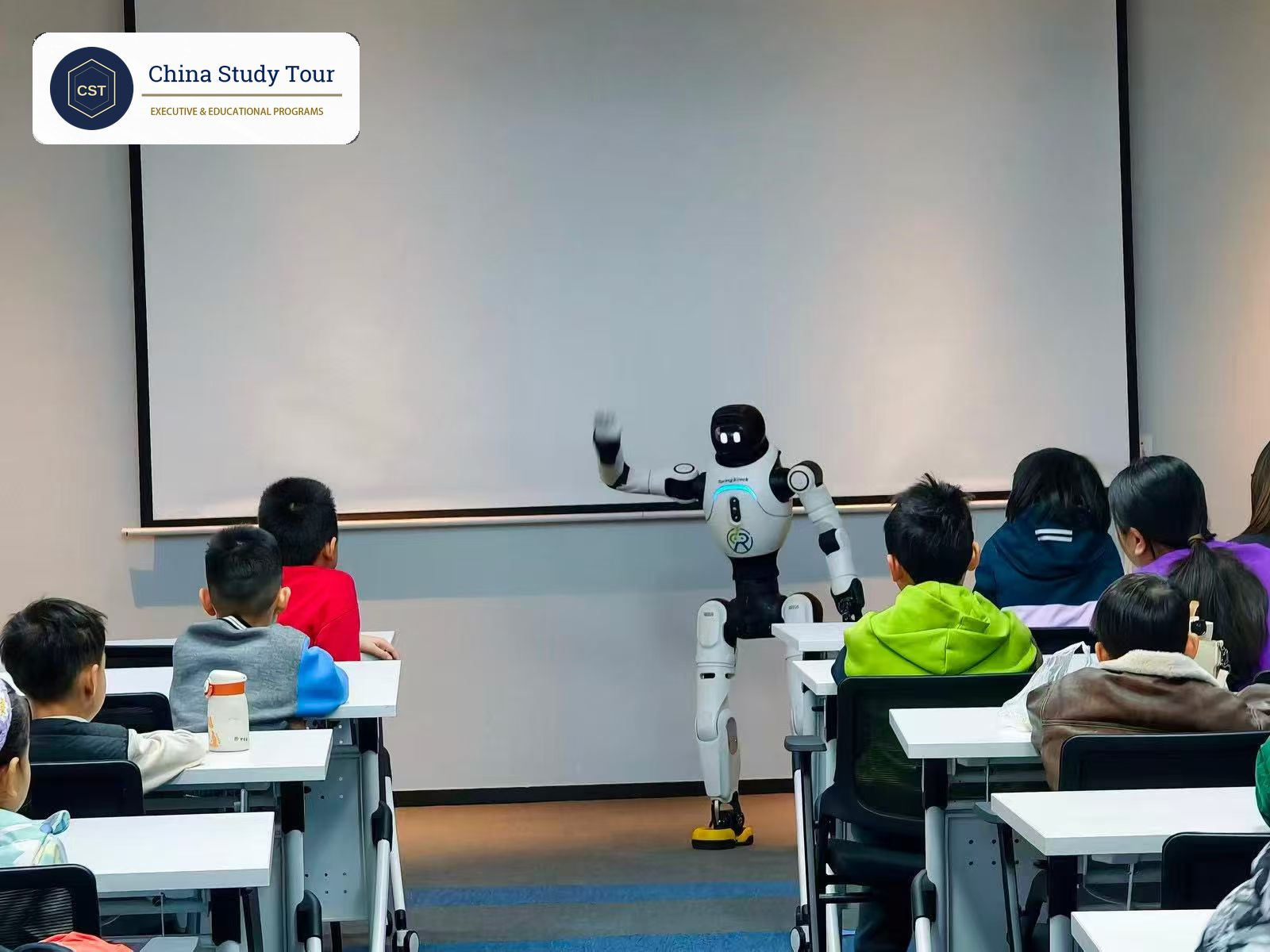
A simple test shows whether the link worked. After each visit, can a student name two facts they will use in next week's paper? If yes, the visit did its job.
Campus Visits in China
On a university study tour, a campus visit means a joint seminar, a lab tour or a research meeting with a Chinese host university. It is not a photo stop. China Study Tour (CST) arranges exchange sessions with Peking University (PKU), Tsinghua University, SUSTech (Southern University of Science and Technology) and CUHK-Shenzhen (The Chinese University of Hong Kong, Shenzhen). Sessions are matched to the visiting faculty's field and the students' interests.
For a Beijing anchor, PKU and Tsinghua are the usual choices. For technology and entrepreneurship, SUSTech and CUHK-Shenzhen pair well with hardware company visits in Shenzhen. In Shanghai, Fudan University hosts structured exchanges with MBA and undergraduate students, as shown in CST's sample school schedules.
Plan the campus and company hosts as one package. If your list is BYD, DJI and Peking University, each has its own lead time. Booking all three through one operator avoids a calendar where PKU is free in week 1, BYD in week 4 and DJI in week 6.
Duration and Structure Options
Most first-time planners choose seven days, and that is a sensible default. Five-day formats work for short intensives inside a semester break. However, they cut the reflection time that improves graded work. Ten to fourteen days suit full-term add-ons, faculty research visits or three-city programs where each city earns its place.
A useful balance is the 40/40/20 framework: 40% academic and company sessions, 40% cultural and experiential learning, and 20% free and reflection time. CST's step-by-step university planning guide shows how to apply it with a 16-week timeline. The most common mistake is overloading. Four visits and two campuses in one day leave students tired, and they remember little.
Choose cities by topic:
- Beijing + Shenzhen: policy, AI, hardware and EVs.
- Shenzhen + Guangzhou: manufacturing, robotics and the Greater Bay Area supply chain.
- Beijing + Shanghai: a safe default for economics, finance and general business topics.
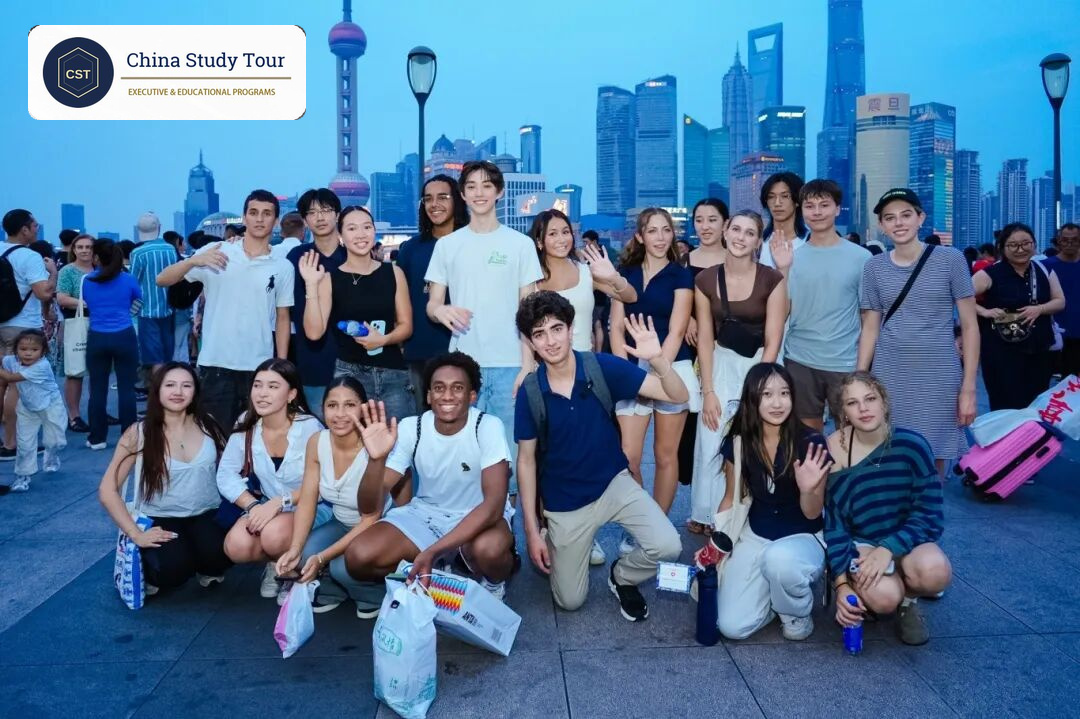
The CST destinations guide covers what each city offers.
Sample 7-Day University Study Tour to China
CST does not sell fixed university packages. Every program is co-designed with your faculty. The table below is one example format, based on the 8-day MBA sample on CST's university program page and shortened to seven days.
| Day | City | Program |
|---|---|---|
| 1 | Beijing | Arrival. Faculty briefing on China's economic model and innovation system. Welcome dinner. |
| 2 | Beijing | Morning: joint seminar with Peking University students. Afternoon: Baidu AI briefing. Evening debrief. |
| 3 | Beijing | Morning: iFlytek demo. Afternoon: Tsinghua University exchange. Evening guest lecture on China's technology policy. |
| 4 | Beijing to Shenzhen | Morning: Forbidden City with historical context. Midday: faculty strategy session. Afternoon flight to Shenzhen. |
| 5 | Shenzhen | BYD headquarters: technology exhibition hall (about 2 hours) and museum (about 1 hour). Evening debrief. |
| 6 | Shenzhen | Morning: DJI Sky City visit. Afternoon: SUSTech exchange on innovation and entrepreneurship. |
| 7 | Guangzhou | High-speed train to Guangzhou. Morning: vehicle plant production line visit. Final faculty synthesis and assessment briefing. Departure. |
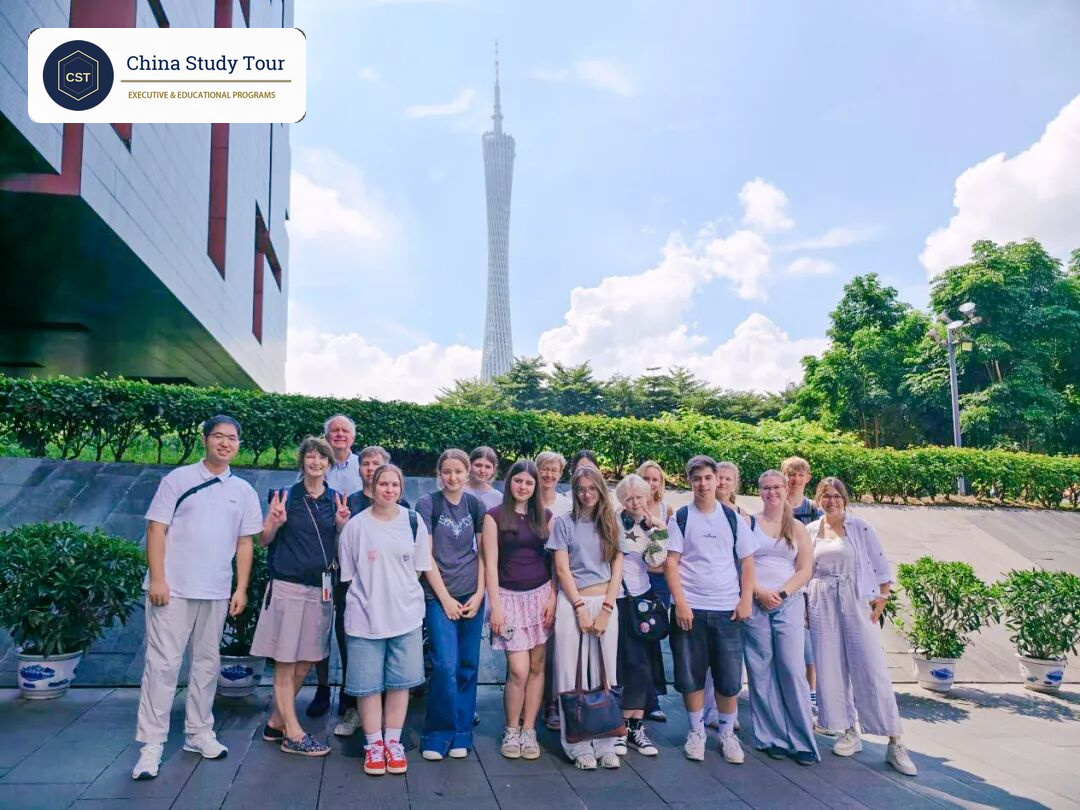
Groups that want a longer academic exchange can use CST's 8-day Beijing and Shanghai format, with seminars at Peking University and Fudan University. Students who cannot form a group of 20 can join the open monthly group tours instead, which need only 5 people.
China's leading firms accept outside groups only through vetted partners with verified records. BYD, for example, approves every participant by passport name in advance and checks each person again at the gate. Cold emails from a university office rarely get a reply. CST's access is built on 13+ years of relationships, not a contact list.
Cost per Student Range
As of October 2026, a 7 to 10 day university program with CST typically runs USD 3,500 to 7,000 per student, not including international flights. Each price is custom. These four factors move it the most:
| Factor | Lower cost | Higher cost |
|---|---|---|
| Group size | 30 to 40 students share fixed costs | 10 to 15 students pay more each |
| Cities | Two cities, linked by high-speed rail | Three cities with domestic flights |
| Hotels | 4-star, outside the center | 5-star in central districts |
| Company access | Exhibition halls and briefings | Senior executive sessions and labs |
The price usually covers hotels, meals, transport in China, university exchange setup, company briefings, bilingual guides, and travel and medical insurance. International flights and visa fees are billed separately.
Group size matters more than most planners expect. Small groups of 8 to 15 can unlock more senior briefings, but each student pays more. Large groups of 30 to 50 lower the cost per student, but they must split up during visits and need more staff. For most MBA programs, 20 to 35 students works best. Also ask early how many faculty places the quote includes.
Safety and Admin Requirements
For a faculty director, admin usually takes more time than program design. The table lists the main tasks in the order they reach your calendar.
| Task | When | Notes |
|---|---|---|
| Learning goal and committee approval | 4 to 6 months out | Many schools send student travel to an academic committee. One review cycle often takes 4 to 6 weeks. |
| Hosts and dates | 2 to 3 months out | Confirm the campus partner and company visits. Avoid Chinese exam periods and Golden Week in early October. |
| Participant list | 6 to 8 weeks out | Firms such as BYD approve names against passports. Late changes are rarely possible. |
| Visas | 3 to 4 weeks out | See the visa notes below. |
| Insurance and risk assessment | Before departure | Travel and medical cover for the full trip; some schools also require medical evacuation. |
Visa Rules in 2026
As of mid-2026, ordinary passport holders from 50 countries, including the UK and Canada, can enter China visa-free for up to 30 days. That policy runs to December 31, 2026 for most countries, and 29 more countries have mutual visa exemption. US citizens are not on the 30-day list. They can use the 240-hour (10-day) visa-free transit, but only with an onward ticket to a third country, so most US groups apply for a visa. Indian passport holders also need a visa. Rules change often, so check the National Immigration Administration before you book flights. CST's visa, timing and budget guide covers the steps by nationality.
Risk, Phones and Language Support
On student trips, the most common problems are traffic, food allergies and lost passports. Altitude matters only on Tibet or Yunnan extensions. CST programs include 24/7 bilingual emergency support, checked hotels and licensed transport.
Phones and data. Some firms do not allow photos in production areas, so brief students on what they may record. Many programs also advise students to set up messaging and maps apps that work in China before they leave.
Languages. CST works in English, Chinese, Spanish, Portuguese, and Japanese. All guides are bilingual, and additional language support is available upon request. Company visits include professional interpretation.
The CST educational programs team wrote this guide in October 2026. Sample days, partner universities and price ranges come from CST's published university program and sample schedule pages. BYD access details come from CST's own visit record from September 2026. Visa rules are a snapshot as of mid-2026 and change often.
Frequently Asked Questions
How far ahead should a university book a study tour to China?
Allow 2 to 3 months for a co-designed program. Leading firms such as BYD and DJI need 6 to 8 weeks of lead time, and Chinese universities need several weeks to set up a joint seminar. If the trip must fit a fixed semester window, start the conversation 4 to 6 months ahead.
Can MBA students really visit companies like BYD and DJI?
Yes, but only through vetted partners. These firms do not accept walk-in groups, and BYD approves every visitor by passport name. At BYD's Shenzhen headquarters, groups see the technology exhibition hall and museum, not the production workshops. When a course needs a working assembly line, CST adds a separate plant visit.
What is the difference between a university study tour and an executive study tour?
A university tour serves a course goal. It includes campus exchanges, company visits tied to the syllabus and graded work. An executive tour serves senior managers who want strategic insight, peer networking and benchmarking. As a result, the group size, hotels, length and take-home materials all differ.
Do Chinese universities host international student groups?
Yes, when an established partner arranges it several weeks ahead. CST works with Peking University and Tsinghua in Beijing, and with SUSTech and CUHK-Shenzhen in Shenzhen. Fudan University hosts exchanges on CST's Beijing and Shanghai format. Sessions can include joint seminars, lab visits and student Q&A matched to your field.
How much does a university study tour to China cost per student?
As of October 2026, a 7 to 10 day program typically costs USD 3,500 to 7,000 per student, not including international flights. Larger groups, two cities and 4-star hotels sit near the lower end. Small groups, 5-star hotels and senior executive sessions sit near the top. Visa fees are also separate.
How is a China study tour tied to course grades?
Strong programs build the trip into assessment. Students get a reading pack before departure and a set of questions for each visit. Faculty lead a short debrief every evening. After the trip, students submit a reflective essay or a group case presentation that uses facts from the visits. Faculty should approve these tasks in advance.
Tell us your institution, program type (undergraduate, MBA or executive education), group size, academic theme and preferred dates. We reply within 24 hours and send a co-designed draft program within 48 hours.
Request a University Program Proposal →
Email: info@chinastudytour.ai·WhatsApp / WeChat: +86 131 6180 6706