Robotics Study Tour in China: A Smart Manufacturing Guide for 2026
A robotics study tour in China takes business, MBA and engineering groups onto live production floors to see how far factory automation has really gone. Most programs are based in Shenzhen and the Pearl River Delta. This guide covers the themes, the companies that accept groups, a sample 5-day route and the cost.
A robotics study tour in China usually runs 5 to 7 days from Shenzhen. Groups of 5 to 30 visit a humanoid robot line, a lights-out factory, DJI and a robot data training center. Prices start at USD 3,200 per person for groups of 20 or more. Book at least 6 weeks ahead, ideally 3 to 4 months.
Key Takeaways
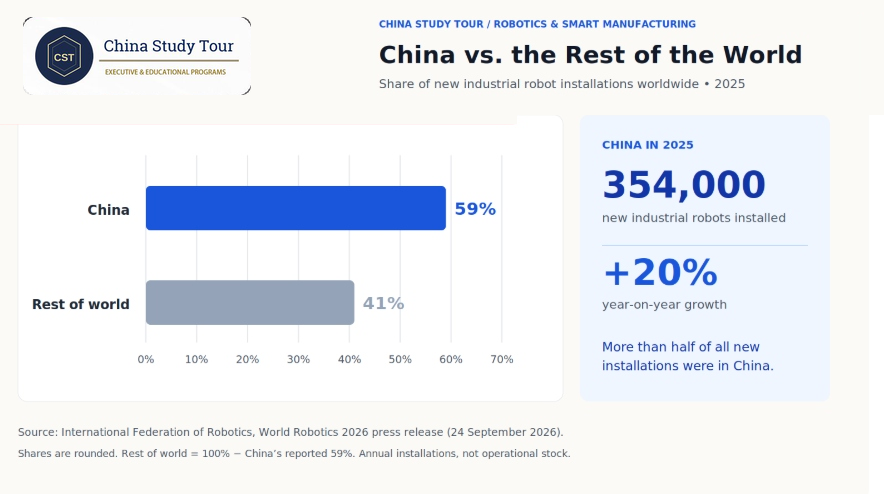
- Scale: China installed 354,000 industrial robots in 2025, which is 59% of the world total (IFR, September 2026).
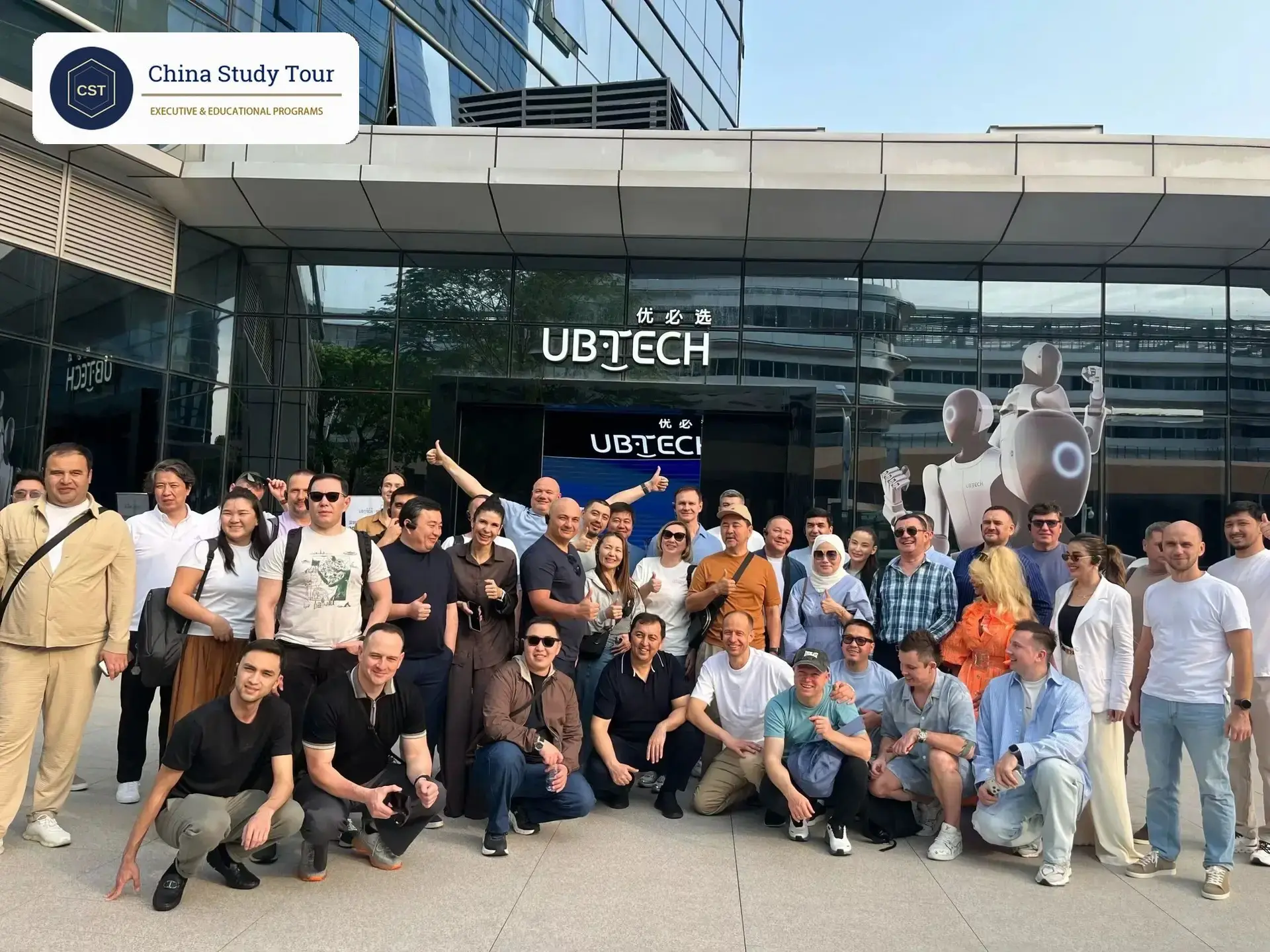
- Access: Some sites offer free showroom slots for individuals, such as UBTECH on weekends and the Foxconn exhibition hall in Longhua. Production floors, technical briefings and leadership roundtables for foreign groups are arranged only through vetted partners.
- Route: The core 5-day program stays in Shenzhen. Hangzhou or Foshan add one or two days.
- Cost: USD 3,200 to 5,500 per person, depending on group size. International flights are not included.
Why China for Robotics and Smart Manufacturing
China is now the largest robot market in the world by a wide margin. According to the International Federation of Robotics (IFR), the country installed 354,000 industrial robots in 2025. That was 59% of all new installations worldwide and 20% more than in 2024. Chinese robot makers supplied 195,000 of those units, or 55% of their home market.
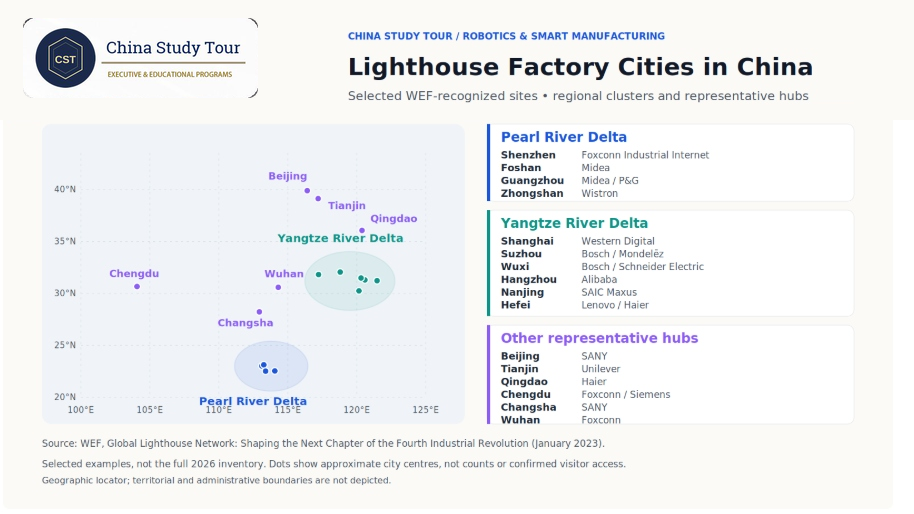
The factories around those robots are changing too. China's industry ministry (MIIT) had graded more than 30,000 basic-level smart factories by February 2025, according to People's Daily. In January 2026, the World Economic Forum added 23 sites to its Global Lighthouse Network of advanced factories, and 16 of them are in China.
Humanoid robots are the newest layer. A 2023 MIIT plan set two targets: batch production by 2025 and world-leading capability by 2027. As a result, several Shenzhen companies now run humanoid lines that groups can see in person.
Key Themes to Cover on the Ground
A factory visit needs a clear question, or it becomes sightseeing. These are the themes our program directors build each briefing around:
- Robot cost parity: at what price a robot replaces a production worker, and which sectors reach that point first.
- Training data: robot data training centers collect the motion and task data that robot AI models learn from.
- Supply-chain speed: in the Pearl River Delta, motors, sensors and circuit boards sit close together, so prototypes take days, not weeks.
- Smart factory results: digital twins, AI quality control and predictive maintenance, measured in defect rates and output per worker.
- What it means for you: how China's automation curve affects your own plant location, investment and staffing plans.
Companies to Visit by Sector
The table shows the robotics and smart manufacturing sites that most often host groups, with the access route for each. The full list by sector is in our guide to Chinese companies that accept visitors.
| Sector | Company | City | Access for groups |
|---|---|---|---|
| Humanoid robots | UBTECH | Shenzhen | Weekend showroom open to individuals; group briefings via vetted partners |
| Drones and R&D | DJI (Sky City) | Shenzhen | Vetted partners; core route; factory floor closed |
| Service robots | Pudu Robotics | Shenzhen | Vetted partners; half-day showroom |
| Lighthouse electronics | Foxconn (Longhua) | Shenzhen | Exhibition hall open to the public; production lines by business channel only |
| Smart appliances | Midea | Foshan | Vetted partners; extra half day |
| Humanoid and four-legged robots | Unitree | Hangzhou | Vetted partners; extra day |
| Lights-out factory | CST partner site | Shenzhen area | CST partner network; subject to host schedule |
| Robot data training | CST partner site | Shenzhen area | CST partner network; subject to host schedule |
The last two rows anchor the core route: a lights-out factory that runs whole night shifts with almost no staff on the floor, and a large robot data training center. Both are in the Shenzhen area. They come through CST's partner network, so the exact host is confirmed during planning and depends on its schedule. Together they answer the two questions most groups bring: how far automation has gone, and what comes next.
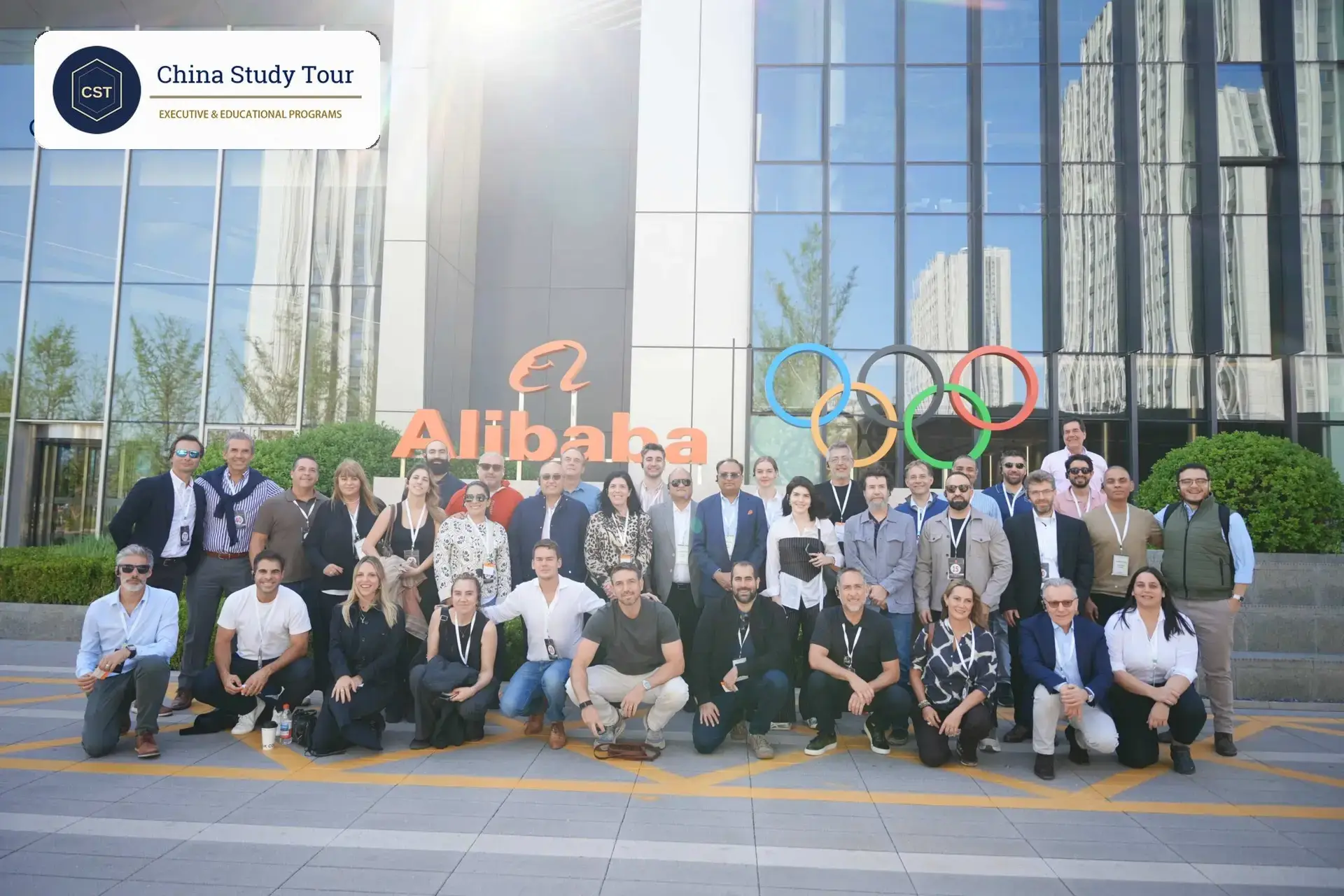
A public showroom shows products. Production floors, engineer briefings and leadership sessions for foreign groups are opened only through vetted partners. The partner sends group details, checks passports and stands behind the group on site. China Study Tour (CST) has built these relationships over 13+ years.
What a Typical Robotics Tour Program Looks Like
A structured program runs 5 to 7 days with five or more company visits. Each visit lasts 2 to 3 hours. That is enough time for a floor walk, a technical briefing and open questions with engineers. Shorter visits often become a showroom walk only.
Before departure, each member gets a briefing pack on every host company. On site, every briefing has professional English and Chinese interpretation, because the engineers who know the numbers rarely present in English. The program ends with a strategy roundtable that turns what the group saw into actions for its own business.
Groups range from 5 to 30 people, and most are 8 to 20. Groups of 5 to 8 can often join a scheduled monthly departure instead of a private program. Typical groups include company leadership teams, MBA and university classes, industry associations and government trade missions. Languages supported: English, Chinese, Spanish, Portuguese, and Japanese. All guides are bilingual, and additional language support is available upon request.
The full program design is on the robotics and smart manufacturing program page. For a mixed EV, robotics and AI route across three cities, see the 7-day CEO study tour itinerary. Single-company options are listed under company visits in China.
Sample 5-Day Robotics Study Tour Itinerary
This is the current 5-day structure from the program page. Final hosts are confirmed during planning, based on your goals and their availability.
| Day | Focus | What happens |
|---|---|---|
| Day 1 | Arrival and briefing | Arrive in Shenzhen. Expert briefing on China's robotics and automation landscape. Welcome dinner. |
| Day 2 | Humanoid robots and data | Morning on a live humanoid robot production line. Afternoon at a robot data training center. |
| Day 3 | Lights-out factory | Tour of a fully automated plant. Afternoon on digital twins, AI quality control and predictive maintenance. |
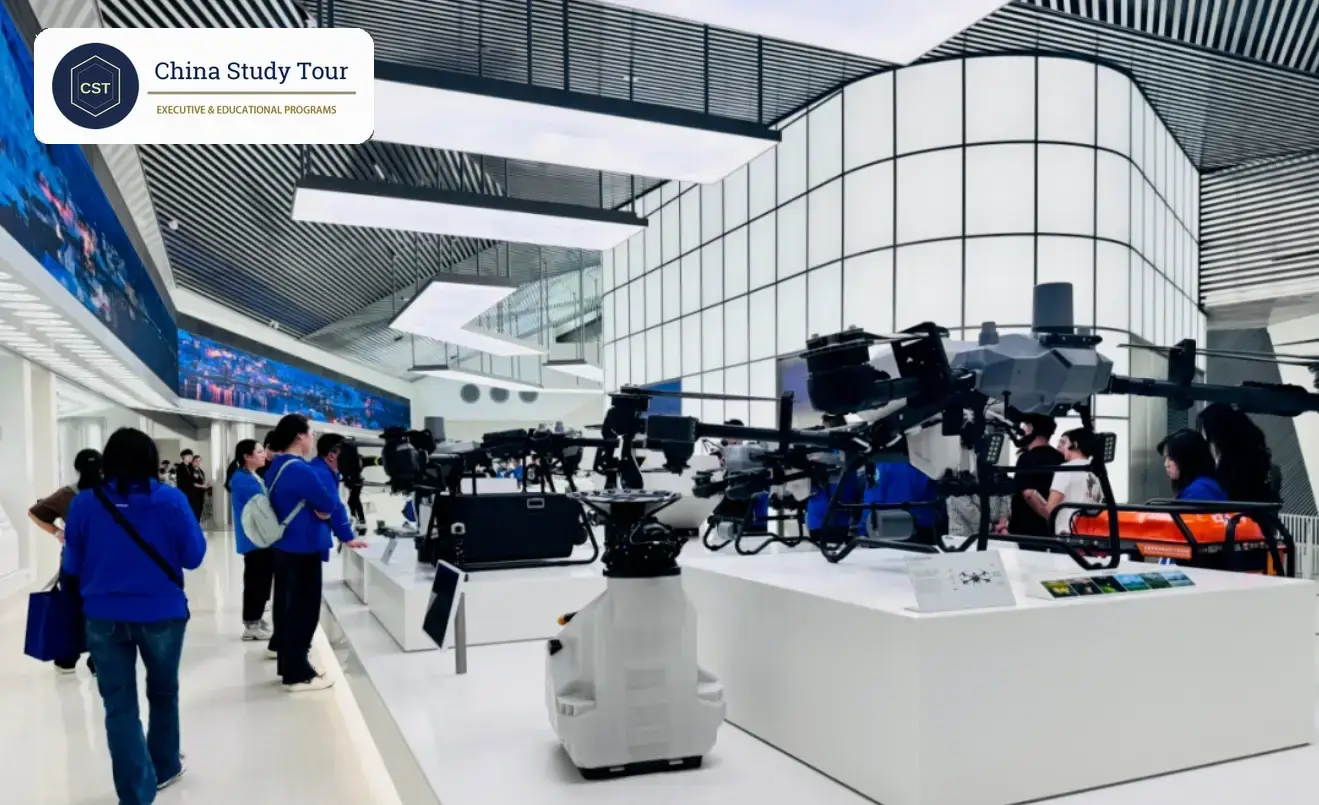
| Day 4 | DJI Sky City | DJI headquarters, R&D tour and live drone demo. Afternoon on drones in farming, inspection and logistics. |
| Day 5 | Strategy roundtable | Structured discussion on what this means for your own automation plans. Departures. |
The 7-day version adds a Pearl River Delta supplier day and a closing session. Adding Unitree or Midea takes one more day and a second city.
Robotics Study Tour Cost
Price depends mainly on group size and length. These are per-person figures for the Shenzhen program, as published in October 2026:
| Group size | Length | Per person (USD) |
|---|---|---|
| 5 to 9 people | 5 days | 4,500 to 5,500 |
| 10 to 19 people | 5 days | 3,800 to 4,600 |
| 10 to 19 people | 7 days | 4,600 to 5,500 |
| 20 or more | 5 to 7 days | 3,200 to 4,200 |
The price includes all company visits, a bilingual guide, 4-star hotels and all transport inside China. International flights are extra. Groups of 10 or more usually pay 15% to 20% less per person than smaller groups. CST sends a full itemized quote within 24 hours of receiving your group details.
The CST industry program team wrote this guide in October 2026. The route, prices and lead times come from the live CST robotics program page. Company access routes come from CST's own visitor-access list. Robot and factory figures come from the IFR, MIIT and the World Economic Forum, as linked above. All figures are a snapshot as of October 2026.
FAQ
How far in advance should we book a robotics study tour in China?
Book at least 6 weeks ahead, and ideally 3 to 4 months. Production floors and the robot data training center need advance approval and a safety briefing, and visitor slots are limited. Spring and autumn are the busiest seasons, so lead times grow then.
When is the best time of year for robotics factory visits in China?
March to April and October to December are best for Shenzhen and southern China. Avoid July to September because of heat and typhoons. Also avoid Golden Week (October 1 to 7) and Chinese New Year, when many factories run reduced schedules or do not receive groups.
Can individuals or very small groups join?
Yes. Structured programs are built for groups of 5 to 30, but individuals and small groups can often join a scheduled monthly departure, which also lowers the cost per person. Individuals can also book public showrooms on their own, such as the UBTECH weekend showroom in Shenzhen or Xiaomi's EV factory in Beijing through its app.
Do we need a visa for the trip?
It depends on your passport. Many nationalities can now enter China visa-free for short stays, while US, Canadian and Indian citizens still need a tourist (L) visa, which takes 2 to 3 weeks. CST issues an invitation letter on booking and covers entry rules in the pre-departure briefing.
Can we take photos inside the factories?
Usually not on production floors or in R&D areas. Some sites ask each visitor to sign a non-disclosure agreement and to leave phones at the entrance. Before the trip, we tell you which visits allow photos and which do not, so you can plan your notes.
Tell us your sector, group size and travel dates. We will design the route, arrange the factory access and send a full itemized quote.
Get a Custom Proposal in 24 Hours →
Email: info@chinastudytour.ai·WhatsApp / WeChat: +86 131 6180 6706