
Corporate Visits · Planning Guide
How to Plan a China Business Delegation Trip: A 13-Year Operator's Guide
Planning a China business delegation usually takes 3 to 6 months, costs USD 2,000–8,000 per person, and works best with a group of 20–30 people. The reasons behind those numbers are where most first-time organizers get caught out — because host companies in China charge per visit, not per head, and the biggest names won't deal with individuals at all. This guide walks through the real timeline, what a delegation actually costs, how to choose companies worth visiting, and how visits to firms like BYD, Huawei, and DJI are actually secured. It's written from 13 years and more than 500 delegations of hands-on experience.
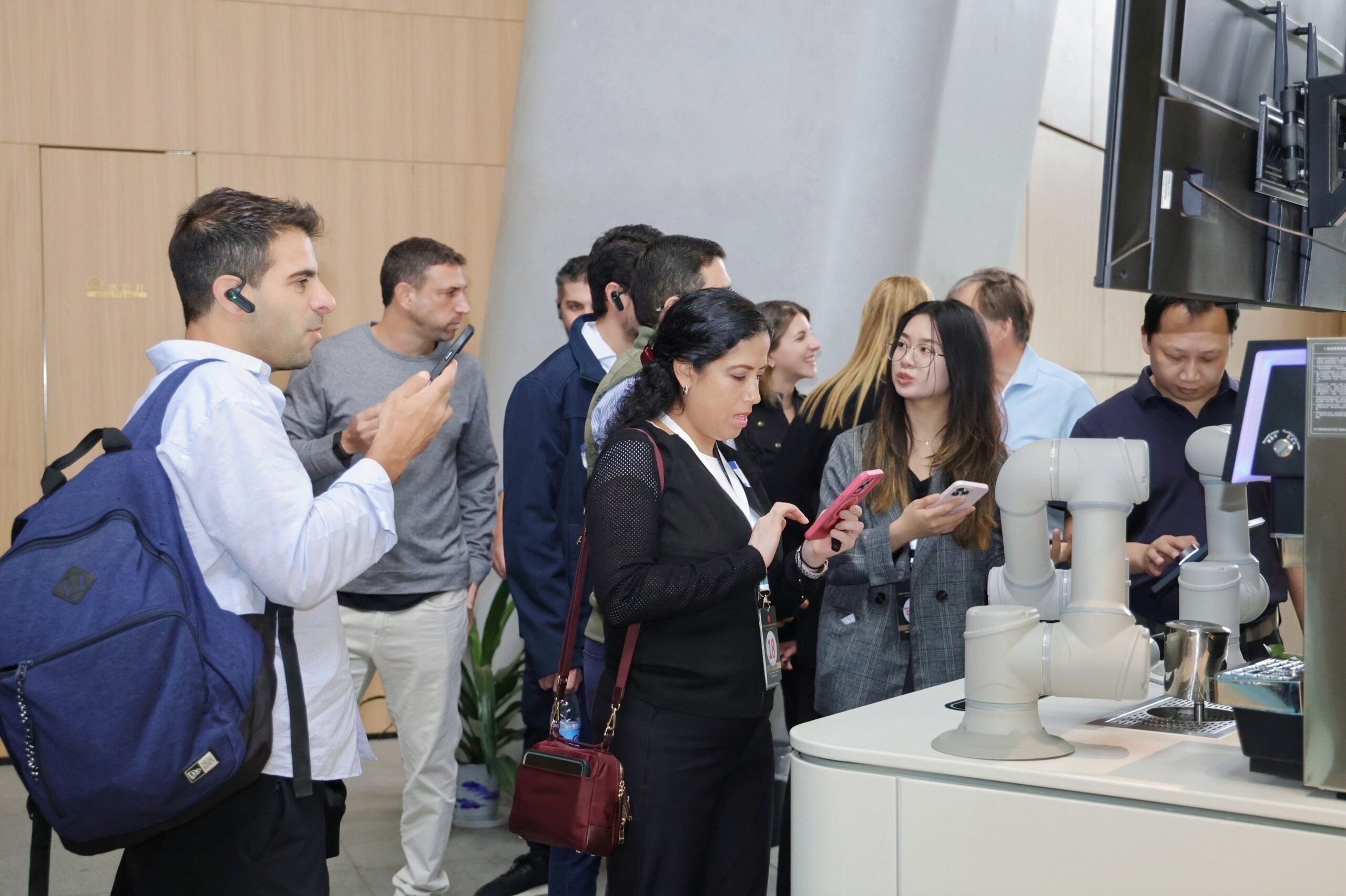
Key Takeaways
- Plan on a 3–6 month lead time — the larger the group, the longer it takes.
- Host companies charge per visit, not per person, so 20–30 people is the sweet spot for cost and experience.
- Budget USD 2,000–8,000 per person, depending on days, language, and hotel.
- Each group travels in one shared language with a matching interpreter throughout.
- Don't just chase Tencent, Huawei, and Alibaba — the right visit depends on your industry and goals.
How long does it really take?
Most first-time organizers assume a business delegation can be arranged in a few weeks. In reality, a well-run China delegation takes 3 to 6 months to plan. The time goes into verifying each participant's details, position, and objectives, booking flights, and — most of all — scheduling and confirming visits with the host companies, who need lead time of their own.
The timeline scales with group size:
| Group size | Lead time needed | Why |
|---|---|---|
| 200+ people | ~6 months | Heavy verification and company-by-company scheduling for a large group. |
| 20–30 people | 30–45 days | The ideal case — a single, self-contained group with no per-head cost pressure. |
| 4 or fewer | ~3 months | Joins a monthly group tour; time goes into matching each person's interests to the right companies. |
The takeaway: start early. If your board wants a delegation on the ground next quarter, the conversation needs to begin now, not after the budget is signed off.
A counterintuitive truth about group size
Here's something most organizers never hear: host companies in China charge per visit, not per person. One visit costs the same whether you bring 8 people or 40. That single fact changes how you should think about group size entirely.
The practical limits:
- Hard cap of 50 people per group.
- Recommended: 20–30 people. A larger group spreads the per-visit fee across more heads, but every additional person dilutes the experience — worse sightlines, less Q&A time, a more rushed room.
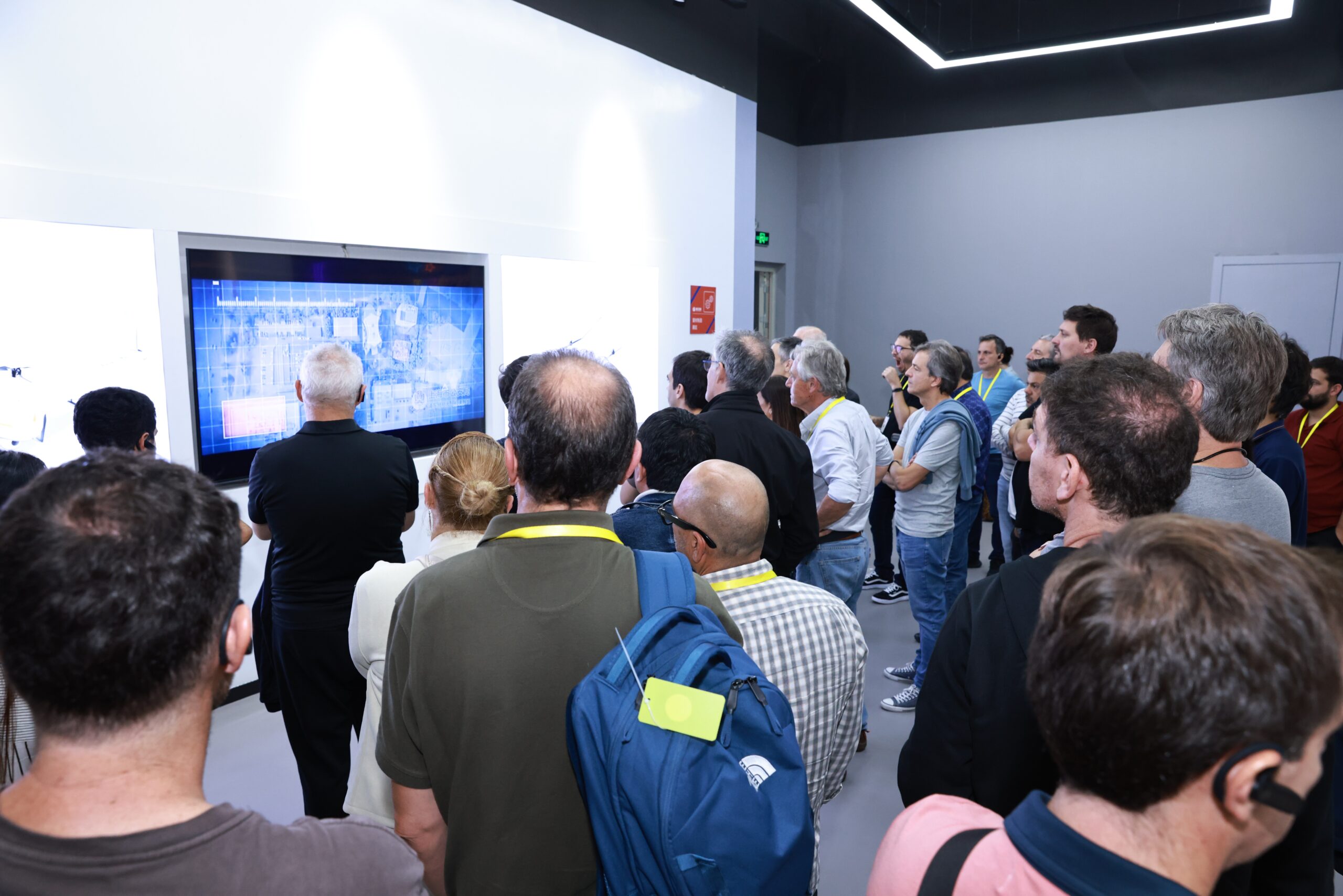
A quick note on scale, since the two numbers can look contradictory: the 50-person cap applies to a single company visit. Separately, our current maximum for a single intake is 500 people at one time. If your delegation exceeds 500, it will need to travel in separate batches — at this stage we are not able to host more than 500 people in one intake. Splitting into batches also keeps each group's close-up experience intact.
What a delegation actually costs
A China business delegation runs USD 2,000–8,000 per person. Where you land in that range depends on three things: the number of company visits, the language (and therefore interpreter) required, and the hotel category.
To make it concrete, here's a real monthly-group-tour package:
| Sample package — USD 3,680 per person | |
|---|---|
| Included | 20–30 person group · 7-day itinerary |
| Included | English interpretation throughout |
| Included | 4-star hotel with breakfast |
| Included | 7 days of business travel insurance |
| Included | Completion certificate |
| Not included | Lunch and dinner |
One structural rule to plan around: a group travels in a single shared language. A Spanish-speaking delegation joins a Spanish-interpreted tour; an English-speaking group has an English interpreter. You can't mix languages within one group.
Ready-to-go monthly tours can be booked and paid online through our group deposit payment page.
What clients ask for vs. what they actually need
Nearly every delegation arrives with the same opening request: we want to see Tencent, Huawei, and Alibaba. Often they have a list of famous names and no clear answer to the question that matters most — why are you going?
We don't recommend the marquee names to everyone. They're expensive, Huawei's screening is especially strict, and a giant tech campus simply isn't the right lesson for every industry or seniority level. A procurement team, a hospital board, and a fintech founder should not be walking the same hallways.
Our job — and the part we're genuinely good at — is to start from your industry, your roles, and your objectives, then match you to the companies that will actually move your thinking. Sometimes that's a household name. Just as often it's a mid-tier operator or a supplier you've never heard of that turns out to be exactly what your team needed to see.
Why others can't get you in — and how access actually works
Getting a serious delegation inside BYD, Huawei, or DJI isn't a matter of emailing the front desk. These companies don't deal with individuals directly — only with official partners. We hold long-standing partnerships with the host companies, and we work alongside local governments, which actively welcome foreign businesses exploring investment and cooperation in China.
The part that trips people up is the paperwork:
- Complete personal information is mandatory. Most host companies run background checks on every visitor.
- Incomplete details are a top reason a visit is refused. A half-filled participant list can sink an otherwise confirmed visit.
There's a second layer of value here too: if you're weighing an actual investment or market entry and don't know where the right opportunities are, that government relationship means we can point you toward where China is genuinely developing — not just arrange a tour.
The pitfalls and hidden costs to plan for
- Last-minute changes. Tell us the moment anything shifts — we almost always have a backup plan, but only if we know in time.
- The budget-vs-standard mismatch (the big one). A low budget paired with high hospitality expectations is the hardest brief to deliver. Be honest up front about the standard you expect. If you specify a five-star experience but fund a two-star one, no one ends up happy — including you.
- Floating costs. Unexpected situations mid-trip can generate real additional expenses; build a small buffer.
When things do go sideways, we absorb it. On one tight-budget, over-packed itinerary that left the client unhappy, we added value at our own cost — wine, coffee, VIP high-speed-rail lounge access — until they were satisfied. The principle is simple: the visiting client's satisfaction comes first.
A real delegation: reading the room in Beijing
A construction-industry client from Argentina brought a 40-person delegation through Beijing, Shanghai, and Shenzhen over 6 days. During the Alibaba visit in Beijing, the host opened by presenting the company's corporate culture — and we could see the group wasn't interested.
We stepped in on the spot, spoke with the presenter mid-session, and redirected the talk to the e-commerce topics the client actually cared about. Afterward, we also explained why Alibaba tends to lead with its culture — and the client accepted it happily. Back home in Argentina, they wrote to thank us for the service.
On a large delegation, this happens constantly: every participant wants something slightly different. The job is to notice in real time and solve it in the moment. In this business, no client concern is too small — that's what actually serving people looks like.
Frequently asked questions
How long does it take to plan a China business delegation?
Typically 3–6 months. A group of 20–30 can usually be confirmed in 30–45 days; delegations of 200+ need around 6 months; groups of 4 or fewer join a monthly tour and still need roughly 3 months.
What is the ideal group size?
20–30 people. Because host companies charge per visit rather than per head (with a 50-person cap), this size spreads the cost while keeping the experience sharp for everyone.
Can you arrange visits to Huawei, BYD, or DJI?
Yes. These firms only work through official partners, and every visitor must submit complete personal information for background checks. Huawei's screening is especially strict, and incomplete details are a common reason a visit is refused.
How much does it cost?
USD 2,000–8,000 per person, depending on the number of visits, language, and hotel. A sample 7-day package with English interpretation, a 4-star hotel, insurance, and a completion certificate is USD 3,680 per person.
What visa do I need?
Most delegates use a business (M) visa, though many nationalities now qualify for China's expanded visa-free and transit policies. See our China visa information page for current details.
Can you host non-English-speaking delegations?
Yes. We host groups worldwide, each travelling in one shared language with a matching interpreter throughout.
Planning a delegation to China?
Tell us your industry, your goals, and roughly when you'd like to travel. We'll help you shape the right group — and get you into the companies that actually matter for your business.
Bring the world to China. Connect China to the world.