China AI Industry in 2026: What Executives Can Really Visit
Quick answer
The China AI industry runs on four layers: domestic chips and cloud capacity, foundation models, applied products, and deployments inside factories, hospitals and city systems. Executives can visit the cloud campuses, the applied-AI and robotics firms, and the deployments. The frontier model labs that generate the headlines almost never host outsiders, so a serious itinerary is built around what is genuinely open and around what you can experience yourself on the street.
Key takeaways
- Model labs are small and closed. DeepSeek runs out of one floor of a Hangzhou office tower with roughly 160 staff and no visitor function.
- The visitable China AI industry: cloud and platform campuses, voice and vision AI firms, robotics makers, and factories running AI in production.
- Four things need no host approval at all: a robotaxi ride, drone delivery, unmanned retail, and the autumn conference halls.
- Book 6 weeks ahead at the absolute minimum, 3 to 4 months for the named companies. Avoid Golden Week, October 1 to 7.
- Passports go to host security days in advance. Bring the physical passport to reception, not a photo of it.
What the China AI industry looks like in 2026
Most China AI industry briefings stop at the model layer, comparing benchmark scores. That is the layer you cannot visit and the layer that changes fastest. It helps to hold the whole stack in view before you build an itinerary.
At the bottom sit compute and chips, increasingly domestic, and the cloud platforms that rent them out. Above that are the foundation models from Alibaba, Baidu, ByteDance, Tencent, DeepSeek, Moonshot, Zhipu and MiniMax. Above those sit the products people actually touch: assistants, coding tools, video generators, voice engines. The top layer is deployment, where a model gets wired into a production line, a claims process or a traffic system.
Policy pushes hard on that top layer. The State Council's "AI Plus" guideline sets adoption targets rather than research targets, aiming for new-generation intelligent terminals and AI agents to pass 70 percent penetration in six priority sectors by 2027. Regulation runs alongside it. Consumer-facing generative services must be filed with the Cyberspace Administration before launch, and AI-generated content carries labeling obligations, which is why a Chinese host will often describe a compliance workflow you have never had to build.
For a visitor, the practical consequence is simple. The China AI industry is best understood by watching where AI is already installed, not by asking who leads on benchmarks.
The companies in the headlines are usually not the ones you can visit
This is the gap between what delegations request and what exists. Nine groups out of ten arrive with a wish list headed by DeepSeek.
DeepSeek occupies a floor of a commercial building in Hangzhou whose other tenants are mostly finance firms. Reporting from its post-launch weeks in early 2025 described security staff turning away every uninvited caller, and the company had not set up a function to handle public or investor inquiries at all. Headcount has been reported at around 160. There is no visitor center, no showroom and no corporate affairs team to route a request to.
That pattern holds across the frontier labs. They are small, research-heavy, and have nothing built for hosting. Moonshot, MiniMax and Zhipu are in the same position, with the added complication that their offices sit inside shared tech parks where the building, not the company, controls the door.
Where the door is open instead
What is open is the other 90 percent of the China AI industry: the platform campuses with purpose-built exhibition halls, the applied-AI companies that sell to enterprises and are happy to demonstrate, the robotics makers, and the manufacturers who run AI in production and treat a delegation as a sales opportunity.
Baidu, Huawei, BYD, DJI and China's other leading firms accept outside visitors through pre-vetted partners with verified credentials. Independent cold outreach almost never succeeds, and at most companies it lands in an inbox with no owner. CST's access is built on 13+ years of relationships, not a cold contact list.
You cannot tour a model, so decide what "seeing AI" means
A large language model is a file on a server. There is no floor to walk, no line to watch, no smell of solder. Groups that plan around model names come home disappointed, and they usually blame the itinerary rather than the category error.
Four things are worth seeing, and each needs a different kind of host.
- A live demonstration. Real-time speech translation, a vision system flagging defects, an agent working through a customer case. Ten minutes, tightly rehearsed.
- A deployment in production. The same technology running where it earns money: a battery line, a port crane, a hospital triage desk. Less polished and far more informative.
- An unscripted conversation. Twenty minutes with an engineer or a product owner who answers follow-ups. This is the part that justifies the flight.
- The consumer surface. What 1.4 billion people actually use daily, which you can sample without asking anyone's permission.
Ask for all four in one day and you will get a showroom and a slide deck. Ask for two, name them, and hosts tend to deliver.
Who actually hosts delegations, and what you see
| Type of host | What you see | How access works | Lead time |
|---|---|---|---|
| Cloud and platform campuses | Purpose-built exhibition hall, live product demos, a business-unit briefing, sometimes engineer Q&A | Vetted partner introduction, group list vetted by security | 6 to 12 weeks |
| Applied AI companies (voice, vision, medical, finance) | Demo lab, deployment case studies, commercial strategy discussion | Partner or industry association; these firms sell to enterprises and welcome buyers | 4 to 8 weeks |
| Robotics and embodied AI | Assembly area, test floor, humanoid or quadruped demonstration | Partner introduction; demand has exploded, so slots are scarce | 8 to 12 weeks |
| Manufacturers running AI in production | The actual line: machine vision inspection, automated warehouse, digital twin control room | Usually the easiest yes, especially for potential customers or suppliers | 4 to 8 weeks |
| City and district showcase centers | Traffic and utility dashboards, urban governance platforms, policy briefing | District government invitation, often paired with a trade mission | 3 to 6 weeks |
| Frontier model labs | Nothing. No visitor facility exists | Not bookable. Meet researchers at a conference or through an investor | Not applicable |
Two structural points save a lot of email. Autonomous driving usually sits in a separate business unit from the cloud and model teams, with its own hosts and its own approval path, so it is a second request rather than an extra hour. And a campus visit is approved for a named list of people, which is why substituting a colleague at the last minute can mean re-running clearance.
Four things you can see with no host approval at all
Every delegation has gaps: a canceled slot, a free evening, an arrival day. These fill them, and they show the China AI industry more honestly than any exhibition hall.
Ride a robotaxi
Baidu's Apollo Go operated in 27 cities as of May 2026, passed 22 million cumulative rides by April, and peaked above 350,000 orders in a single week in March. Pony.ai and WeRide run competing fleets. Fares often undercut a regular ride-hailing trip.
Registration is where visitors get stuck. The apps verify identity, and support for foreign passports varies by city and changes without notice. Wuhan has accepted passport registration for tourist accounts, with manual review that can take a day or two. Beijing has been far less accommodating. The reliable workaround is to have a Chinese colleague, a guide or a hotel concierge order the car, then ride as a passenger. Service zones are limited, so check that your hotel sits inside one before planning around it.
Order drone delivery and watch it land
Shenzhen and parts of Guangzhou run commercial drone food delivery to fixed landing pads in office parks and residential compounds. It takes one order and fifteen minutes of standing outside. Executives remember it longer than most briefings.
Walk into the consumer layer
Unmanned convenience stores, robot-served cafes, AI glasses in brand flagship stores, and the vending walls in any Shenzhen mall. XPeng has been selling tickets to its own showroom since January 2026, and they sell out. Huaqiangbei in Shenzhen remains the fastest hardware education available anywhere.
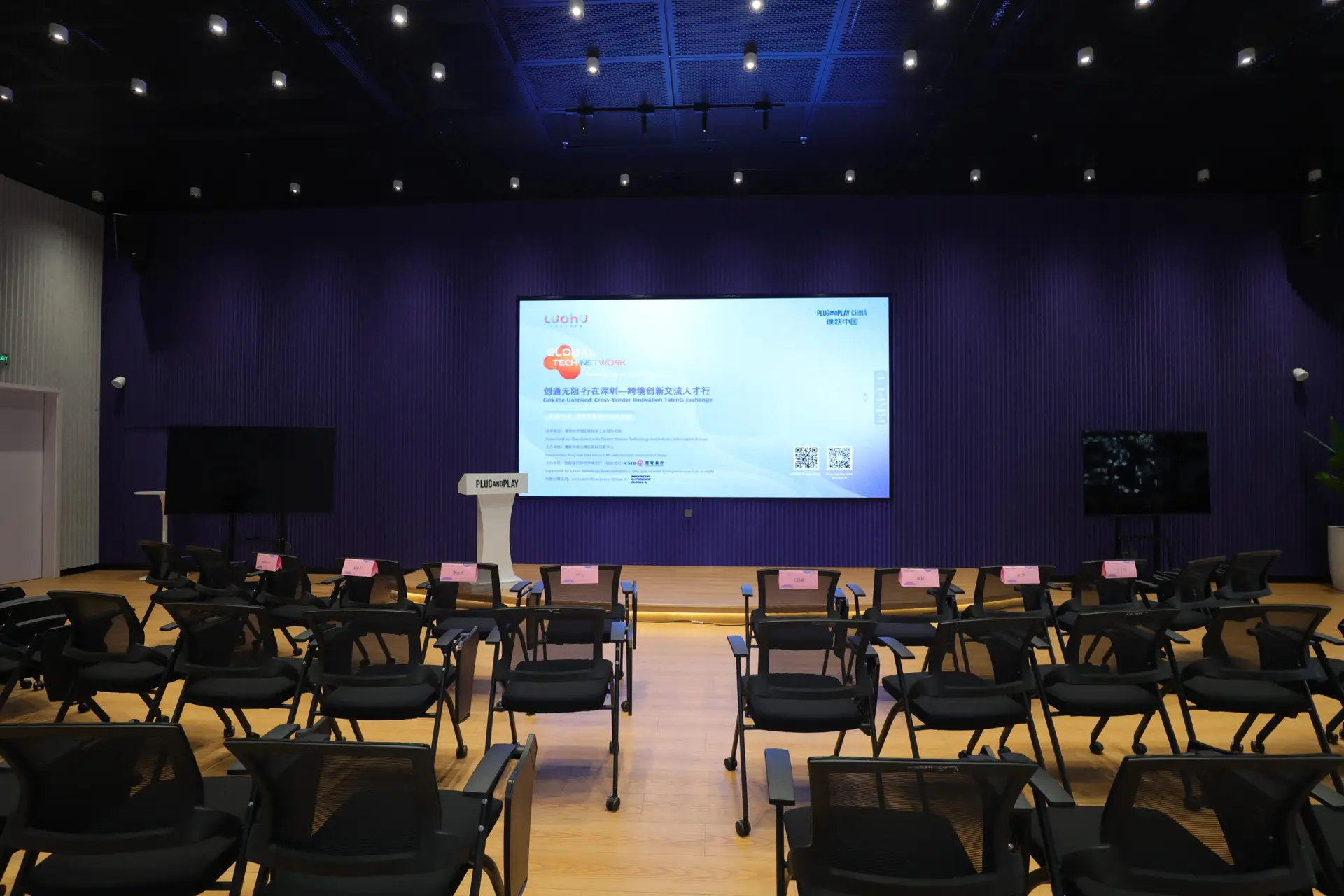
Time your trip around an exhibition
Conference halls are the one place where the closed labs put people in a booth. Huawei Connect runs September 17 to 19 in Shanghai and Alibaba's Apsara Conference September 22 to 24 in Hangzhou. The World Artificial Intelligence Conference lands in Shanghai in July. A badge costs a fraction of a company visit and puts 200 vendors in one hall.
Curated tech tours have become a business of their own. Rest of World reported in May 2026 that visitors pay up to 9,000 US dollars for three to five day itineraries, while a public bilingual tech tour in Shenzhen with a robotaxi ride and a drone demonstration sells for about 92 dollars. The difference is not the sightseeing. It is whether an executive answers your questions afterward.
Where to go: four cities, four different answers
| City | Strongest for | Typical hosts | Notes |
|---|---|---|---|
| Beijing | Search and cloud AI, autonomous driving, policy and academia | Platform campuses, university labs, government briefings | Allow an hour between Haidian and the CBD. Two visits a day is realistic, three is optimistic |
| Hangzhou | Cloud, e-commerce AI, robotics, the startup cluster | Cloud campus, robotics makers, incubators | Unitree listed on Shanghai's STAR Market on August 19, 2026, which pushed local robotics onto every itinerary |
| Shenzhen | Hardware, drones, embodied AI, manufacturing at speed | Device makers, factories, component markets | Best city for seeing AI attached to something physical. Easy add-on from Hong Kong |
| Shanghai | Applied AI in finance and healthcare, conferences, multinational R&D | Enterprise AI vendors, banks, hospital systems, expo venues | The natural arrival and departure city for most delegations |
Two cities in a week works. Three is a travel itinerary with company visits attached to it. Beijing plus Hangzhou covers models, cloud and robotics. Shenzhen plus Hangzhou covers hardware and software. Add Shanghai when the group is finance or healthcare.
What a China visit shows that a US visit does not
Executives often ask how the two compare. Silicon Valley shows you the frontier of capability and the money behind it. China shows you diffusion: the same class of technology installed in ordinary businesses, at prices that assume thin margins.
Three differences show up on the ground. Cost per unit of intelligence is treated as the main competitive lever, not an afterthought. Open-weight releases are normal, which changes what a partner can offer you on deployment. And hardware is close by, so a model, a robot and a factory can be visited in the same week without a domestic flight.
You will also see the constraints. Compute is scarcer and more domestic than the headlines suggest, filings and content labeling shape what ships, and consumer products carry compliance features Western equivalents do not need. A group that comes back describing only the wins was shown a showroom.
How to structure an AI-focused study tour
- Write the decision first. Sourcing, partnership, investment, or internal education. Hosts calibrate to a stated purpose and stall on vague curiosity.
- Three to five company visits in five to seven days. More than one substantial visit per day degrades every visit, including the good one.
- Mix the layers. One platform campus, one applied vendor, one factory or robotics floor, one public experience. The contrast is where the insight lives.
- Send questions ahead in both languages. One page, five questions. Hosts route them to whoever can actually answer, which is how you get an engineer instead of a marketing manager.
- Protect the Q&A. Ask for the corporate video to be skipped. It is the easiest twelve minutes to reclaim.
- Debrief the same evening. Thirty minutes while it is fresh. By day four the visits blur into one another.
- Do not put the anchor visit on Friday afternoon. It is the slot most likely to move.
Groups typically run 5 to 30 people. Government trade missions, MBA and EMBA cohorts, corporate innovation teams and industry associations all travel on the same structure. Language support covers English, Chinese, Spanish, Portuguese, and Japanese. All guides are bilingual, and additional language support is available upon request.
Sample five-day AI itinerary
| Day | City | Morning | Afternoon | Evening |
|---|---|---|---|---|
| 1 | Beijing | Arrival, hotel check-in | Ecosystem briefing: the stack, the players, the regulation | Welcome dinner, itinerary walk-through |
| 2 | Beijing | Platform campus: exhibition hall, model and cloud briefing, engineer Q&A | Autonomous driving session, arranged as a separate request | Robotaxi ride booked by the guide |
| 3 | Beijing | Applied AI vendor: live demonstration and deployment cases | University lab or city showcase center | Transfer to Hangzhou by high-speed rail |
| 4 | Hangzhou | Robotics or embodied AI: test floor and demonstration | Cloud campus or startup incubator session | Group debrief |
| 5 | Hangzhou | Factory running AI in production: vision inspection, automated logistics | Synthesis workshop, decisions and follow-ups | Departures |
Swap Hangzhou for Shenzhen when the group cares more about hardware than about cloud. Full sample programs sit on the AI and technology tour page, and the sister program for factories is robotics and manufacturing.
Timing and lead time, which decide your access
Book AI visits at least 6 weeks out, and 3 to 4 months for the named companies. Custom programs across several cities need 8 to 12 weeks for the itinerary to hold together. Requests under 4 weeks still travel, but the list of available hosts narrows sharply and the best sessions go first.
Avoid Golden Week, October 1 to 7, when offices run skeleton schedules. Chinese New Year takes out two to three weeks in January or February, with the exact dates shifting yearly. April to May and September to October are the strongest windows for both weather and host availability. September is crowded because of the conference calendar, which cuts both ways: harder to book a campus, easier to meet everyone in a hall.
Before you fly: entry, payments and site rules
- Entry. Fifty nationalities enter mainland China visa-free for 30 days under the unilateral policy, currently running through December 31, 2026. The United States and India are not on that list and need a visa. Our China business visa guide covers the M and F categories and the invitation letter, and the visa information page has the summary.
- Passports go ahead of you. Most host security desks want the full passenger list with passport numbers 5 to 10 working days before the visit, spelled exactly as printed. Middle names get dropped and cost a week.
- Bring the physical passport to reception. Campus registration checks the document itself. A photo on a phone is refused often enough to plan around.
- Payments. Alipay and WeChat Pay accept most international Visa and Mastercard now. Set both up before departure, not in the taxi line.
- Photography. Exhibition halls are usually fine, production floors and screens usually are not. Ask once at the start of the visit and get a rule for the whole day rather than negotiating at every stop.
- Connectivity. International roaming works. A group chat beats email, because Chinese hosts confirm changes there and often within the hour.
Questions worth asking, and answers that mean nothing
The quality of an AI visit is decided by the questions. Numbers from an annual report signal that you are in the wrong room, or talking to the wrong person in the right room.
Ask what broke in the first deployment and what they changed. Find out which customer workflow the system replaced, and what the old process used to cost. Domestic chips are worth a direct question: what runs on them today, and what does not. Filing is another one, since every consumer-facing service goes through it before launch. Then close with what they would not deploy yet, and why. That last question produces the most honest sixty seconds of most visits.
Frequently asked questions
Access and booking
Can we visit DeepSeek or the other Chinese AI labs?
In practice, no. DeepSeek works from one floor of a Hangzhou office building with roughly 160 staff, no visitor facility and no corporate affairs function to handle requests. Moonshot, MiniMax and Zhipu are similarly closed. The realistic route to their researchers is a conference or an investor introduction, not a site visit.
Which AI companies in China do accept executive visitors?
Cloud and platform campuses such as Baidu, applied-AI vendors such as iFlytek, robotics manufacturers, and factories running AI in production. Named-company access runs through pre-vetted partners rather than direct outreach, and every visit is approved against a named participant list.
How far ahead should we book a China AI industry visit?
Six weeks is the practical minimum, and 3 to 4 months is right for the named companies. Multi-city custom programs need 8 to 12 weeks. Under 4 weeks you will still travel, but with a shorter list of hosts and less choice of session format.
How many company visits fit into a week?
Three to five across five to seven days, in two cities. One substantial visit per day plus a lighter second stop is the pattern that holds. Groups that book two campuses a day arrive late to the second one and lose the Q&A, which is the part worth traveling for.
On the ground
Can foreign visitors ride a robotaxi in China?
Yes, though registration is the obstacle rather than the ride. Passport support in the apps varies by city and changes without notice, and verification can take a day or two where it is offered. The dependable method is to have a local colleague, guide or concierge book the car. Check that your pickup point sits inside the service zone.
What do executives actually see inside a Chinese AI company?
A rehearsed demonstration, a business briefing, and if the visit is well prepared, an unscripted conversation with an engineer or product owner. You will not see training clusters, model weights, unreleased roadmaps or named customer data. Deployments on a factory floor are usually more revealing than the showroom.
Is photography allowed during AI company visits?
It depends on the room. Exhibition halls and demo areas are usually open, while production floors, screens and lab spaces are usually restricted. Agree the rule with your host at the start of the visit. Phones stay in pockets whenever a screen shows customer data.
Which Chinese city is best for an AI-focused delegation?
Beijing for cloud, autonomous driving and policy. Hangzhou for cloud, e-commerce AI and robotics. Shenzhen for hardware, drones and embodied AI. Shanghai for finance, healthcare and the conference calendar. Most itineraries pair Beijing or Shanghai with one of the other two.
Plan an AI-focused delegation
Tell us your sector, group size and target dates. We will map what is realistically bookable in your window, name the alternatives where a company is closed, and send a full proposal. Programs run for corporate delegations, MBA and EMBA cohorts, industry associations and government trade missions.
Get an AI itinerary proposal in 24 hours
More background: how our programs work and the corporate visit FAQ.